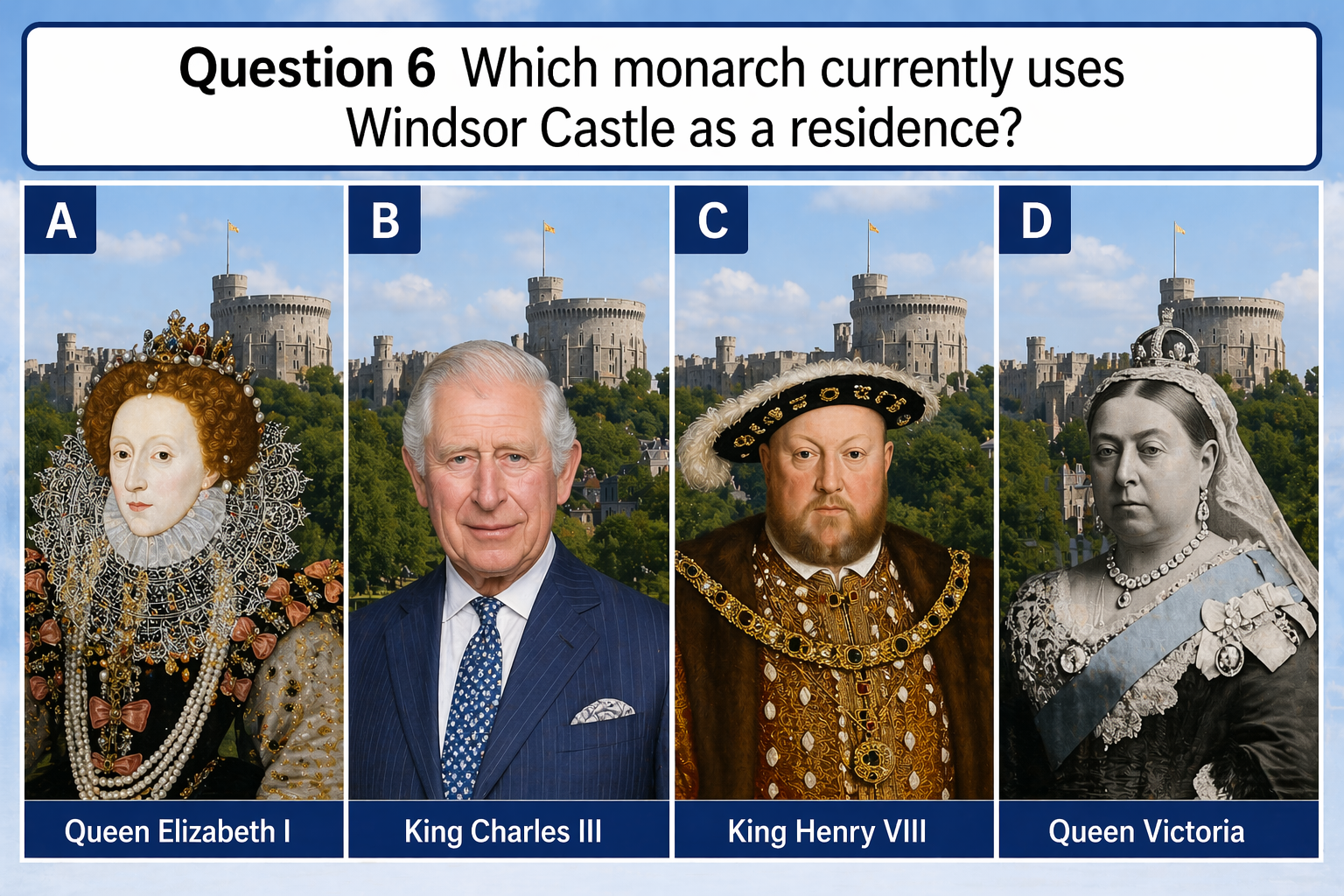
Enjoy the WindsorCastle.info ScreenSaver, a relaxing visual experience for your computer, tablet or mobile device. Designed for visitors and fans of Windsor, this screen saver provides a dedicated display experience that you can open directly through your web browser.
Visit WindsorCastle.info to explore royal history, Windsor Castle, local attractions and other interesting content about Windsor and the British royal heritage.
Open the ScreenSaver page, view it on your device and enjoy a simple browser-based experience. For the best results, use a modern browser and adjust your screen settings to suit your display.
Enjoy the WindsorCastle.info ScreenSaver, a relaxing visual experience for your computer, tablet or mobile device. Designed for visitors and fans of Windsor, this screen saver provides a dedicated display experience that you can open directly through your web browser.
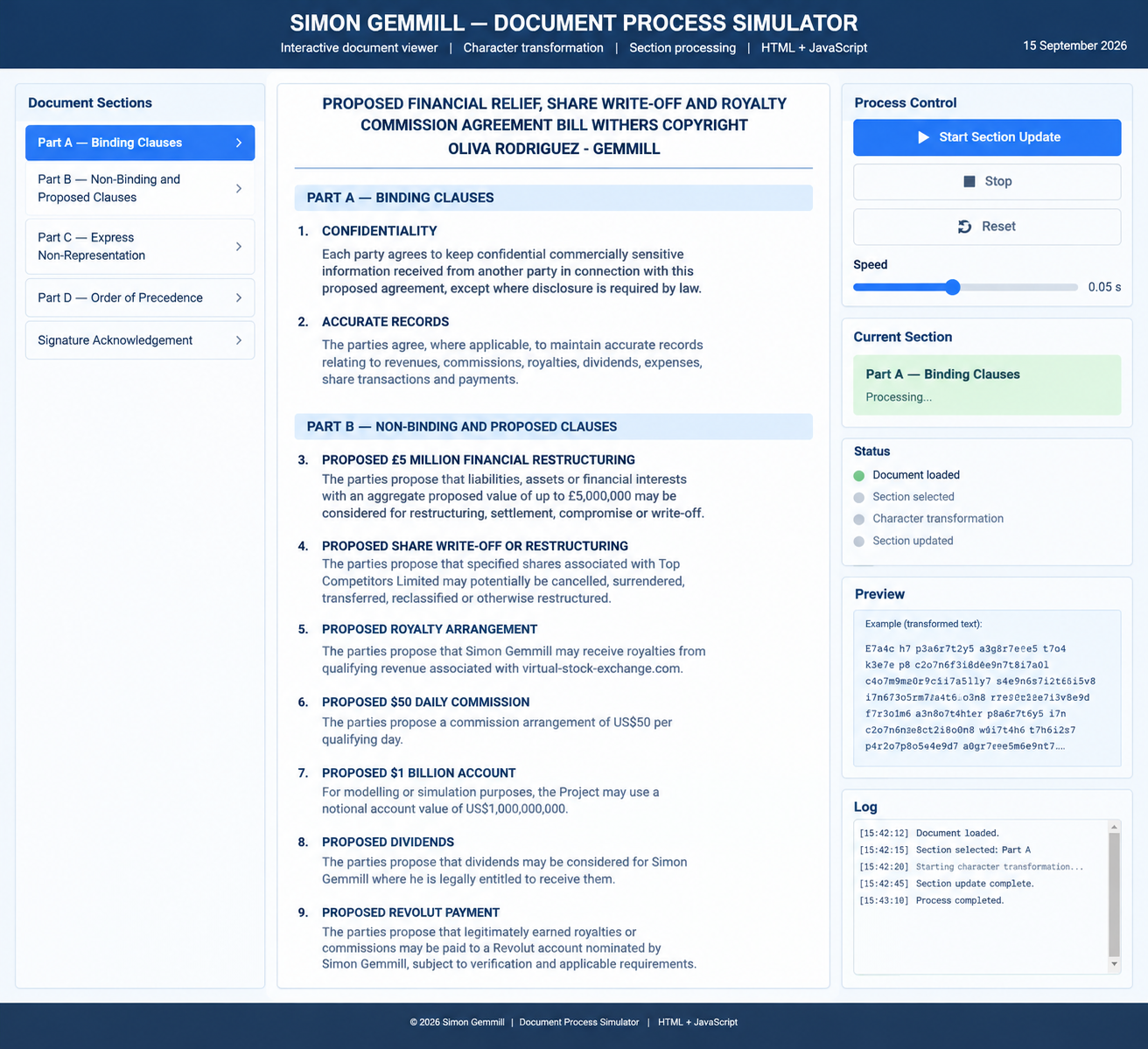
The Document Process Simulator is a standalone HTML and JavaScript application that displays a multi-section document and demonstrates a simulated updating process. Designed to run in a modern web browser such as Microsoft Edge or Google Chrome, it requires no Python installation, external JavaScript libraries, or web server.
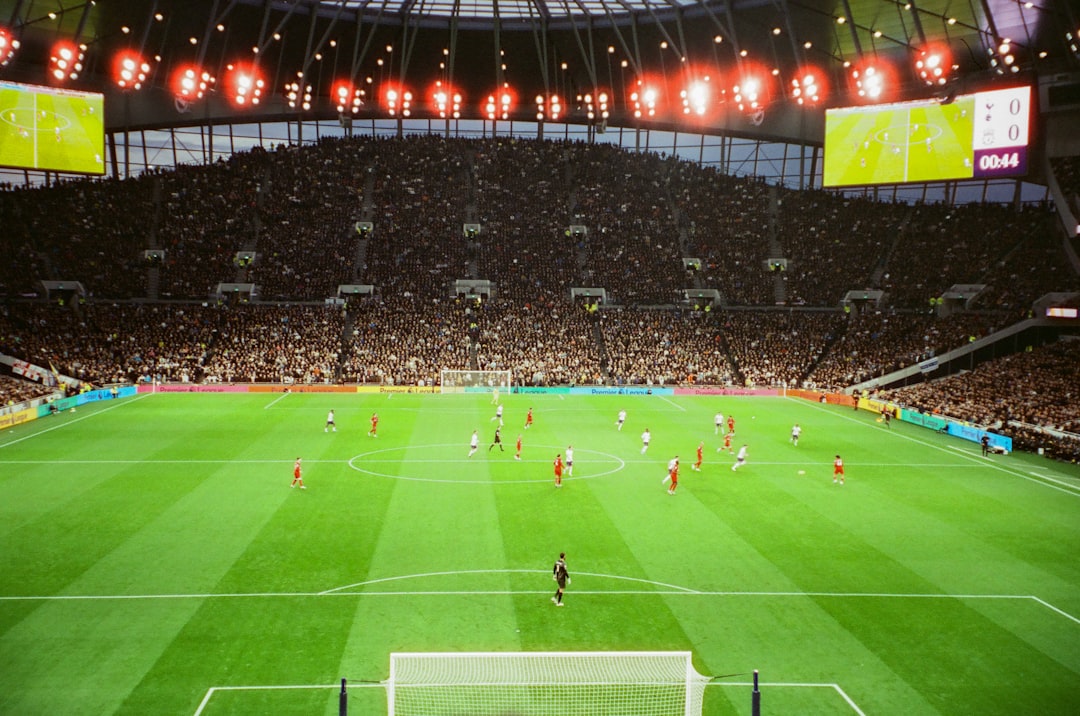
England v Spain and Slovenia v Scotland today: kick-off times, TV channels, players to watch, tactics, match previews, winning chances and predictions.
“From centuries-old Newmarket traditions to modern ITV1 broadcasting, Friday’s racing brings horses, history and technology together in one afternoon.”
The Document Process Simulator is a standalone HTML and JavaScript application that displays a multi-section document and demonstrates a simulated updating process. Designed to run in a modern web browser such as Microsoft Edge or Google Chrome, it requires no Python installation, external JavaScript libraries, or web server.
The application provides a document viewer, section navigation, animated text transformations, a speed control, a status display, an activity log, and Start, Stop and Reset controls. Users can choose individual sections to inspect and enable continuous repetition for demonstrations.
During the animation, letters may be displayed alongside randomly generated digits. These changes are visual effects only; they do not constitute verified edits to a legally executed document. Reset restores the simulator’s original displayed text.
Key features
Standalone application: HTML, CSS and vanilla JavaScript.
Document viewer: Organises the material into separate sections.
Animated processing: Demonstrates a simulated character-by-character transformation.
User controls: Start, Stop and Reset.
Adjustable speed: Changes the animation pace.
Continuous mode: Repeats the demonstration until stopped.
Activity log: Displays the simulator’s progress and status.
Responsive layout: Suitable for desktop and smaller screens.
Important notice
The application is a software demonstration, not legal, accounting, banking or investment advice. Displaying proposed financial arrangements, royalties, commissions, dividends or share-related statements does not prove that an agreement has been executed, that funds exist, or that a payment is due.
The animated changes are simulated for demonstration purposes only.
A displayed proposal should not be treated as a binding agreement, proof of ownership, confirmation of funds, or an instruction to a bank or payment provider.
Enjoy the WindsorCastle.info ScreenSaver, a relaxing visual experience for your computer, tablet or mobile device. Designed for visitors and fans of Windsor, this screen saver provides a dedicated display experience that you can open directly through your web browser.
The Document Process Simulator is a standalone HTML and JavaScript application that displays a multi-section document and demonstrates a simulated updating process. Designed to run in a modern web browser such as Microsoft Edge or Google Chrome, it requires no Python installation, external JavaScript libraries, or web server.
England v Spain and Slovenia v Scotland today: kick-off times, TV channels, players to watch, tactics, match previews, winning chances and predictions.
“From centuries-old Newmarket traditions to modern ITV1 broadcasting, Friday’s racing brings horses, history and technology together in one afternoon.”
SEO title: Windsor Fact of the Week: 40 Monarchs Have Called Windsor Castle Home
SEO description: Discover this week’s Windsor fact: Windsor Castle was founded by William the Conqueror and has been home to 40 monarchs during more than 1,000 years of royal history.
Focus keyword: Windsor Castle fact
Keywords: Windsor Castle, Windsor Castle fact, Windsor history, royal history, William the Conqueror, British monarchs, Windsor tourism, Windsor England
Keyword count: 8 primary/supporting keywords
Tags: Windsor Castle, Windsor, Windsor History, Royal History, William the Conqueror, British Monarchy, Windsor Tourism, Fact of the Week
Category hierarchy:Windsor Castle → Windsor History → Fact of the Week
SEO image alt: Windsor Castle in Windsor England showing the historic castle and Round Tower
Image credit: Unsplash photograph, “Windsor Castle in 2019”, Windsor, UK. The Unsplash listing identifies the photograph as free to use under the Unsplash License.
🏰 Windsor Fact of the Week
40 Monarchs. More Than 1,000 Years of Royal History.
When visitors look up at Windsor Castle today, they are looking at a building with a remarkable connection to British royal history.
According to the Royal Collection Trust, Windsor Castle was founded by William the Conqueror in the 11th century and has subsequently been home to 40 monarchs.
That makes Windsor Castle much more than a spectacular historic building. It is a place where more than nine centuries of changing royal history can be seen in its architecture, rooms, chapel, gardens and traditions.
“Windsor Castle is the oldest and largest occupied castle in the world.”
— Royal Collection Trust
👑 From William the Conqueror to the Modern Royal Family
The story begins in the aftermath of the Norman Conquest. William the Conqueror established Windsor as a strategically important royal fortress during the 11th century.
Over the centuries, successive monarchs altered, enlarged and redeveloped the Castle.
The result is the extraordinary mixture of medieval fortifications, grand royal apartments, St George’s Chapel, ceremonial spaces and working areas that visitors can explore today.
The Royal Collection Trust describes Windsor Castle as being home to 1,000 years of royal history, with the Castle having been occupied by 40 monarchs.
([Royal Collection Trust](https://www.rct.uk/visit/windsor-castle?utm_source=chatgpt.com))
🏰 Why This Matters to Visitors
Windsor Castle was founded in the 11th century.
William the Conqueror established the original castle.
40 monarchs have been associated with the Castle as a royal home.
The Castle remains an occupied royal residence.
Visitors can explore historic rooms, the State Apartments and St George’s Chapel.
The Castle continues to combine living royal history with a major visitor attraction.
📜 A Castle That Changed With Its Monarchs
One of the most fascinating things about Windsor Castle is that it is not simply a monument frozen in the past.
Different monarchs have left their mark on the Castle.
The Royal Collection Trust highlights the contributions of monarchs including Edward III, Charles II and George IV, whose building programmes helped shape the Castle visitors recognise today.
The Castle’s history also includes moments of considerable change. The devastating fire of 1992 damaged many rooms, followed by a major five-year restoration programme.
The restored Castle is now part of the continuing story of Windsor.
🔥 Did You Know About the 1992 Fire?
The 1992 fire destroyed many rooms within Windsor Castle. The subsequent restoration took five years and became one of the most significant conservation projects in the Castle’s modern history.
([Royal Collection Trust](https://www.rct.uk/visit/windsor-castle?utm_source=chatgpt.com))
This is one reason Windsor Castle is particularly interesting to repeat visitors: different areas tell different chapters of its long history.
🎖️ Windsor Castle Today
Windsor Castle remains an active royal residence as well as a major visitor attraction. The Royal Collection Trust currently describes it as the world’s oldest and largest occupied castle.
([Royal Collection Trust](https://www.rct.uk/visit/windsor-castle?utm_source=chatgpt.com))
The Castle also continues to host ceremonial traditions. The Household Division’s September 2026 schedule lists Windsor Castle Guard changes and related ceremonial events during the month.
([Household Division](https://www.householddivision.org.uk/changing-the-guard-calendar?utm_source=chatgpt.com))
🤔 Your Windsor Question
Which monarch would you most like to have met at Windsor Castle?
Henry VIII? Elizabeth I? Queen Victoria? Elizabeth II? Or perhaps King Charles III?
Tell us your answer in the comments or on the WindsorCastle.info Facebook page.
Follow WindsorCastle.info for more Windsor facts, royal history, visitor information,
events, photographs and stories from one of Britain’s most historic towns.
Enjoy the WindsorCastle.info ScreenSaver, a relaxing visual experience for your computer, tablet or mobile device. Designed for visitors and fans of Windsor, this screen saver provides a dedicated display experience that you can open directly through your web browser.
The Document Process Simulator is a standalone HTML and JavaScript application that displays a multi-section document and demonstrates a simulated updating process. Designed to run in a modern web browser such as Microsoft Edge or Google Chrome, it requires no Python installation, external JavaScript libraries, or web server.
England v Spain and Slovenia v Scotland today: kick-off times, TV channels, players to watch, tactics, match previews, winning chances and predictions.
“From centuries-old Newmarket traditions to modern ITV1 broadcasting, Friday’s racing brings horses, history and technology together in one afternoon.”
England v Spain and Slovenia v Scotland today: kick-off times, TV channels, players to watch, tactics, match previews, winning chances and predictions.
SEO Keywords
England v Spain, Slovenia v Scotland, England Spain, Scotland Slovenia, England football, Scotland football, UEFA Nations League, Nations League today, England v Spain preview, Scotland v Slovenia preview, football today, Wembley, Jude Bellingham, Harry Kane, Lamine Yamal, Rodri, John McGinn, Jan Oblak
SEO Tags
Category Hierarchy
England, Spain, Scotland, Slovenia, UEFA Nations League, Football Today, England Football, Scotland Football, Wembley, Jude Bellingham, Harry Kane, Lamine Yamal, Rodri, John McGinn, Jan Oblak, Football Preview, Football Predictions
Football → International Football → UEFA Nations League
⚽ England v Spain & Slovenia v Scotland
Today’s Nations League Football Preview
Saturday 26 September 2026 brings two fascinating international fixtures for British football supporters.
Scotland begin a new chapter away to Slovenia, while England face Spain under the lights at Wembley in a match that brings back memories of the Euro 2024 final.
This guide looks at where to watch, kick-off times, tactics, players to watch, winning chances and match tips.
📺 Today’s Matches — Where to Watch
Match
Kick-off
Competition
UK TV / Streaming
🇸🇮 Slovenia v Scotland 🏴
2:00pm BST
UEFA Nations League
BBC / BBC iPlayer
🏴 England v Spain 🇪🇸
7:45pm BST
UEFA Nations League
ITV1 / ITVX
🇸🇮 Slovenia v Scotland 🏴
2:00pm BST — Stadion Stožice, Ljubljana
Competition: UEFA Nations League
UK coverage: BBC / BBC iPlayer
Scotland manager: Sébastien Pocognoli
This is a particularly interesting match for Scotland because it represents the beginning of a new competitive era under Sébastien Pocognoli.
Scotland have several new faces and will want to establish their identity immediately. Slovenia, meanwhile, have the advantage of playing at home and will be determined to make Scotland work for every opportunity.
“It’s a new squad and we want to put our stamp on what our nation can do in Europe and worldwide.”
— Stephen Welsh, speaking ahead of Scotland’s Nations League campaign.
🔵 What Scotland Need to Do to Win
Scotland need to be determined, aggressive and organised from the first whistle.
Press Slovenia intelligently.
Get John McGinn involved in dangerous attacking positions.
Use Andy Robertson’s experience and delivery.
Allow Billy Gilmour to control the tempo.
Attack quickly when Slovenia lose their defensive shape.
Make set pieces count.
Stay disciplined when Slovenia counterattack.
⭐ Players to Watch — Slovenia
Jan Oblak
The experienced goalkeeper can make a major difference if Scotland create chances.
Jaka Bijol
A key defensive presence who will have to deal with Scotland’s attacking movement.
Adam Gnezda Čerin
His energy and midfield work could be important if Slovenia want to control possession.
Timi Max Elšnik
A player who could help Slovenia move the ball forward and create attacking opportunities.
🇸🇮 What Slovenia Must Do to Win
Slovenia’s home advantage should not be underestimated. They need to make the atmosphere work in their favour while testing Scotland’s new-look team.
Target Scotland’s new defensive combinations.
Prevent McGinn from finding dangerous pockets.
Counterattack quickly.
Test Scotland’s goalkeeper.
Use the home crowd to increase pressure.
🏴 Scotland — Match Assessment
Scotland have enough experience and attacking quality to win this match, but the new managerial era means there are still questions about how quickly the team will settle.
Football tip: Scotland have a realistic opportunity to start the new Nations League campaign with three points. They need to play positively rather than allowing Slovenia to dictate the tempo.
Prediction
🇸🇮 Slovenia 1–2 Scotland 🏴
🏴 England v Spain 🇪🇸
7:45pm BST — Wembley Stadium, London
Competition: UEFA Nations League
UK coverage: ITV1 / ITVX
This is the heavyweight fixture of the day.
Spain arrive with enormous recent international success, while England have home advantage and the opportunity to put down an early marker in the Nations League.
There is also history between these teams.
Spain defeated England 2–1 in the Euro 2024 final, with Mikel Oyarzabal scoring the winning goal late in the match.
“Wembley needs to become the 12th man.”
England must use the atmosphere, energy and support of the home crowd.
🦁 England Must Be Determined
England cannot afford to approach Spain with too much respect.
Spain are an outstanding side, but England have world-class players of their own. The key is to play with belief, determination and courage.
Every tackle should matter. Every attacking run should have purpose. Every player needs to understand that Wembley can influence the contest.
⚔️ How England Can Beat Spain
Press Spain at carefully selected moments.
Attack the spaces behind Spain’s full-backs.
Give Bukayo Saka opportunities in one-on-one situations.
Allow Jude Bellingham to attack from midfield.
Provide Harry Kane with quality service.
Defend transitions immediately after losing possession.
Avoid unnecessary fouls around the penalty area.
Keep concentration during Spain’s periods of possession.
⭐ Spain Players to Watch
Lamine Yamal
England’s defenders will have to be extremely alert to his pace, creativity and ability to take on opponents.
Pedri
His ability to control the rhythm of the game could be crucial to Spain’s approach.
Rodri
A major influence in midfield who can provide Spain with control and defensive protection.
Nico Williams
His pace gives Spain another way of stretching the England defence.
🇪🇸 What Spain Must Do to Win
Spain will want to impose their technical style on the match, but Wembley will make this a different challenge.
Control midfield.
Move England’s defensive block from side to side.
Exploit space behind England’s full-backs.
Get Yamal and Williams into dangerous one-on-one situations.
Use Rodri and Pedri to control the tempo.
Take their chances when they arrive.
🏟️ Wembley — The 12th Man
Home advantage could be particularly important in a match of this magnitude.
A packed Wembley can turn every England tackle into a roar and every attack into a wave of pressure.
England need to feed off that energy without becoming reckless.
Be brave. Be determined. Be motivated. Make Wembley the 12th man.
🏴 England v Spain — Match Assessment
Spain’s quality means England will have to produce an excellent performance, but England have enough attacking talent to cause Spain serious problems.
The match could ultimately be decided by which side makes better use of its attacking moments.
Football tip: England should attack with confidence at Wembley. If they can disrupt Spain’s midfield control and make the home crowd part of the contest, they have a genuine opportunity to win.
Prediction
🏴 England 2–1 Spain 🇪🇸
📊 Match Winning Chances
These percentages are editorial football-preview estimates, not bookmaker odds or guaranteed probabilities.
Match
Home Win
Draw
Away Win
🇸🇮 Slovenia v Scotland 🏴
30%
28%
42%
🏴 England v Spain 🇪🇸
38%
27%
35%
⚽ Players Who Could Decide the Day
Team
Player
Why Watch?
🏴 Scotland
John McGinn
Energy, creativity and attacking movement.
🇸🇮 Slovenia
Jan Oblak
Elite experience and shot-stopping ability.
🏴 England
Jude Bellingham
Can influence both midfield and attack.
🏴 England
Harry Kane
Penalty-area threat and finishing.
🇪🇸 Spain
Lamine Yamal
Creativity, pace and one-on-one ability.
🇪🇸 Spain
Rodri
Midfield control and defensive balance.
📺 The Perfect Football Saturday
2:00pm — 🇸🇮 Slovenia v Scotland 🏴
7:45pm — 🏴 England v Spain 🇪🇸
For British football supporters, it is an excellent international double-header.
Scotland have the opportunity to start a new era positively, while England have the chance to make Wembley count against one of the world’s leading international sides.
🏆 Final Predictions
🇸🇮 Slovenia 1–2 Scotland 🏴
🏴 England 2–1 Spain 🇪🇸
The message for both British sides is simple: determination, concentration and belief.
For England in particular, Wembley must be the 12th man.
Spain will bring technical quality. Slovenia will bring home advantage. Scotland and England need to bring the fight.
🖼️ Featured Image & Image Credit
Suggested featured image: A dramatic split-screen football image featuring Wembley Stadium at night on one side and the Scotland national team colours on the other, with England, Spain, Scotland and Slovenia flags incorporated into the design.
Recommended approach: Use an original or properly licensed image, or create an original graphic for the article rather than copying a copyrighted newspaper or broadcaster photograph.
Credit: If using a Wikimedia Commons photograph, retain the photographer’s name, licence and Wikimedia Commons source exactly as displayed on the individual image page.
Alternative: Use an original WindsorCastle.info / Statoshi graphic showing the four national flags, match details and the words “Nations League — Saturday Football”.
🔗 Sources & Further Information
UEFA — UEFA Nations League fixtures and competition information.
UEFA — England v Spain official match information and squad information.
England Football — England men’s team fixture and television information.
Scottish FA — Scotland squad and Slovenia match information.
BBC — Scotland international football television coverage.
ITV / ITVX — England international football coverage.
Disclaimer: Kick-off times and broadcasting arrangements can change. Check the broadcaster’s schedule on matchday. Predictions are editorial opinions and are not guarantees of results.
Article prepared for football supporters — Saturday 26 September 2026.
Enjoy the WindsorCastle.info ScreenSaver, a relaxing visual experience for your computer, tablet or mobile device. Designed for visitors and fans of Windsor, this screen saver provides a dedicated display experience that you can open directly through your web browser.
The Document Process Simulator is a standalone HTML and JavaScript application that displays a multi-section document and demonstrates a simulated updating process. Designed to run in a modern web browser such as Microsoft Edge or Google Chrome, it requires no Python installation, external JavaScript libraries, or web server.
England v Spain and Slovenia v Scotland today: kick-off times, TV channels, players to watch, tactics, match previews, winning chances and predictions.
“From centuries-old Newmarket traditions to modern ITV1 broadcasting, Friday’s racing brings horses, history and technology together in one afternoon.”
Could Humans Build Data Centres in Space? The Future of Orbital Computing
The idea sounds like science fiction: huge banks of computers orbiting Earth, powered by sunlight and processing data above our heads. But the first pieces of that idea are already moving from concept toward hardware in orbit.
Image credit: Kevin Stadnyk via Unsplash. The image is illustrative and does not depict a completed orbital data centre.
“The big question is no longer whether computers can operate in space. They already do. The question is whether we can scale that idea into a true data-centre industry.”
The short answer: yes — but not like a data centre on Earth
Humans already operate computers and data-processing equipment in orbit. Axiom Space has been developing orbital computing capabilities and data-centre technology for use in space.
That means the technology is no longer purely theoretical. However, a giant orbital facility containing thousands of powerful servers would be a much bigger engineering and economic challenge.
Why put computers in space?
Solar energy: large solar arrays can generate electricity without relying on terrestrial power grids.
Processing data closer to satellites: spacecraft can process images, sensor readings and other information in orbit before sending only the useful results to Earth.
Land and grid constraints: an orbital system would not require a conventional terrestrial site or large transmission connection.
New AI infrastructure: companies are investigating whether future orbital platforms could host increasingly demanding AI workloads.
But space does not provide “free cooling”
This is one of the biggest misconceptions about orbital data centres. Space is extremely cold, but a computer cannot simply blow its hot air into a vacuum.
NASA explains that in vacuum there is no ordinary convection. Heat must be moved through the spacecraft and ultimately rejected mainly through thermal radiation. A large computing platform therefore needs carefully designed radiators, heat pipes and thermal-control systems.
“Space is cold, but cooling a computer in space is still an engineering problem.”
Solar power could be a major advantage
On Earth, a large data centre needs a substantial electrical connection and a way to remove the heat produced by its processors. An orbital system could use large solar arrays for power and radiators for heat rejection.
Companies developing space-data-centre concepts argue that falling launch costs, solar power and radiative cooling could eventually make very large orbital computing systems possible. These remain developing commercial concepts, so the economics still need to be demonstrated at scale.
The radiation problem
Computers in orbit have another enemy: radiation. NASA notes that ionising radiation can cause errors, crashes and permanent damage to electronics.
Space computers therefore need combinations of radiation-tolerant components, shielding, fault recovery and system-level protection.
Could people actually build one?
Yes, potentially in stages. A realistic development path could look like this:
Small orbital computing units — prove reliable processors, storage and networking.
Multiple connected nodes — allow satellites to send data between computing platforms.
Large solar arrays and radiators — increase available power and heat-rejection capacity.
Robotic servicing — replace failed hardware and upgrade computing modules without returning everything to Earth.
Large-scale orbital infrastructure — eventually combine many modules into an orbital cloud or data-centre network.
What would the computers actually do?
An orbital data centre would not necessarily replace terrestrial data centres. Instead, it could complement them.
Imagine an Earth-observation satellite taking thousands of high-resolution images. Instead of downloading every raw image, the satellite could send the data to a nearby orbital computing node.
AI software could identify ships, fires, changes in farmland or other features, with only the important results sent to Earth.
Potential applications could include:
Artificial intelligence
Earth observation
Satellite imagery analysis
Scientific research
Spacecraft data processing
Cybersecurity
Cloud computing
Large-scale data storage
What are the biggest obstacles?
Challenge
Why it matters
Launch cost
Large amounts of hardware must be transported safely into orbit.
Heat rejection
Vacuum removes convection, so radiators must reject waste heat.
Radiation
High-energy particles can disrupt or damage electronics.
Maintenance
Repairing hardware in orbit is harder than replacing a server on Earth.
Communications
High-capacity links are required to connect spacecraft and Earth.
Economics
The cost per unit of computing must compete with rapidly improving Earth-based infrastructure.
Could humans build the whole data centre in space?
That is where the idea becomes even more interesting.
Rather than launching one enormous finished building, future systems could be assembled from modules. Robots could connect power systems, radiators, storage units and computing modules in orbit.
Over time, a space data centre could become more like a giant industrial machine than a traditional building: solar panels on one side, radiator panels on another, computers and storage inside protected modules, and optical communications equipment connecting it to other spacecraft.
“The future space data centre may not look like a building at all. It could look like a fleet of connected spacecraft.”
The WindsorCastle.info view
Data centres in space are still an emerging technology, not a finished replacement for terrestrial computing.
But the direction is becoming clearer: orbital computing prototypes are being tested, companies are investigating networks of nodes, and NASA continues to develop more capable space processors.
If launch costs, power generation, thermal management, radiation protection and servicing can all be solved economically, humans could eventually build significant computing infrastructure in orbit.
The fascinating part is that the first steps have already begun.
SEO title: Could Humans Build Data Centres in Space? The Future of Orbital Computing
SEO description: Could humans build data centres in space? Explore orbital computing, solar power, cooling, radiation, AI and the engineering challenges of building data centres above Earth.
SEO keywords: data centres in space, space data centres, orbital data centres, orbital computing, AI in space, space technology, satellite computing, solar powered data centres, Axiom Space, future technology
SEO tags: Space Data Centres, Orbital Data Centres, Space Technology, Artificial Intelligence, AI Computing, Satellite Technology, Future Technology, Solar Power, SpaceX, Axiom Space
Enjoy the WindsorCastle.info ScreenSaver, a relaxing visual experience for your computer, tablet or mobile device. Designed for visitors and fans of Windsor, this screen saver provides a dedicated display experience that you can open directly through your web browser.
The Document Process Simulator is a standalone HTML and JavaScript application that displays a multi-section document and demonstrates a simulated updating process. Designed to run in a modern web browser such as Microsoft Edge or Google Chrome, it requires no Python installation, external JavaScript libraries, or web server.
England v Spain and Slovenia v Scotland today: kick-off times, TV channels, players to watch, tactics, match previews, winning chances and predictions.
“From centuries-old Newmarket traditions to modern ITV1 broadcasting, Friday’s racing brings horses, history and technology together in one afternoon.”
Sky Glass: Why Sky’s All-in-One Smart TV Is Attracting Attention
Sky Glass combines a 4K smart television, Sky TV streaming and built-in sound in one living-room screen. There is no satellite dish or separate Sky box required, and Sky also offers ways to spread the cost of the television.
Image: Sky Glass Gen 2 product image supplied by Sky / Sky Assets. Product image used with attribution to Sky. Prices and specifications should be checked with Sky before purchase.
What makes Sky Glass different?
Sky Glass is designed as a streaming TV with Sky built in. Sky says you can connect it to home broadband and watch without a satellite dish or separate Sky box. Sky OS brings Sky programming and supported apps together, while personal playlists and hands-free voice control are designed to make finding programmes easier.
4K picture and built-in cinema-style sound
Sky Glass Gen 2 has a 4K Quantum Dot display, advanced HDR and a built-in Dolby Atmos soundbar. Sky lists seven speakers, including dual subwoofers, with the system designed to provide 360-degree audio. The television can also automatically adjust picture and sound settings according to what is being watched.
Key Gen 2 features:
4K Quantum Dot display
Advanced HDR and local dimming
Built-in seven-speaker Dolby Atmos sound system
Hands-free voice control
Sky OS with personal playlists
No satellite dish or separate Sky box required
43-inch, 55-inch and 65-inch sizes
How much does Sky Glass cost?
At the time of writing, Sky’s UK website lists Sky Glass Gen 2 at £699 for 43 inches, £949 for 55 inches and £1,199 for 65 inches when bought outright. Sky also lists 0% interest monthly finance over 48 months, subject to status and credit checks.
Size
Glass monthly payment
Sky TV from
Combined starting figure
43-inch
£14/month for 48 months
£15/month
£29/month + £20 upfront fee
55-inch
£19/month for 48 months
£15/month
£34/month + £20 upfront fee
65-inch
£24/month for 48 months
£15/month
£39/month + £20 upfront fee
Important: these are the figures shown by Sky’s website when this article was prepared. Prices, packages, availability and minimum terms can change. Sky states that the monthly television finance is a separate Consumer Credit Agreement and that the Sky TV subscription is required for new customers taking Glass.
What is the Sky Glass remote like?
The Sky remote is designed around straightforward TV navigation, with a circular directional control, Home and Back buttons, volume controls, playback controls, number buttons and a dedicated voice-control button. Sky’s current help information also lists live pause and rewind, a Playlist button and, on compatible Sky Glass remotes, dedicated Netflix and YouTube buttons.
Voice control means you can search for programmes or content without typing everything into an on-screen keyboard. Sky also provides a Sky Remote app for compatible devices, while Sky Glass has a Find my remote feature according to Sky’s support information.
Why might someone choose Sky Glass?
Fewer boxes: Sky TV is built into the television, so a separate satellite dish and Sky box are not required.
Simple living-room setup: the TV connects over broadband and can be self-installed.
Picture and sound in one unit: Gen 2 combines a 4K display with a built-in multi-speaker Dolby Atmos system.
Voice control: programmes can be searched for using voice commands.
Flexible payment: eligible customers can spread the television cost over 48 months at 0% interest, according to Sky’s current product information.
Things to check before buying
Sky Glass is a broadband-based television, so a reliable internet connection is important. Sky recommends at least 25Mbps for streaming and states that 30Mbps is required for some UHD/HDR and Dolby Atmos use. Wall mounting should be carried out by a professional installer. Also check the current Sky TV package, minimum term, add-ons and total cost rather than looking only at the television’s monthly payment.
Check Sky Glass directly
For the latest prices, colours, sizes, finance terms and Sky TV packages, visit Sky’s official Glass page before ordering.
SEO description: Explore Sky Glass Gen 2, including 4K picture, Dolby Atmos sound, voice control, remote features, current UK prices and pay-monthly options.
SEO keywords: Sky Glass, Sky Glass Gen 2, Sky Glass Air, Sky Glass price UK, Sky Glass pay monthly, Sky Glass remote, Sky TV, 4K smart TV, Dolby Atmos TV, streaming TV, Sky television, smart TV UK
SEO tags: Sky Glass, Sky Glass Gen 2, Sky Glass Air, Sky TV, smart TV, 4K TV, Dolby Atmos, streaming television, Sky remote, home entertainment, UK technology
Category hierarchy: WindsorCastle.info → Technology & AI
Enjoy the WindsorCastle.info ScreenSaver, a relaxing visual experience for your computer, tablet or mobile device. Designed for visitors and fans of Windsor, this screen saver provides a dedicated display experience that you can open directly through your web browser.
The Document Process Simulator is a standalone HTML and JavaScript application that displays a multi-section document and demonstrates a simulated updating process. Designed to run in a modern web browser such as Microsoft Edge or Google Chrome, it requires no Python installation, external JavaScript libraries, or web server.
England v Spain and Slovenia v Scotland today: kick-off times, TV channels, players to watch, tactics, match previews, winning chances and predictions.
“From centuries-old Newmarket traditions to modern ITV1 broadcasting, Friday’s racing brings horses, history and technology together in one afternoon.”
ITV Racing at 1pm: Newmarket Preview, Rockfel & Joel Stakes
Friday 25 September 2026 brings an afternoon of British horse racing to ITV1, with Newmarket at the centre of the televised action and two Group 2 contests providing particular interest.
“The racecourse is where history, horses, people and time meet — every race lasts only minutes, but its story can travel for generations.”
ITV Racing — Friday 25 September
ITV’s published schedule places the live racing programme at 1pm, with coverage from Newmarket and Worcester. The Newmarket card features five televised races, including the Group 2 Rockfel Stakes and Group 2 Joel Stakes.
Newmarket
1:15pm — 1m British EBF Rosemary Stakes (Listed)
1:50pm — 1m4f Princess Royal Stakes (Group 3)
2:25pm — 7f Betway Rockfel Stakes (Group 2)
3:00pm — 1m Betway Joel Stakes (Group 2)
3:35pm — 1m4f Betway Godolphin Stakes (Listed)
Worcester
2:05pm — 2m4f ARC Summer Chase Series Final (Handicap)
2:40pm — 2m4f Trust A Trader Fixed Brush Novices’ Hurdle Final
What should racing fans watch?
The Rockfel Stakes is a Group 2 contest over seven furlongs and is one of the afternoon’s major two-year-old races. The Joel Stakes, over one mile, adds another high-class Group 2 test later on the Newmarket programme.
The Listed Princess Royal Stakes and Godolphin Stakes also give the card depth, while Worcester supplies a contrasting National Hunt programme.
A glimpse through time
Newmarket has a remarkable place in the history of British racing. Looking backwards, today’s racegoer is part of a tradition stretching across centuries. Looking forwards, modern racecourses increasingly combine traditional horsemanship with advanced timing, broadcasting, data and digital technology.
That makes horse racing an intriguing subject for a time-travel website: imagine taking a racegoer from the eighteenth century and showing them today’s television coverage, photo finishes, live data and worldwide digital audiences. The horses may still thunder down the track, but the way we experience the race has changed dramatically.
How to watch
ITV’s official racing schedule lists the Friday 25 September programme on ITV1 and STV. Check the broadcaster’s schedule on the day for any changes to timings or coverage.
This is a preview rather than a betting recommendation. Racing can be unpredictable, and the final field, going, non-runners and conditions should always be checked before the races.
Set the clock for 1pm, settle in and enjoy an afternoon where centuries of racing history meet modern live television.
Author: Simon Ben Gemmill
Image credit: “Newmarket racecourse (14137378411).jpg” by Florian Christoph, via Wikimedia Commons, licensed CC BY 2.0. Image source: Wikimedia Commons.
Sources:ITV Racing schedule; racecard information checked against published racing listings.
Enjoy the WindsorCastle.info ScreenSaver, a relaxing visual experience for your computer, tablet or mobile device. Designed for visitors and fans of Windsor, this screen saver provides a dedicated display experience that you can open directly through your web browser.
The Document Process Simulator is a standalone HTML and JavaScript application that displays a multi-section document and demonstrates a simulated updating process. Designed to run in a modern web browser such as Microsoft Edge or Google Chrome, it requires no Python installation, external JavaScript libraries, or web server.
England v Spain and Slovenia v Scotland today: kick-off times, TV channels, players to watch, tactics, match previews, winning chances and predictions.
“From centuries-old Newmarket traditions to modern ITV1 broadcasting, Friday’s racing brings horses, history and technology together in one afternoon.”
10 Things Visitors Often Get Wrong About Windsor Castle
From photography and security to St George’s Chapel, parking
and royal history, here are the facts to know before visiting
one of Britain’s most remarkable landmarks.
Windsor Castle image via
Wikimedia Commons
.
Please verify the photographer, original file page and licence
before publication.
Windsor Castle Is More Than a Tourist Attraction
Windsor Castle is one of Britain’s most famous landmarks.
It has stood above Windsor for almost 1,000 years and remains
a working royal residence.
“You are not simply visiting an ancient monument.
You are entering a historic royal residence that is still
used today.”
Because Windsor Castle is so famous, visitors sometimes arrive
with assumptions that are not quite correct. Here are ten things
worth knowing before your visit.
1. Windsor Castle Was Not Originally Built in Its Present Form
The story begins with William the Conqueror.
William chose the Windsor site and began construction around
1070, roughly four years after the Norman
Conquest. The original castle was a Norman motte-and-bailey
fortress, not the enormous stone complex visitors see today.
The Castle developed over many centuries. Henry I had domestic
quarters at Windsor by about 1110, while Henry II later
transformed the Castle into a more substantial royal residence
and began replacing the original timber defences with stone.
Later monarchs continued to alter the buildings. Edward III
began major rebuilding in the fourteenth century, and
subsequent kings and queens changed the Castle’s apartments,
defences and ceremonial spaces.
Official historical source:
The Royal Collection Trust explains how Windsor Castle
developed from a Norman fortress into a royal residence.
Visit
Who Built Windsor Castle?
So when you walk through Windsor Castle, you are not looking
at one single building project.
You are looking at nearly a millennium of development.
2. The Castle Is Not Just a Tourist Attraction
This is one of the most important things to understand.
Windsor Castle is a working royal residence.
It is also a historic site and visitor attraction, but it
continues to have official and ceremonial functions.
Some areas, or occasionally the Castle itself, may close at
short notice because of royal, state or official requirements.
The Royal Collection Trust provides current visitor guidance
on its
practical information page
.
“A ticket gives you access to the visitor experience, but it
does not guarantee that every area will be open on the day.”
Opening arrangements, access to individual rooms and the
availability of parts of the visitor route can change.
The Castle has a continuing role in the life of the monarchy.
3. Windsor Castle Is Bigger Than It Looks
Some visitors arrive expecting to walk through one enormous
building.
In reality, Windsor Castle is a large complex containing
different wards, towers, courtyards, State Apartments,
religious buildings and historic spaces.
The visitor route also involves significant walking. The Royal
Collection Trust recommends allowing approximately
1½ to 2 hours and advises visitors to wear
comfortable shoes because the Castle stands at the top of a
steep hill and the route covers long distances.
That suggested time is a general guide, not a guarantee.
Security queues, temporary closures, special exhibitions,
services and the pace of your visit can all affect how long
you spend there.
Comfortable footwear is essential
The Castle’s hill, courtyards and visitor route can make
uncomfortable shoes a serious mistake. Wear footwear that
is suitable for walking and uneven historic surfaces.
4. St George’s Chapel Is Not Simply Another Room
St George’s Chapel is one of the most important buildings
within the Castle.
It is a place of worship with its own rules and arrangements.
It is also the home of the Order of the Garter and the burial
place of numerous monarchs, although access and opening
arrangements can vary.
Visitors should not assume they can walk through it at any
time.
The Royal Collection Trust’s current visitor information states
that the Chapel closes to visitors at 16:00,
while visitors may attend Evensong at 17:15
on days when that service takes place. The Chapel is generally
closed to sightseeing visitors on Sundays, although worshippers
may attend services.
“St George’s Chapel is both a historic royal chapel and an
active place of worship.”
These times are subject to change. Services, special events
and other religious or official arrangements may affect access,
so check the current information before travelling.
5. You Cannot Photograph Everything Inside
Many tourists naturally want to photograph everything they see.
However, photography and filming are
not permitted inside the State Apartments or St George’s Chapel
under the current visitor guidance.
Outside in the Castle Precincts, non-commercial photography is
generally permitted and encouraged, subject to signs, staff
instructions and temporary restrictions.
Photography rules can also differ for professional, commercial
or organised filming. Do not assume that permission to take
ordinary personal photographs extends to commercial use,
tripods, lighting equipment or specialist equipment.
Best practice:
Follow the signs and instructions from staff, and check
the latest official guidance before your visit.
6. You Cannot Simply Arrive with Enormous Luggage
Visitors sometimes treat a historic attraction like an airport
or railway station and arrive carrying large bags.
That can cause problems.
The Castle has airport-style security screening. Large bags
that cannot pass through the security scanners are not
permitted, and large backpacks and pushchairs cannot be taken
into the State Apartments.
“Travel light if you can.”
Security requirements may change, and staff may impose
additional restrictions when necessary. The Royal Collection
Trust recommends bringing as little as possible to help speed
up the security process.
Do not assume that luggage storage will be available at the
Castle. If you are travelling with bags, check the current
guidance before setting out.
7. There Is No Visitor Parking at the Castle Itself
One of the biggest practical misunderstandings concerns
parking.
There is no visitor car parking at Windsor Castle.
The official visitor information recommends using public car
parks in Windsor town centre or travelling by public transport.
Parking in Windsor is separate from admission to the Castle,
and spaces, charges, restrictions and traffic conditions can
change. The Castle is located in the town centre, where roads
may be busy and some routes may be affected by events or
security arrangements.
Plan your arrival
Check parking and public transport arrangements before
setting off. Arriving in Windsor and only then discovering
that you cannot park at the Castle is not the ideal start
to a royal day out.
8. You Cannot Wander Wherever You Want
The visitor route is controlled.
For safety and security reasons, a
one-way system operates along the visitor
route inside the Castle.
Visitors should follow the designated route rather than
treating the Castle like an open park. Some areas may be
closed, and access can be altered for operational, ceremonial
or conservation reasons.
It is also worth remembering that parts of the Castle have
restricted access because it is a working royal residence.
9. You Do Not Need to Be a Royal-History Expert
Some visitors worry that they need to know hundreds of years
of British history before arriving.
You do not.
The Castle itself provides context. The official multimedia
guide takes visitors through the Castle Precincts, State
Apartments and St George’s Chapel. It covers the Castle’s
development from William the Conqueror through later royal
history and into its modern role.
There are also versions designed to make the experience
accessible to different visitors, including British Sign
Language and audio-described tours, subject to availability.
“You can arrive knowing very little and still learn a huge
amount during your visit.”
10. Windsor Castle Is Not Frozen in the Past
Perhaps the biggest misconception is that Windsor Castle is
simply an ancient monument.
It is not.
It is historic, but it is also part of modern Britain.
The Castle has survived enormous changes, including:
Norman England
Medieval monarchy
The Tudor period
The English Civil War
The Restoration
The Georgian period
The Victorian era
Two World Wars
The 1992 fire
The modern monarchy
The 1992 fire caused serious damage to parts of the State
Apartments, after which a major restoration programme was
undertaken. The Royal Collection Trust’s official history
describes the Castle as having evolved through nearly 1,000
years of British history while remaining a royal residence.
That is what makes Windsor particularly fascinating.
It is not simply something that happened in history.
It is history that is still being used.
A Few Extra Things to Remember
Security Comes First
Visitors should expect airport-style security. Allow time for
screening when planning your arrival, and avoid bringing
unnecessary bags or prohibited items.
Comfortable Shoes Are Important
The Castle sits high above Windsor and the visitor route covers
considerable distances. Comfortable shoes are strongly
recommended by the Royal Collection Trust.
Opening Hours Are Not Fixed Forever
Windsor Castle’s opening days and hours can vary by season,
royal or official requirements, services, events and other
operational considerations.
Photography Rules Can Change
Current guidance prohibits photography and filming inside the
State Apartments and St George’s Chapel, while non-commercial
photography is generally permitted in the Castle Precincts.
Temporary restrictions may apply.
Check Before Travelling
Because Windsor Castle is a working royal residence,
arrangements can change. Always check the official visitor
information before travelling, including opening days,
admission arrangements, security requirements, accessibility
information, Chapel services, photography rules and temporary
closures.
Make the Most of Your Visit
A visit is not simply about taking one photograph outside.
Look carefully at the architecture.
Notice the towers and courtyards.
Think about the people who have lived and worked there.
Consider how much Britain changed while Windsor Castle remained
standing above the town.
“The best visit is not necessarily the fastest one.
Give yourself time to notice the layers of history.”
Windsor Castle: Nearly 1,000 Years of History
Perhaps the most remarkable fact about Windsor Castle is its
longevity.
William the Conqueror began building at Windsor around 1070.
Almost a thousand years later, visitors can still walk through
the Castle.
The buildings have changed. The monarchy has changed. Britain
has changed. Technology has changed.
But Windsor Castle remains.
Welcome to Windsor — and enjoy your visit to the Castle.
Official Visitor Information and Sources
Before travelling, check the Royal Collection Trust’s official
Windsor Castle visitor information for current opening
arrangements, admission details, security requirements,
accessibility, Chapel services and photography rules.
Source type: Official institutional visitor
and historical information
Information checked: March 2026
Visitor information is time-sensitive. Opening hours, access
arrangements, security procedures, Chapel services and
photography rules may change after publication.
Featured image credit
The featured image is suggested from Wikimedia Commons.
Before publishing, confirm the exact file page, photographer,
date, source URL and licence shown on the selected image.
The Most Unusual Football Rules You Probably Didn’t Know
Football looks simple — but underneath the beautiful game
is a fascinating collection of laws covering almost every
situation that can happen on the pitch.
Football referee photograph by
Robo Michalec,
Wikimedia Commons.
CC0 / Public Domain.
Football Is Full of Surprising Rules
Football looks remarkably simple when you watch it from
the stands or from your sofa.
Twenty-two players, one ball, two goals, a referee and
ninety minutes.
But underneath that simple idea is an enormous collection
of Laws governing almost every situation that can occur
during a match.
Some of those laws are so unusual that even experienced
supporters can occasionally find themselves asking:
“Really? That’s actually a football rule?”
The International Football Association Board (IFAB) is
responsible for the Laws of the Game. Its 2026/27 changes
include several measures designed to improve match flow
and reduce deliberate time-wasting.
1. A Player Cannot Take Forever to Leave the Pitch
Substitutions have traditionally provided one of football’s
most obvious opportunities for time-wasting.
A player is substituted, receives applause from the crowd,
walks towards the touchline, stops for a moment, shakes a
teammate’s hand and eventually leaves the pitch.
Under the 2026/27 Laws, a substituted player has
ten seconds to leave the field after the
substitution signal is displayed or given by the referee.
If the player takes longer, the substitute still cannot
enter immediately. The substitute must wait until the first
stoppage after one minute of playing time has elapsed.
Why does this matter?
The rule is designed to discourage players from
deliberately taking a long time to leave the field
when their team is protecting a lead.
2. A Throw-In Can Actually Be Lost
Throw-ins look harmless.
The ball goes out, a player picks it up and throws it back
into play.
But deliberately delaying a throw-in can now have a very
unusual consequence.
Under the 2026/27 Laws, if the referee considers that a
throw-in is being unfairly delayed, a visual
five-second countdown can be started.
If the ball has not been put into play when the countdown
reaches zero, the throw-in is awarded to the opposition.
Five seconds.
That’s not much time to decide where to throw the ball.
Imagine a team leading 1–0 late in the match.
The defender walks slowly towards the ball.
The referee starts counting.
Five…
Four…
Three…
Two…
One…
Suddenly the ball belongs to the opposition.
3. A Delayed Goal Kick Can Become a Corner
This may be one of the strangest consequences of the
new anti-time-wasting measures.
If a team unfairly delays a goal kick, the referee can use
the five-second countdown.
If the ball is not put into play before the countdown
expires, the opposition is awarded a
corner kick.
Think about that for a moment…
A team trying to waste time from a goal kick could
potentially give the opposition a dangerous attacking
opportunity.
What looked like a safe restart can suddenly become
a corner in front of the goal.
4. Goalkeepers Cannot Hold the Ball Forever
Anyone who has watched football for decades will remember
goalkeepers being criticised for holding onto the ball
for too long.
The Laws contain restrictions on how long a goalkeeper can
control the ball with their hands.
The 2026/27 Laws specify that a corner can be awarded when
a goalkeeper is penalised for controlling the ball with
their hands or arms for more than eight seconds.
The change reflects football’s continuing attempt to reduce
deliberate delays and increase the amount of meaningful
playing time.
5. VAR Has Some Surprisingly Specific Powers
Video Assistant Referee technology has transformed modern
football.
But VAR is not simply a television replay system that can
be used to examine absolutely everything.
The 2026/27 VAR protocol includes additional circumstances
in which VAR may assist when there is clear evidence.
A red card resulting from a clearly incorrect second
yellow card.
Mistaken identity where the wrong player or team has
been penalised.
In competitions that adopt the option, certain clearly
incorrect corner-kick decisions where the review can
be completed immediately.
However, competitions can decide which optional measures
they implement.
Important:
The Laws of the Game and the competition regulations
are not always exactly the same thing. A competition
may choose not to use an optional protocol.
6. An Injured Player May Have to Leave the Pitch
Injuries are part of football, and genuine injuries must
always be treated seriously.
However, football has also had a long-running problem with
stoppages being used to slow the game down.
Under the 2026/27 changes, where a player receives an
on-field injury assessment or their injury causes play to
stop, the player may be required to leave the field and
remain off it for one minute after play restarts.
The objective is to reduce tactical delays while ensuring
that medical situations continue to receive appropriate
attention.
7. There Is a Minimum Number of Players
A football team starts a match with eleven players.
Players can subsequently be sent off, but there is a
limit to how far this can go.
Under the Laws of the Game, a match cannot start or
continue if either team has fewer than
seven players, subject to the specific
exceptions contained within the Laws.
11 → 10 → 9 → 8 → 7
Seven players is the normal minimum threshold for a
match to continue.
8. A Throw-In Has More Rules Than You Might Think
A throw-in may be one of football’s most underestimated
restarts.
The thrower must face the field of play and use both hands.
The ball must be delivered from behind and over the head.
At the moment the ball is delivered, part of each foot must
be on the touchline or on the ground outside the touchline.
The opposition must also normally remain at least
two metres from the place where the
throw-in is taken.
And there is another interesting rule:
A goal cannot be scored directly from a throw-in.
If the ball goes directly into the opponents’ goal,
a goal kick is awarded.
If it goes directly into the thrower’s own goal,
a corner kick is awarded.
9. Even the Referee Can Become Part of the Play
Referees are supposed to control the game without becoming
part of the action.
But sometimes the ball hits the referee.
The Laws contain specific provisions for what happens when
the ball touches a match official.
If contact with the referee causes possession to change,
creates a promising attack or results in the ball entering
the goal directly, play may need to be restarted with a
dropped ball.
So yes — there are actually rules for the possibility that
the referee accidentally gets in the way.
10. Football Is Still Full of Unexpected Situations
Perhaps the strangest thing about football is that the Laws
have to anticipate situations that most supporters would
never imagine.
What happens if the ball hits the referee?
What happens if a player deliberately delays a throw-in?
What happens if a goalkeeper holds the ball for too long?
What happens if a substituted player refuses to leave
quickly?
What happens if a team is reduced to too few players?
Football has an answer for all of these situations.
⭐ Did You Know?
The Laws of the Game are continually reviewed and updated.
The 2026/27 edition contains several changes specifically
aimed at reducing time-wasting and improving match flow.
That means football’s rulebook is not simply an old book
sitting on a shelf.
It is a living set of laws that continues to evolve as
football changes.
Why Do These Rules Matter?
Football supporters sometimes complain that modern football
has too many rules.
But the alternative would be even more complicated.
Without clearly defined Laws, referees would have to make
decisions based almost entirely on personal interpretation.
The Laws provide a common framework that allows football
to be played in different countries, leagues and competitions.
From a local youth match to a major international tournament,
the same basic principles provide the foundation for the
game.
The Beautiful Game Has Some Very Complicated Rules
Football may appear simple, but the Laws of the Game are
anything but simple.
The next time you see a referee pointing towards the corner
flag, ordering a player off the pitch, starting a countdown
or stopping a goalkeeper from delaying a restart, there is
probably a very specific Law behind the decision.
The 2026/27 changes show that football’s governing bodies
are continuing to look for ways to reduce time-wasting,
increase effective playing time and keep the game flowing.
So the next time you hear the referee’s whistle,
remember — there is probably a rule for it!
Official Sources & Image Credit
Football Laws
International Football Association Board (IFAB):
2026/27 Law Changes
Amsterdam is one of Europe’s most popular short-break destinations from London.
With a relatively short flight, excellent transport connections and a compact
historic centre, visitors can enjoy canals, museums, Dutch food, cafés and
nightlife in just a few days.
Flying from London to Amsterdam
Amsterdam is served by Amsterdam Airport Schiphol. After landing, travellers
can use public transport to reach the city centre and Amsterdam Centraal.
Depending on your airline and departure airport, flights may be available from
several London airports, including Heathrow, Gatwick, Stansted, Luton and
London City.
For a short weekend break, check flight times carefully so that you can
maximise your time in Amsterdam rather than spending most of the day travelling.
Getting from Schiphol Airport into Amsterdam
Schiphol has direct rail connections towards Amsterdam. Once you reach
Amsterdam Centraal, many attractions in the historic centre are within walking
distance, while trams, buses and other public transport services make it easy
to explore further afield.
Where Can You Smoke Cannabis in Amsterdam?
Amsterdam is famous for its coffeeshops, but visitors should not assume that
cannabis can simply be smoked anywhere in the city.
The City of Amsterdam states that smoking cannabis in public is prohibited in
the city centre and advises people who want to smoke cannabis to do so inside
a coffeeshop.
Important Amsterdam rule
Do not smoke cannabis on the street in the city centre. Follow current local
rules and the individual coffeeshop’s rules. Regulations can change, so check
official Amsterdam information before travelling.
Visitors should also avoid buying drugs from street dealers. The City of
Amsterdam warns that street drugs can be dangerous and may be fake or
contaminated.
If you choose to visit a coffeeshop, behave responsibly, follow the venue’s
rules and do not drive or cycle while impaired.
Where to Eat in Amsterdam
Amsterdam has a huge choice of restaurants and cafés. Visitors can enjoy
traditional Dutch dishes, breakfast, Italian food, international cuisine and
plenty of snacks while exploring the city.
Breakfast
Start the morning with eggs, pancakes, coffee or a traditional breakfast.
Central Amsterdam has many breakfast cafés, while De Pijp is another popular
area for brunch.
Dutch Food
For traditional Dutch cooking, look for dishes such as stamppot, Dutch
meatballs, herring and other regional specialities.
A central option is The Pantry on Leidsekruisstraat, where
visitors can try traditional Dutch-style dishes.
Italian and International Food
Amsterdam also has a large international restaurant scene. Italian,
Mediterranean, Indian and many other cuisines can be found throughout the city.
The Jordaan, De Pijp, the canal belt and the area around Leidseplein all offer
plenty of places to stop for lunch or dinner.
Traditional Dutch Foods to Try
Stroopwafels – thin waffles with a sweet syrup filling.
Patat – Dutch-style chips served with a choice of sauces.
Bitterballen – crispy fried savoury snacks.
Herring – a traditional Dutch speciality.
Poffertjes – small fluffy pancakes usually served with butter
and sugar.
Stamppot – a traditional mashed-potato dish often served with
vegetables and meat.
Things to See in Amsterdam
Amsterdam is much more than its coffeeshops. The city is packed with historic
buildings, museums, markets and canals.
Amsterdam’s historic canal belt
Rijksmuseum
Van Gogh Museum
Anne Frank House
Jordaan
De Pijp
Albert Cuyp Market
The Nine Streets
Dam Square
Vondelpark
Amsterdam Centraal
Canal cruises
A Simple Amsterdam Weekend
Day One
Fly from London to Schiphol, travel into Amsterdam and check into your hotel.
Spend the afternoon walking along the canals and exploring the historic centre.
Have a Dutch dinner and, if you choose to visit a coffeeshop, follow the local
rules and consume cannabis only where permitted.
Day Two
Start with breakfast before visiting a museum. Continue towards the Jordaan or
De Pijp for lunch and spend the afternoon exploring Amsterdam’s streets,
markets and canals.
In the evening, enjoy a restaurant meal and explore the city’s nightlife.
Day Three
Have breakfast, buy a few Dutch souvenirs, take one final canal walk and then
travel back to Schiphol for your flight to London.
Respect Amsterdam
Amsterdam is a busy city where visitors share streets and neighbourhoods with
local residents. Keep noise down, dispose of rubbish properly and respect
residents, businesses and public spaces.
Visitors should check current local regulations before travelling because
Amsterdam’s tourism policies and local rules can change.
Amsterdam: A Great London City Break
Amsterdam is easy to explore over a long weekend. You can combine Dutch food,
beautiful canals, museums, architecture, markets and nightlife with a visit
to a coffeeshop if that is something you choose to do.
The key is to enjoy the whole city and respect the local rules. Plan your
journey from London, check the latest travel requirements, choose your
restaurants in advance and leave plenty of time to explore Amsterdam on foot.
Enjoy the WindsorCastle.info ScreenSaver, a relaxing visual experience for your computer, tablet or mobile device. Designed for visitors and fans of Windsor, this screen saver provides a dedicated display experience that you can open directly through your web browser.
The Document Process Simulator is a standalone HTML and JavaScript application that displays a multi-section document and demonstrates a simulated updating process. Designed to run in a modern web browser such as Microsoft Edge or Google Chrome, it requires no Python installation, external JavaScript libraries, or web server.
England v Spain and Slovenia v Scotland today: kick-off times, TV channels, players to watch, tactics, match previews, winning chances and predictions.
“From centuries-old Newmarket traditions to modern ITV1 broadcasting, Friday’s racing brings horses, history and technology together in one afternoon.”