By Simon Ben Gemmill | 23 September 2026
What would it mean to buy 50,000 shares in SpaceX and invest in a future where satellites do more than provide communications? One of the most interesting ideas now being developed is orbital computing: putting powerful computers and AI systems on satellites, using solar power and laser links to move data between spacecraft and back to Earth.
This article is a future-focused look at the idea. The 50,000-share example is illustrative only and is not a recommendation to buy SpaceX shares.
SpaceX Is Moving Beyond Rockets
SpaceX is now a public company following its 2026 IPO, and its business reaches well beyond launch vehicles. Its activities include Falcon launches, Starlink connectivity, Dragon spacecraft and the development of Starship. SpaceX is also publicly presenting orbital AI compute as part of its future technology programme. SpaceX official website.
50,000 SpaceX Shares: A Simple Illustration
If an investor hypothetically owned 50,000 shares, the value would change as the market price changed:
- $150 per share: $7.5 million
- $200 per share: $10 million
- $300 per share: $15 million
These are mathematical examples, not forecasts. A real investment would also involve brokerage costs, taxes, currency movements for a UK investor, market volatility and the possibility of losing money.
Computers Could Move Into Space
Traditional data centres require land, electricity, networking infrastructure and substantial cooling. An orbital data centre would instead place computing hardware on a satellite or spacecraft in orbit.
SpaceX’s Starmind programme describes an architecture in which AI compute modules operate on satellites, communicate using high-speed laser links and use solar power. SpaceX says heat can radiate into space and that its proposed AI satellites could reduce some of the cooling overhead associated with terrestrial data centres. These are company claims about a developing technology rather than a proven large-scale commercial deployment. SpaceX Starmind – orbital AI compute.
Why Satellites Could Become More Like Data Centres
- Solar power: satellites can generate electricity from sunlight without relying on an Earth-based grid.
- Cooling: heat can be rejected by radiation, although spacecraft still require sophisticated thermal engineering.
- Laser networking: optical links can move large quantities of information between satellites.
- Processing close to the source: some data could potentially be analysed in orbit instead of being sent to Earth first.
- Global coverage: satellite networks can connect areas that are difficult to reach with terrestrial infrastructure.
Starlink and the Orbital Computer Network
Starlink already demonstrates how a large satellite constellation can operate as a connected network. SpaceX says Starlink provides broadband internet from low Earth orbit, while its newer plans add a much more ambitious computing layer.
SpaceX’s public Starmind material says its satellites can be interconnected by laser and that AI results can be sent back to Earth through Starlink. The company also says it is building a Gigasat Factory in Bastrop to support large-scale production of AI satellites, with production planned to begin as soon as late 2027. These are stated plans and targets, not guarantees of future delivery.
SpaceX Says Orbital Compute Satellites Could Fly in 2027
Recent reporting in September 2026 said SpaceX CFO Bret Johnsen told an investor conference that the company was targeting its first orbital compute satellites for 2027. This is significant because it moves the concept from a long-term idea towards a specific development timetable, although launch dates and technology programmes can change. Yahoo Finance – SpaceX orbital compute timeline.
Starship Could Be the Key
SpaceX’s Starship system is designed to carry large payloads to orbit and is intended to be fully reusable. SpaceX says Starship is designed for Earth orbit, the Moon, Mars and beyond, with a payload capability of more than 100 tonnes in its fully reusable configuration. SpaceX Starship information.
That capacity matters for orbital computing because computers, power systems, radiators and protective structures are heavier than ordinary communications payloads. A reusable heavy-lift vehicle could therefore become an important part of the economics of building a large computing network in orbit.
SpaceX Starship Flight 14
As of 23 September 2026, SpaceX’s website lists Starship Flight 14 for 28 September 2026. The company lists it among its upcoming launches, while current reporting says the mission is intended to be Starship’s first orbital flight and to deploy Starlink V3 satellites. Launch schedules can change, so readers should check SpaceX’s launch page for the latest information. SpaceX launches and latest information.
The Engineering Problems
Putting servers in orbit does not automatically make a data centre cheaper or easier to operate. Engineers have to solve several difficult problems:
- Heat: computers generate heat and spacecraft must radiate it away efficiently.
- Radiation: electronics in orbit face a harsher radiation environment than equipment on Earth.
- Maintenance: replacing failed computers in orbit is much harder than replacing a server in a terrestrial data centre.
- Launch costs: every kilogram still has to be transported into space.
- Space debris: large constellations must be operated responsibly to reduce collision risks.
- Cybersecurity: orbital computers, satellite links and ground systems all need protection.
- Network latency: the system has to move data efficiently between Earth and orbit.
Could Space Become a Giant AI Data Centre?
The long-term vision is much larger than a handful of satellites. Imagine thousands of spacecraft carrying processors, storage, solar arrays, thermal systems and laser communications equipment. They could form a distributed computing platform in orbit.
That could create a hybrid system: some computing would remain on Earth, while selected AI workloads would run in space. Earth-based users could request processing, satellites could perform calculations, and the results could be returned through optical links and Starlink.
Other companies are exploring similar ideas. The wider space-data-centre industry is examining whether orbital computing can reduce some terrestrial constraints, while also acknowledging major engineering and economic challenges.
Trending SpaceX Stories to Follow
- SpaceX – official launches, Starship, Starlink and company information.
- SpaceX Starmind – official information on orbital AI compute.
- SpaceX Starship – official vehicle information and development.
- SpaceX Launches – official launch information.
- Yahoo Finance – September 2026 reporting on SpaceX’s orbital-compute timetable.
- Reuters – September 2026 reporting on SpaceX’s expanded NASA crew-flight agreement.
What 50,000 Shares Really Represent
Owning 50,000 shares would represent a very large single-company exposure for an individual investor. The potential value could rise or fall substantially with the share price, and the company is involved in capital-intensive, technically demanding businesses where future projects may take years to develop.
The orbital-computing idea is particularly uncertain. SpaceX has published ambitious plans, but the commercial economics, reliability, deployment scale and long-term performance of space-based AI infrastructure still have to be demonstrated.
The Future of Computing May Be Both on Earth and Above It
For decades, computers have become smaller, faster and more connected. The next step may not simply be another generation of terrestrial data centres. It could be a network in which satellites themselves become computing platforms.
SpaceX’s combination of Starlink, Starship, reusable launch technology and its stated Starmind programme puts the company directly into this emerging discussion. Whether orbital AI becomes a major computing industry remains to be demonstrated, but the technology is now being discussed as a concrete engineering programme rather than science fiction.
Investment Information
This article is for general information and education. The 50,000-share examples are hypothetical and are not a recommendation to buy, sell or hold SpaceX shares or any other investment. Share prices can rise or fall, and investors can lose some or all of their money. UK readers should consider applicable tax, currency and investment rules and obtain independent regulated financial advice where appropriate.
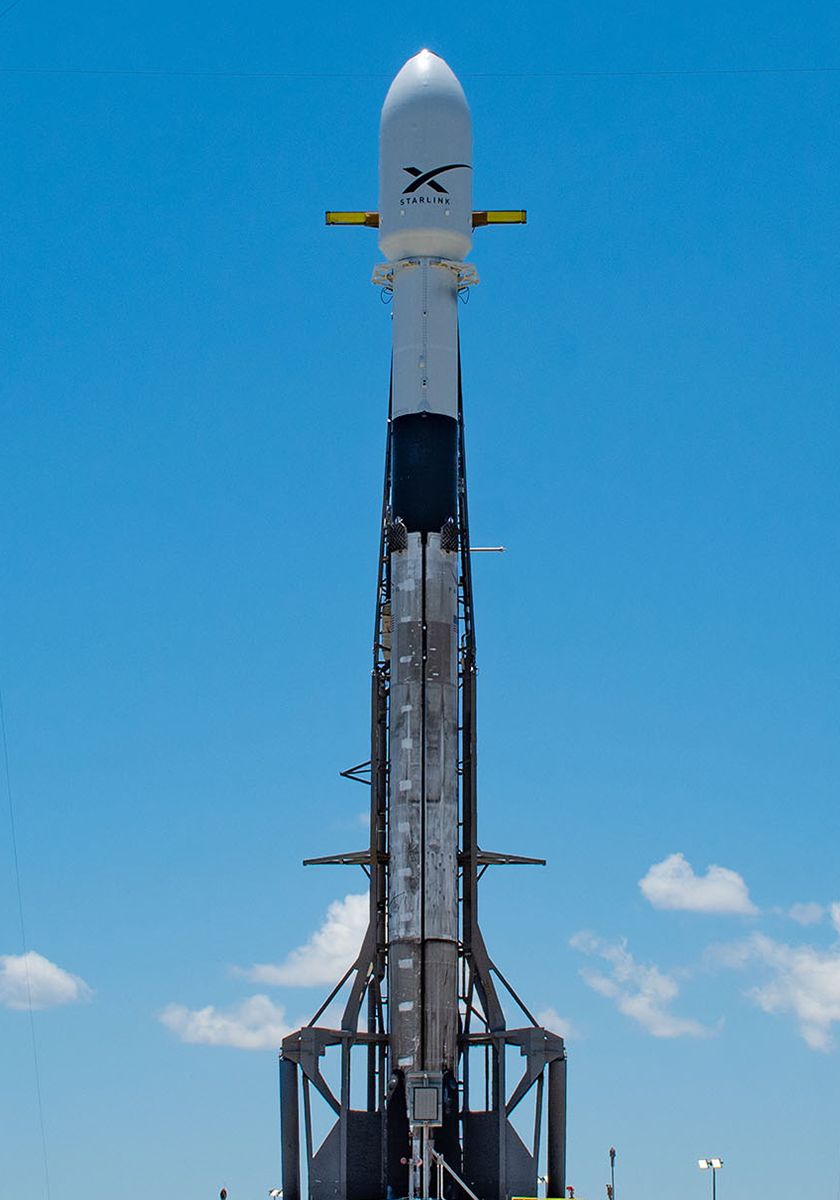
Image credit: SpaceX. Falcon 9/Starlink launch image supplied through SpaceX’s official website. Used here as an attributed image for this article.
SEO Information
SEO title: Investing in 50,000 SpaceX Shares: Space, Satellites & Orbital AI Computers
SEO description: Explore the idea of owning 50,000 SpaceX shares and the future of Starlink, Starship, satellites and AI computers running in orbit.
SEO keywords: SpaceX shares, 50,000 SpaceX shares, SPCX, SpaceX investing, Starlink, Starship, orbital computing, space data centres, AI satellites, Starmind, space technology, satellite computers, future of space