Tag: Space Technology

  • The Caves Beneath Mars: A Fictional Scientific Research Mystery

    The Caves Beneath Mars: A Fictional Scientific Research Mystery

    Fictional research dossier: This is a science-fiction mystery built around real planetary-science concepts. The Asterion mission, Mole-7 rover, researchers, measurements and discoveries described below are invented. They are not reports of a real Mars mission.

    What if a robotic expedition entered a Martian cave and found a signal that appeared to predict the rover’s movements? The Caves Beneath Mars is a cinematic research mystery about lava tubes, scientific uncertainty and a final transmission that cannot be explained by the mission team.

    Rugged volcanic-looking rock landscape used as a visual reference for the fictional Martian cave expedition
    Illustrative geological landscape. Photograph by Suganth on Unsplash; not a photograph of a confirmed Martian cave.

    Abstract: The Asterion mission

    In the fictional year 2042, an international robotic expedition explores a suspected lava tube beneath the western flank of Arsia Mons. The cave is selected because a thick roof could offer protection from some surface hazards and preserve clues to Mars’s geological history.

    On the third day underground, two receivers record a repeating electromagnetic signal. A mapping robot named Mole-7 then detects unusually regular depressions in the rock. When its camera records an image with a timestamp several minutes ahead of the mission clock, the team must distinguish equipment faults from a genuinely unexplained observation.

    Research question and hypotheses

    Primary question: Could the unexplained signal and geometric formations inside a Martian lava tube be accounted for by known geological and physical processes?

    • H1 — Geology: the formations are natural products of volcanic activity or erosion.
    • H2 — Instrument fault: a sensor, clock or software error has corrupted the observations.
    • H3 — Interference: the signal comes from the rover’s electronics or radio environment.
    • H4 — Unknown natural process: repeat measurements reveal an unusual but natural mechanism.
    • H5 — Artificial origin: the geometry and material evidence indicate deliberate construction. This is a hypothesis to test, not an assumed conclusion.

    Why investigate caves on Mars?

    Lava tubes form when the surface of a flowing lava stream cools while molten material continues moving below it. Once the lava drains away, an underground passage can remain. Planetary scientists study possible caves because they may reveal volcanic history and could provide a more sheltered environment for future exploration.

    Mineral deposits and evidence of past water-rock interactions could help researchers assess whether ancient Martian environments were once habitable. Such clues would not, by themselves, prove that life existed.

    Mars-like red rocky landscape used to illustrate the fictional Asterion cave expedition
    Visual reference for the red planet setting. Photograph by Nicolas Lobos on Unsplash. Used illustratively; it is not evidence from the fictional mission.

    Methodology: Mole-7’s underground survey

    The fictional Mole-7 rover carries a lidar mapper, cameras, two independent radio-frequency receivers, temperature and radiation sensors, and a mineral-analysis instrument. The mission protocol requires calibration before and after each survey, repeated scans from different angles, preservation of raw data and independent checks of all timestamps.

    1. Map the cave: build a three-dimensional model of the passage and chamber.
    2. Analyse the signal: compare both receivers’ records with equipment activity and known transmissions.
    3. Measure the environment: record temperature, radiation and mineral composition at multiple locations.
    4. Verify independently: repeat scans and compare original sensor data before drawing conclusions.

    Invented findings: the signal and the chamber

    All results below are fictional story data. During the imagined survey, the cave extends 1.8 kilometres from its entrance. The temperature varies less than expected between several locations, and mineral deposits warrant a closer examination for possible ancient water-rock interactions.

    At 03:17 mission time, both receivers detect a narrow-band signal that repeats every 17 seconds. The fictional readings rise when Mole-7 enters a chamber containing twelve evenly spaced depressions around a central rock column. Their spacing varies by less than 1.5 per cent in the initial map—an intriguing observation, but not proof of artificial construction.
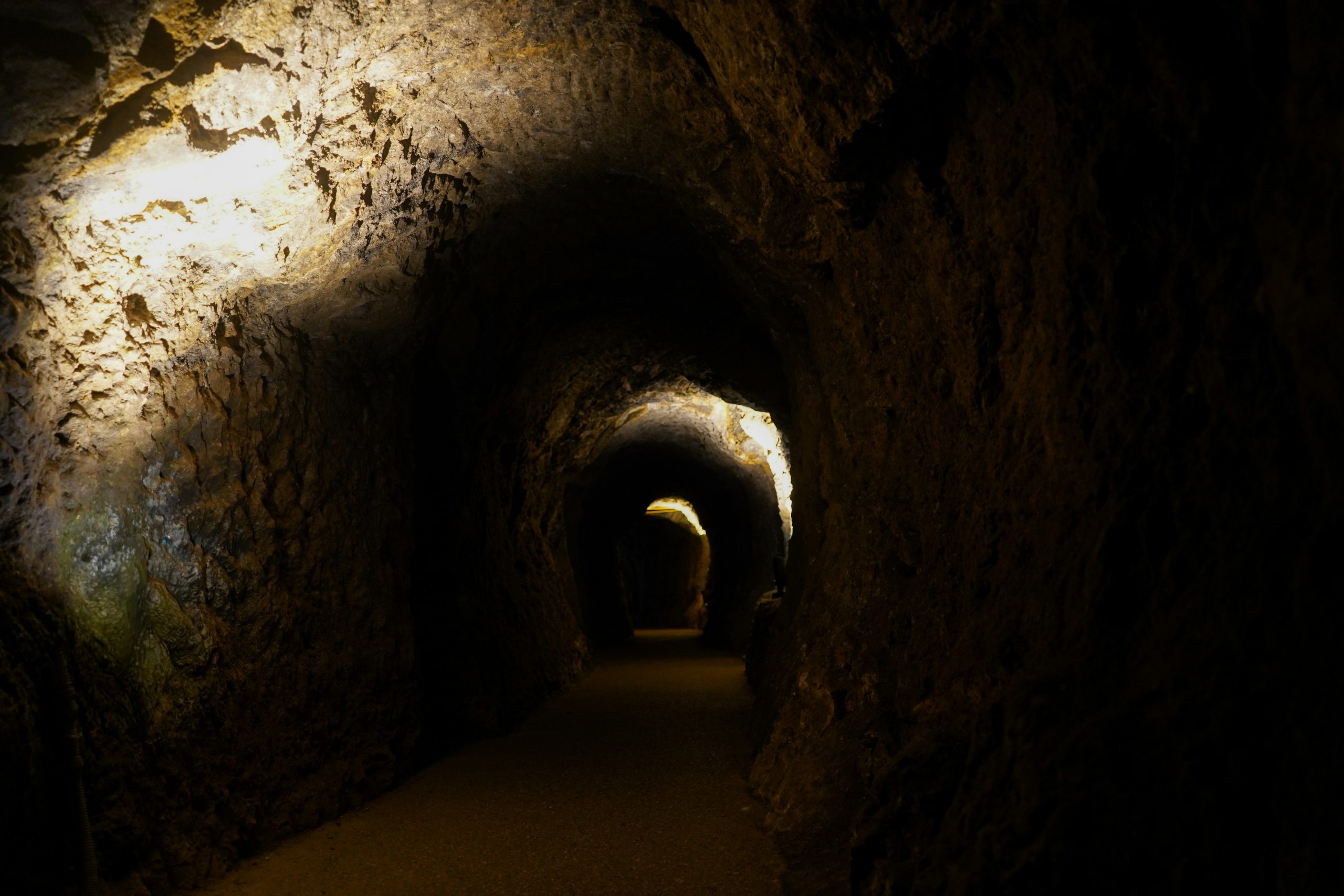
    Dark underground rock tunnel used as a visual reference for the fictional Martian chamber
    Underground tunnel reference image. Photograph by Yosuke Ota on Unsplash. This is a terrestrial reference photograph, not a Martian cave.

    Graph: the fictional signal readings

    The graph below shows invented signal-strength values across six observation windows. Units are arbitrary and the numbers have been created for this story; they are not real mission telemetry.

    Asterion: invented signal-strength readings010203040123456Observation windowSignal strength (arbitrary units)Fictional values — not real Mars data
    Invented values: 12, 13, 12, 31, 30 and 32 arbitrary units. The increase coincides with the fictional rover’s entry into the chamber.

    The timestamp that should not exist

    At 03:42, Mole-7 transmits an image labelled 03:47. It appears to show tracks the rover has not yet made. The team checks clock drift, buffered data, software corruption and image metadata. The checksum is valid, but the available logs do not resolve every discrepancy.

    During the next survey, a lidar map reveals a narrow opening behind the central column that was absent from previous scans. Mole-7 sends a final data packet containing a map of the opening and an unidentified rectangular object. Contact is lost. The signal continues for exactly 17 seconds, then stops.

    Interpretation: what might explain the anomaly?

    Explanation What supports it What remains unresolved
    Sensor or software fault Missing lidar returns and conflicting timestamps Not every observation has been reconciled
    Radio propagation or interference Signal strength changes inside the chamber Does not fully explain the image sequence
    Natural geological structure Volcanic processes can create regular formations The chamber is not fully mapped
    Unknown phenomenon Several records remain unexplained in the story No verified evidence establishes a new physical process

    Interim conclusion: the fictional evidence is inconclusive. The team has not proved that the formations are artificial, that life exists on Mars, or that known physics has been violated. An unexplained observation is a reason for further testing, not proof of an extraordinary claim.

    Proposed follow-up: Asterion II

    A second fictional mission would use two independently designed mapping robots, separate timing systems, a portable radio-frequency analyser, a robotic sampling arm and a tethered communications relay. Researchers would pre-register expected signal characteristics and ask an independent team to analyse the raw data without being told which observations are considered mysterious.

    Limitations

    • The robot loses contact before the chamber can be fully surveyed.
    • Sensor faults, clock errors and radio interference remain plausible.
    • The final image and its timestamp cannot be independently verified.
    • No physical samples are collected from the unidentified object.
    • The fictional study provides no verified evidence of ancient or present-day life.

    Conclusion: a scientific mystery

    The Caves Beneath Mars combines real planetary-science concepts with invented research results. Its central question is not whether the cave contains alien technology, but how a careful team should respond when measurements do not fit its current explanation.

    “We designed this mission to discover what the cave was made of. We may have to return to find out what made it.”

    The story ends before the next expedition launches. The cave remains unexplored, the signal unexplained, and the evidence open to testing.

    Further reading: real science behind the fiction

    Image credits: Nicolas Lobos, Suganth and Yosuke Ota via Unsplash; photographer profile links are provided beneath each image. Images are illustrative references and are not presented as real photographs of Martian caves.

    Prepared for WindsorCastle.info. Fictional research and film concept; all mission data and discoveries are invented.

  • Investing in 50,000 SpaceX Shares: Space, Satellites & Orbital AI Computers

    Investing in 50,000 SpaceX Shares: Space, Satellites & Orbital AI Computers


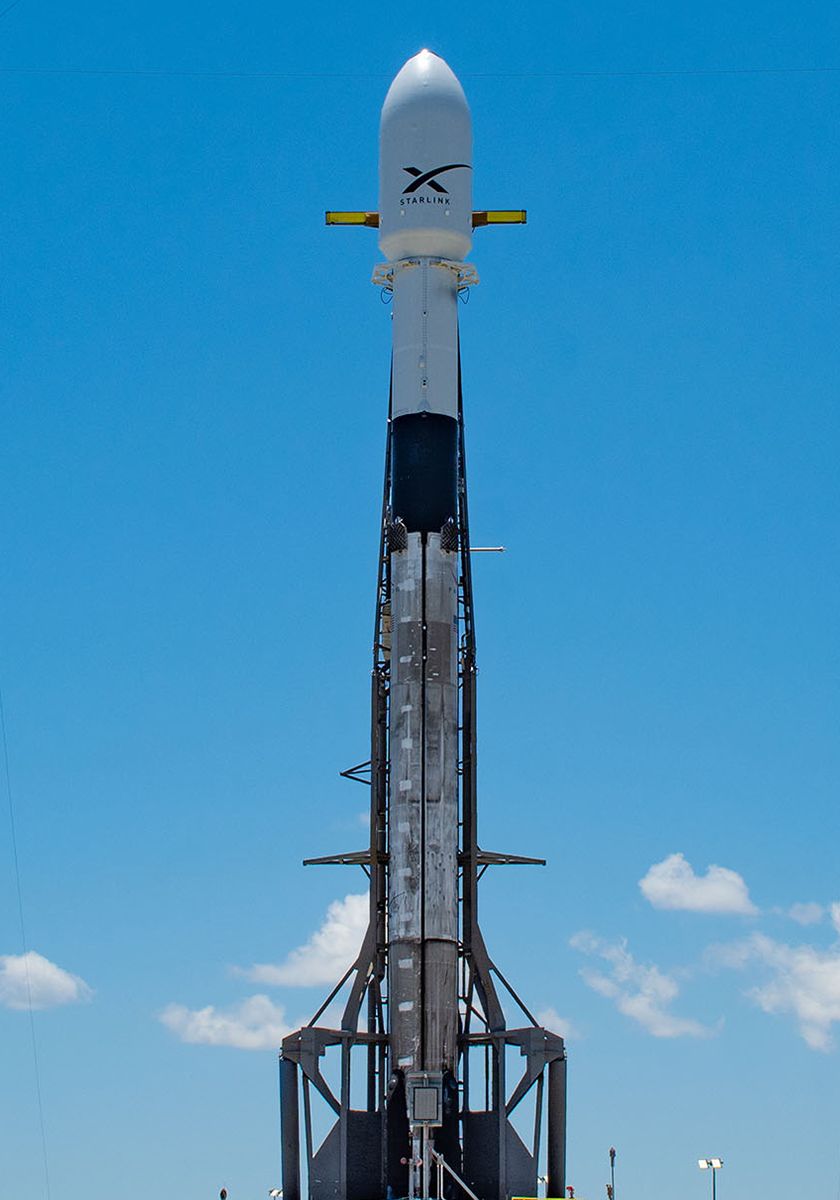
    SpaceX Falcon 9 rocket prepared for a Starlink satellite launch
    SpaceX Falcon 9 prepared for a Starlink mission. Image: SpaceX.

    By Simon Ben Gemmill | 23 September 2026

    What would it mean to buy 50,000 shares in SpaceX and invest in a future where satellites do more than provide communications? One of the most interesting ideas now being developed is orbital computing: putting powerful computers and AI systems on satellites, using solar power and laser links to move data between spacecraft and back to Earth.

    This article is a future-focused look at the idea. The 50,000-share example is illustrative only and is not a recommendation to buy SpaceX shares.

    SpaceX Is Moving Beyond Rockets

    SpaceX is now a public company following its 2026 IPO, and its business reaches well beyond launch vehicles. Its activities include Falcon launches, Starlink connectivity, Dragon spacecraft and the development of Starship. SpaceX is also publicly presenting orbital AI compute as part of its future technology programme. SpaceX official website.

    50,000 SpaceX Shares: A Simple Illustration

    If an investor hypothetically owned 50,000 shares, the value would change as the market price changed:

    • $150 per share: $7.5 million
    • $200 per share: $10 million
    • $300 per share: $15 million

    These are mathematical examples, not forecasts. A real investment would also involve brokerage costs, taxes, currency movements for a UK investor, market volatility and the possibility of losing money.

    Computers Could Move Into Space

    Traditional data centres require land, electricity, networking infrastructure and substantial cooling. An orbital data centre would instead place computing hardware on a satellite or spacecraft in orbit.

    SpaceX’s Starmind programme describes an architecture in which AI compute modules operate on satellites, communicate using high-speed laser links and use solar power. SpaceX says heat can radiate into space and that its proposed AI satellites could reduce some of the cooling overhead associated with terrestrial data centres. These are company claims about a developing technology rather than a proven large-scale commercial deployment. SpaceX Starmind – orbital AI compute.

    Why Satellites Could Become More Like Data Centres

    • Solar power: satellites can generate electricity from sunlight without relying on an Earth-based grid.
    • Cooling: heat can be rejected by radiation, although spacecraft still require sophisticated thermal engineering.
    • Laser networking: optical links can move large quantities of information between satellites.
    • Processing close to the source: some data could potentially be analysed in orbit instead of being sent to Earth first.
    • Global coverage: satellite networks can connect areas that are difficult to reach with terrestrial infrastructure.

    Starlink and the Orbital Computer Network

    Starlink already demonstrates how a large satellite constellation can operate as a connected network. SpaceX says Starlink provides broadband internet from low Earth orbit, while its newer plans add a much more ambitious computing layer.

    SpaceX’s public Starmind material says its satellites can be interconnected by laser and that AI results can be sent back to Earth through Starlink. The company also says it is building a Gigasat Factory in Bastrop to support large-scale production of AI satellites, with production planned to begin as soon as late 2027. These are stated plans and targets, not guarantees of future delivery.

    SpaceX Says Orbital Compute Satellites Could Fly in 2027

    Recent reporting in September 2026 said SpaceX CFO Bret Johnsen told an investor conference that the company was targeting its first orbital compute satellites for 2027. This is significant because it moves the concept from a long-term idea towards a specific development timetable, although launch dates and technology programmes can change. Yahoo Finance – SpaceX orbital compute timeline.

    Starship Could Be the Key

    SpaceX’s Starship system is designed to carry large payloads to orbit and is intended to be fully reusable. SpaceX says Starship is designed for Earth orbit, the Moon, Mars and beyond, with a payload capability of more than 100 tonnes in its fully reusable configuration. SpaceX Starship information.

    That capacity matters for orbital computing because computers, power systems, radiators and protective structures are heavier than ordinary communications payloads. A reusable heavy-lift vehicle could therefore become an important part of the economics of building a large computing network in orbit.

    SpaceX Starship Flight 14

    As of 23 September 2026, SpaceX’s website lists Starship Flight 14 for 28 September 2026. The company lists it among its upcoming launches, while current reporting says the mission is intended to be Starship’s first orbital flight and to deploy Starlink V3 satellites. Launch schedules can change, so readers should check SpaceX’s launch page for the latest information. SpaceX launches and latest information.

    The Engineering Problems

    Putting servers in orbit does not automatically make a data centre cheaper or easier to operate. Engineers have to solve several difficult problems:

    • Heat: computers generate heat and spacecraft must radiate it away efficiently.
    • Radiation: electronics in orbit face a harsher radiation environment than equipment on Earth.
    • Maintenance: replacing failed computers in orbit is much harder than replacing a server in a terrestrial data centre.
    • Launch costs: every kilogram still has to be transported into space.
    • Space debris: large constellations must be operated responsibly to reduce collision risks.
    • Cybersecurity: orbital computers, satellite links and ground systems all need protection.
    • Network latency: the system has to move data efficiently between Earth and orbit.

    Could Space Become a Giant AI Data Centre?

    The long-term vision is much larger than a handful of satellites. Imagine thousands of spacecraft carrying processors, storage, solar arrays, thermal systems and laser communications equipment. They could form a distributed computing platform in orbit.

    That could create a hybrid system: some computing would remain on Earth, while selected AI workloads would run in space. Earth-based users could request processing, satellites could perform calculations, and the results could be returned through optical links and Starlink.

    Other companies are exploring similar ideas. The wider space-data-centre industry is examining whether orbital computing can reduce some terrestrial constraints, while also acknowledging major engineering and economic challenges.

    Trending SpaceX Stories to Follow

    • SpaceX – official launches, Starship, Starlink and company information.
    • SpaceX Starmind – official information on orbital AI compute.
    • SpaceX Starship – official vehicle information and development.
    • SpaceX Launches – official launch information.
    • Yahoo Finance – September 2026 reporting on SpaceX’s orbital-compute timetable.
    • Reuters – September 2026 reporting on SpaceX’s expanded NASA crew-flight agreement.

    What 50,000 Shares Really Represent

    Owning 50,000 shares would represent a very large single-company exposure for an individual investor. The potential value could rise or fall substantially with the share price, and the company is involved in capital-intensive, technically demanding businesses where future projects may take years to develop.

    The orbital-computing idea is particularly uncertain. SpaceX has published ambitious plans, but the commercial economics, reliability, deployment scale and long-term performance of space-based AI infrastructure still have to be demonstrated.

    The Future of Computing May Be Both on Earth and Above It

    For decades, computers have become smaller, faster and more connected. The next step may not simply be another generation of terrestrial data centres. It could be a network in which satellites themselves become computing platforms.

    SpaceX’s combination of Starlink, Starship, reusable launch technology and its stated Starmind programme puts the company directly into this emerging discussion. Whether orbital AI becomes a major computing industry remains to be demonstrated, but the technology is now being discussed as a concrete engineering programme rather than science fiction.

    Investment Information

    This article is for general information and education. The 50,000-share examples are hypothetical and are not a recommendation to buy, sell or hold SpaceX shares or any other investment. Share prices can rise or fall, and investors can lose some or all of their money. UK readers should consider applicable tax, currency and investment rules and obtain independent regulated financial advice where appropriate.

    Image credit: SpaceX. Falcon 9/Starlink launch image supplied through SpaceX’s official website. Used here as an attributed image for this article.

    SEO Information

    SEO title: Investing in 50,000 SpaceX Shares: Space, Satellites & Orbital AI Computers

    SEO description: Explore the idea of owning 50,000 SpaceX shares and the future of Starlink, Starship, satellites and AI computers running in orbit.

    SEO keywords: SpaceX shares, 50,000 SpaceX shares, SPCX, SpaceX investing, Starlink, Starship, orbital computing, space data centres, AI satellites, Starmind, space technology, satellite computers, future of space

X (Twitter)20
URL has been copied successfully!