Tag: football

  • Harry Kane Wins the 2026 Ballon d’Or: England’s Goal Machine Makes History

    Harry Kane Wins the 2026 Ballon d’Or: England’s Goal Machine Makes History

    WINDSORCASTLE.INFO • FOOTBALL SPECIAL

    HARRY KANE: BALLON D’OR GLORY

    England’s captain reaches the summit of world football

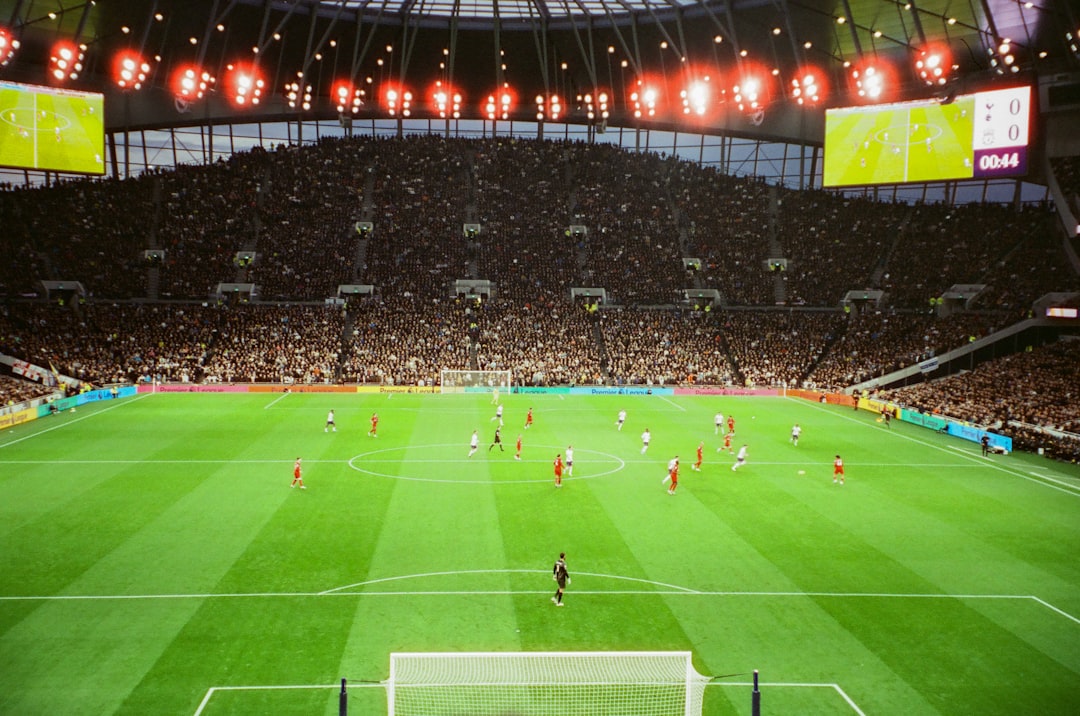
    Football training scene illustrating Harry Kane’s remarkable goal-scoring career and Ballon d’Or achievement
    Illustrative football image, not a photograph of Harry Kane. Image by Frames For Your Heart via Unsplash.

    By WindsorCastle.info | 27 October 2026

    A golden moment for English football
    Harry Kane has won the 2026 men’s Ballon d’Or, becoming the first Englishman to lift football’s most famous individual prize since Michael Owen in 2001. It is a remarkable reward for a career built on relentless goalscoring, intelligent movement, hard work and leadership.

    For England supporters, this is more than another trophy. Kane’s rise from a young academy player who went out on loan to the best player in the world is a story of patience and persistence. The striker who had to prove himself at Leyton Orient, Millwall, Norwich City and Leicester City has now been recognised at the very top of the global game.

    Is he England’s greatest footballer? His record makes him one of the strongest candidates: he is England’s all-time leading men’s goalscorer, has captained his country through major tournaments and has continued to score prolifically after moving to Germany. Whether he is the greatest remains a debate for supporters, but his place among the country’s elite is beyond serious doubt.

    The 2026 Ballon d’Or podium

    🥇

    1st — Harry Kane
    England • Bayern Munich

    🥈

    2nd — Kylian Mbappé
    France • Real Madrid

    🥉

    3rd — Lamine Yamal
    Spain • Barcelona

    The official rankings placed Kylian Mbappé second and Barcelona’s teenage star Lamine Yamal third. Kane also collected the men’s Striker of the Year award. The ceremony, held in London on 26 October, marked 70 years since the Ballon d’Or was first awarded.

    England Football reported that Kane scored 73 goals in 65 appearances for club and country during the 2025/26 campaign — 61 for Bayern Munich and 12 for England. That extraordinary return helped Bayern retain the Bundesliga title and win domestic silverware, while Kane finished as the Bundesliga’s leading scorer for a third consecutive season.

    England head coach Thomas Tuchel said:
    “I ran out of superlatives to describe your performances a long time ago…”
    Source: England Football, report on Kane’s 2026 Ballon d’Or win.

    The clubs that shaped Harry Kane

    Kane’s route to the top was not a straight line. Loan spells gave him senior experience, Tottenham became the club where he emerged as a world-class striker, and Bayern Munich offered a new challenge in Germany.

    Club Goals and context
    Tottenham Hotspur 280 goals in 435 appearances in all competitions — the club’s record goalscorer.
    Bayern Munich Joined in August 2023. Bayern reported 128 goals in 132 appearances by February 2026; England Football reported 61 Bayern goals during 2025/26.
    Millwall Nine goals during his 2011/12 loan spell.
    Leyton Orient Five goals during his first senior loan in 2010/11.
    Leicester City Two goals during a loan spell in 2013.
    Norwich City A short loan spell in 2012/13; no senior competitive goals recorded for Norwich.

    Statistics are attributed to the clubs and league reports below. Bayern’s 128-goal figure is a dated snapshot from February 2026, not a live total. Tottenham’s 280 is its all-competition figure.

    A record-breaker for England

    England Football’s October 2026 statistics credit Kane with 91 goals in 125 appearances, comfortably ahead of Wayne Rooney’s 53 goals. Kane is also level with goalkeeper Peter Shilton on England men’s appearance record, at 125 caps.

    His honours include the 2018 World Cup Golden Boot and two European Championship final appearances. He is not simply a penalty-box finisher: his passing, link-up play, ability to drop deep and create chances have made him a more complete forward.

    Could Harry Kane be England’s greatest ever?

    There is no single objective answer. Sir Bobby Charlton helped England win the 1966 World Cup; Bobby Moore captained that side; Gary Lineker was a phenomenal goalscorer; Wayne Rooney combined scoring with creativity. Every generation has its heroes.

    But Kane’s case is formidable. He owns England’s men’s goalscoring record, has won the Ballon d’Or, collected major individual scoring awards in England and Germany, and sustained elite-level output over many seasons. His 2026 Ballon d’Or puts him among the English footballers whose achievements will be discussed for generations.

    The WindsorCastle.info verdict

    Harry Kane’s Ballon d’Or is a triumph of talent, discipline and persistence. Whether every fan ranks him first in England’s all-time list is a matter of opinion — but his record makes the argument unavoidable.

    Harry Kane quiz: test your football knowledge

    Tap each question to see the multiple-choice options, then tap “Reveal answer” to check yourself.

    1. Which club did Kane join in August 2023?

    A. Real Madrid
    B. Bayern Munich
    C. Barcelona
    D. Borussia Dortmund

    Reveal answer

    Correct: B — Bayern Munich.

    2. Who finished second in the 2026 men’s Ballon d’Or?

    A. Lamine Yamal
    B. Erling Haaland
    C. Kylian Mbappé
    D. Jude Bellingham

    Reveal answer

    Correct: C — Kylian Mbappé. Lamine Yamal finished third.

    3. How many goals did Kane score for Tottenham in all competitions?

    A. 180
    B. 213
    C. 250
    D. 280

    Reveal answer

    Correct: D — 280 goals.

    4. How many goals did England Football report Kane scored for club and country in 2025/26?

    A. 42
    B. 55
    C. 73
    D. 91

    Reveal answer

    Correct: C — 73 goals. 61 for Bayern and 12 for England.

    5. Which award did Kane win at the 2018 World Cup?

    A. Golden Boot
    B. Golden Glove
    C. Best Young Player
    D. Fair Play Award

    Reveal answer

    Correct: A — Golden Boot.

    6. Which club gave Kane an early senior loan in 2010/11?

    A. Millwall
    B. Leyton Orient
    C. Norwich City
    D. Leicester City

    Reveal answer

    Correct: B — Leyton Orient.

    7. Who is England’s second-highest men’s goalscorer behind Kane in the October 2026 list?

    A. Gary Lineker
    B. Alan Shearer
    C. Wayne Rooney
    D. Michael Owen

    Reveal answer

    Correct: C — Wayne Rooney, with 53 England goals.

    8. Who finished third in the 2026 men’s Ballon d’Or?

    A. Rodri
    B. Lionel Messi
    C. Erling Haaland
    D. Lamine Yamal

    Reveal answer

    Correct: D — Lamine Yamal.

    Sources and further reading

    Editorial note: Statistics are time-sensitive and credited to the named organisations. Ballon d’Or podium and 2025/26 figures reflect reports published 26 October 2026. The image is illustrative and does not depict Kane.

    SEO description: Harry Kane wins the 2026 Ballon d’Or ahead of Kylian Mbappé and Lamine Yamal. Discover his clubs, goal records, England achievements and quiz.

    WindsorCastle.info
    Royal heritage, sport and stories worth sharing.
  • Premier League Round-up: Results, Tonight’s Spurs v Coventry Preview, Fixtures & Christmas Table Forecast

    Premier League Round-up: Results, Tonight’s Spurs v Coventry Preview, Fixtures & Christmas Table Forecast

    WindsorCastle.info • The Football Briefing

    Premier League Round-up: City Set the Pace, Brighton Hit Five and Spurs Face Coventry

    Monday 19 October 2026 | Matchweek 7 review • Tonight’s preview • Next fixtures • Christmas table forecast

    By Simon Ben Gemmill with ChatGPT assistance | Updated: Monday 19 October 2026

    The Premier League’s seventh matchweek has delivered a little of everything: Manchester City’s perfect start survived a five-goal thriller, Brighton produced the weekend’s statement result, Arsenal found a late winner, and Manchester United were held at Elland Road. Tonight, Tottenham Hotspur host Coventry City in the final fixture of the round, with pressure building on Spurs to turn a difficult start into points.

    Editorial note: the league table below is a snapshot ahead of Monday night’s match. The Christmas forecast is our reasoned prediction, not an official table or a guarantee. Kick-off times are UK local time and fixtures can change; check the official links before travelling.

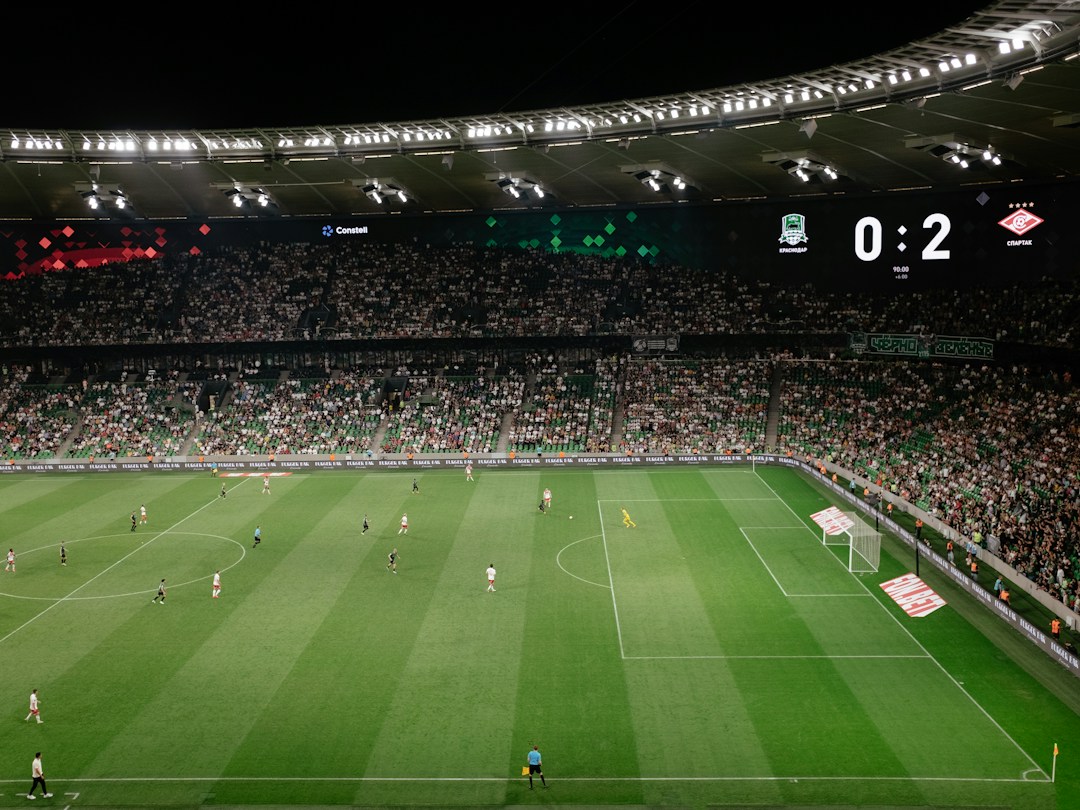
    Premier League football stadium and pitch illuminated by floodlights ahead of an evening match, Unsplash photograph by Dmitry Ant
    Under the lights: the Premier League’s Monday-night drama. Photograph: Dmitry Ant / Unsplash photographer profile. Image found via Unsplash.
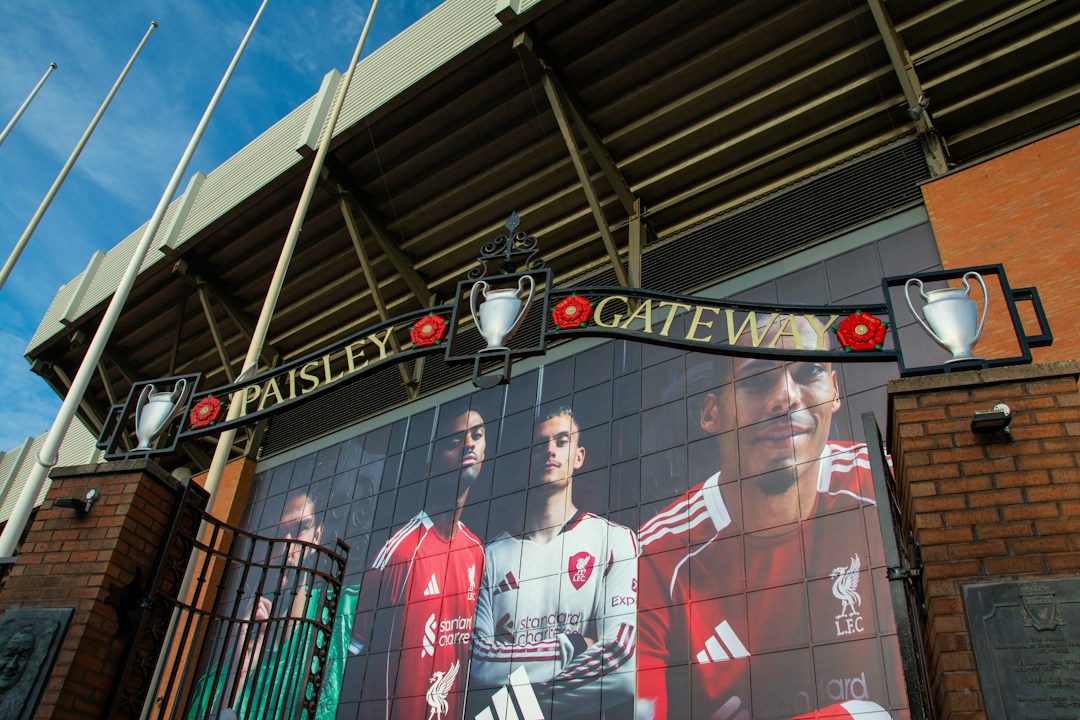
    Anfield stadium entrance and Paisley Gateway, football ground exterior; photograph by Alexander David via Unsplash
    Football heritage: Anfield’s Paisley Gateway. Photograph: Alexander David / Unsplash photographer profile.

    The weekend in brief: every result

    Saturday 17 October

    • Everton 0–2 Chelsea: Pedro Neto’s brace gave Chelsea a valuable away win and a first league clean sheet in 23 matches, although the match was not without its injury concerns.
    • Brentford 1–2 Liverpool: Liverpool came from behind to take the points. Brentford’s two red cards changed the contest, while Florian Wirtz’s creativity became increasingly influential.
    • Fulham 1–0 Hull City: Fulham finally collected their first league win, a narrow but important result in the lower-table battle.
    • Manchester City 3–2 Ipswich Town: Erling Haaland scored twice as City preserved their 100 per cent league record. Ipswich made the champions work for it, and City’s late injury concerns will be worth watching.
    • Newcastle United 0–1 Aston Villa: Johan Manzambi’s early goal settled a tight game and gave Villa a useful away victory. Newcastle’s defensive vulnerabilities remain a talking point.

    Sunday 18 October

    • Bournemouth 2–0 Sunderland: Bournemouth secured their first league win of the season and moved away from the bottom places; Sunderland’s afternoon was made harder by a sending-off.
    • Brighton 5–0 Crystal Palace: Brighton blew the derby open early. Diego Gómez’s extraordinary long-range strike was the headline moment in a ruthless display that lifted Brighton to third.
    • Leeds United 1–1 Manchester United: Dominic Calvert-Lewin’s threat at set-pieces helped Leeds earn a point. United showed some midfield promise but left without the win they needed.
    • Nottingham Forest 0–1 Arsenal: Noni Madueke struck late after Arsenal had struggled to create clear chances. It was not a fluent display, but title challengers must also learn to win awkward away games.

    For match-by-match score confirmation, use the Premier League’s official fixtures and results and Sky Sports’ Premier League scoreboard.

    Tonight’s match: Tottenham Hotspur v Coventry City

    Monday 19 October • 8.00pm BST • Tottenham Hotspur Stadium

    Spurs have the home advantage, but the pressure is on. They began the round without a league win and need to show greater threat in the final third. Coventry arrive with a chance to make the occasion uncomfortable: compact defending, quick transitions and making the most of set-pieces could test a Tottenham side short on confidence.

    What could decide it? Spurs must move the ball quickly enough to pull Coventry’s defensive shape apart and avoid becoming predictable. Coventry’s best route is likely to be patience without the ball and sharp counter-attacks into the spaces left by advancing full-backs.

    Windsor verdict
    Tottenham have the stronger squad on paper, but that does not automatically make this straightforward. Prediction: Tottenham 2–1 Coventry. Confidence: moderate; one early goal either way could change the game.

    Fixture listing and kick-off confirmation: The Guardian’s Premier League fixture page and Premier League official match centre.

    Manager and player voices

    After Manchester United’s draw at Leeds, manager Michael Carrick praised his new midfield pairing, Carlos Baleba and Andrey Santos. The Guardian’s matchweek analysis reports Carrick saying:

    “They’re both young players adapting to life at this football club and I thought both of them were terrific today. That’s a massive positive for us.”

    Source: The Guardian — Premier League: 10 talking points from the weekend’s action (19 October 2026).

    Arsenal’s late win was another test of patience. Reuters’ report notes that Mikel Arteta’s side struggled to find a shot on target before the interval, then found a decisive contribution from substitute Noni Madueke. Read the match report and post-match context here: Reuters — Slow-starting Arsenal make patience pay against Forest.

    Brighton’s 5–0 win was a different kind of statement. The Guardian’s weekend analysis highlights how quickly Brighton overwhelmed Palace, while Reuters recaps the result and Gómez’s remarkable strike: Reuters matchweek round-up. Quotes above are short extracts attributed to the original reporting; follow the links for full context.

    Premier League table snapshot

    Before Tottenham v Coventry on 19 October. Points and positions can change after tonight’s match; this snapshot is compiled from published standings and results available at the time of writing.

    Pos Club P Pts
    1 Manchester City 7 21
    2 Arsenal 7 18
    3 Brighton & Hove Albion 7 16
    4 Chelsea 7 13
    5 Liverpool 7 12
    6 Aston Villa 7 11
    7 Leeds United 7 10
    8 Brentford 7 10
    9 Everton 7 10
    10 Ipswich Town 7 9
    11 Hull City 7 9
    12 Newcastle United 7 8
    13 Manchester United 7 7
    14 Crystal Palace 7 7
    15 Bournemouth 7 6
    16 Coventry City 6 6
    17 Fulham 7 5
    18 Nottingham Forest 7 5
    19 Sunderland 7 4
    20 Tottenham Hotspur 6 3

    Reference standings: NBC Sports’ latest 2026/27 table and the official Premier League table. Clubs on equal points are ordered here as a quick editorial snapshot; consult the official table for the live ordering and full goal statistics.

    Next fixtures to circle in the diary

    • Friday 23 October, 8.00pm: Ipswich Town v Nottingham Forest.
    • Saturday 24 October, 12.30pm: Aston Villa v Manchester City.
    • Saturday 24 October, 3.00pm: Arsenal v Everton.
    • Saturday 24 October, 3.00pm: Coventry City v Fulham.
    • Saturday 24 October, 5.30pm: Chelsea v Tottenham Hotspur.
    • Sunday 25 October, 2.00pm: Crystal Palace v Newcastle United.
    • Sunday 25 October, 2.00pm: Hull City v Brentford.
    • Sunday 25 October, 2.00pm: Liverpool v Brighton.
    • Sunday 25 October, 2.00pm: Manchester United v Bournemouth.
    • Sunday 25 October, 4.30pm: Sunderland v Leeds United.

    Kick-off times and fixture changes: full fixture list and official October/November fixture amendments.

    Our Christmas table forecast: a prediction, not a promise

    There are still many matches before Christmas, and injuries, European commitments, form and the fixture list can quickly change the picture. Based on the early evidence—not a statistical certainty—our provisional top ten for the Christmas period is:

    1. Manchester City — their perfect start and scoring output make them the early benchmark.
    2. Arsenal — close enough to apply pressure, with late wins showing resilience even when the attack misfires.
    3. Brighton — the attacking numbers are striking, but sustaining them over a longer run is the test.
    4. Liverpool — creative quality and comeback ability should keep them in the European places.
    5. Chelsea — recent defensive improvement could help them build consistency.
    6. Aston Villa — efficient away performances offer a platform to climb.
    7. Brentford — organised football and a strong start could keep them in the top half.
    8. Leeds United — competitive performances suggest they can stay clear of immediate danger.
    9. Everton — a solid early base, but goals will determine how high they can rise.
    10. Newcastle United — quality is there, although defensive consistency needs attention.

    Potential surprise: Brighton could challenge the established top sides if their attacking form remains sustainable. Biggest question: can Manchester City maintain their perfect pace while managing injuries and a busy calendar? At the bottom, Spurs’ response against Coventry and Sunderland’s ability to turn performances into points could shape the early survival race.

    We will revisit the forecast as more matches are played. For the official table, match reports and confirmed dates, use the Premier League links below.

    Sources and further reading

    WindsorCastle.info Football Desk

    Royal blue, gold and the beautiful game. Scores and fixtures checked for this edition; forecasts are editorial opinion and will change as the season develops.

  • Defensive Players Focus: Premier League Defending & Fantasy Football Points

    Defensive Players Focus: Premier League Defending & Fantasy Football Points

    Football pitch viewed from above, illustrating defensive shape, positioning and team organisation
    Defensive organisation begins with shape, communication and smart positioning. Photograph: Bence Balla-Schottner / Unsplash.

    Football analysis for WindsorCastle.info | Updated 16 October 2026

    Goals win headlines, but organised defending wins points. The best defensive players do far more than slide into tackles: they read danger early, protect space, communicate with teammates and help their side regain possession. In this edition of Defensive Players Focus, we look at the statistics that matter, the different jobs defenders perform and how to judge a performance fairly.

    The key question: Is a defender simply making lots of emergency interventions, or are they preventing dangerous situations from developing in the first place?

    1. The defensive statistics worth watching

    No single statistic can describe a complete defensive performance. Tackles and clearances show activity, while interceptions, blocks, aerial duels and errors provide different clues about how a player protects their goal.

    • Tackles won: challenges that successfully regain possession or force play out under the relevant data provider’s definition.
    • Interceptions: reading an opponent’s pass and moving into its path.
    • Clearances: removing the ball from a dangerous area, even if the team cannot keep possession.
    • Blocks: stopping a shot or, in some datasets, cutting out a pass. Check the provider’s definition.
    • Aerial duels: contests for balls played through the air. Winning the duel is important, but the next action matters too.
    • Errors leading to shots or goals: costly mistakes, best assessed alongside the player’s overall workload and role.
    • Clean sheets and goals conceded: team outcomes, not individual ratings. Defending is a collective responsibility.

    The Premier League’s official statistics guide lists defensive categories including tackles, tackle success, blocks, interceptions, clearances, aerial battles won and errors. Definitions can vary between providers, so comparisons should use consistent data.

    2. Centre-backs: command the danger zone

    Centre-backs must judge when to step forward and challenge, when to hold the line and when to cover a teammate. Strong positional awareness can prevent a through-ball reaching a striker; good communication can keep the defensive line organised against runners.

    When assessing a centre-back, look beyond the clearance count. Consider whether they track runners, win important aerial contests, defend one-on-one situations, protect the space in front of goal and pass accurately when building from the back.

    3. Full-backs and wing-backs: defend wide areas

    Full-backs face quick wingers, overlapping runners and crosses into the penalty area. They need timing and balance: dive into a challenge too early and an attacker may go past; retreat too far and the opponent can deliver a dangerous cross.

    Modern full-backs also contribute to attacks. A useful assessment therefore considers recovery runs, one-on-one defending, interceptions, support for the centre-backs and the space left behind when they advance.

    4. Defensive midfielders: stop attacks before they reach the back four

    A defensive midfielder can protect the defence by screening passing lanes, tracking runners and collecting second balls. Interceptions and recoveries can be particularly revealing, but a player who positions themselves well may prevent an opponent attempting a pass at all.

    Watch the player’s starting position when the opposition has possession. Are they blocking the route into the striker? Can they press without leaving a gap behind? Do they win the ball and help their team keep it?

    5. Goalkeepers are part of the defensive unit

    Saves matter, but goalkeeper analysis should also include positioning, handling, command of crosses, communication and distribution. A goalkeeper who claims a cross cleanly may prevent a shot from happening; a keeper who passes well can help the team escape pressure.

    Save totals need context. A goalkeeper facing many difficult shots may record more saves than one whose defence limits opponents to low-quality attempts. Where available, compare shot-stopping figures with the quality and location of shots faced.

    6. How to compare players fairly

    Raw totals can favour players who have played more minutes or whose teams spend longer defending. For a fairer comparison:

    1. Check appearances and minutes played.
    2. Compare rates per 90 minutes when the data provider offers them.
    3. Separate centre-backs, full-backs and defensive midfielders where possible.
    4. Consider the team’s possession and tactical approach: a side that defends deep may record more clearances.
    5. Look at several matches rather than judging a player from one game.
    6. Combine statistics with match footage and role-specific context.

    Remember: More tackles do not automatically mean better defending. A player may make many tackles because opponents repeatedly attack their area; another may prevent danger through anticipation and positioning.

    7. A simple defensive performance scorecard

    Use this checklist when watching a match. It is a viewing aid, not an official rating system.

    Area What to look for Question to ask
    Positioning Spacing, covering and tracking runners Did the player close dangerous space?
    Duels Ground challenges and aerial contests Were important duels won cleanly?
    Awareness Interceptions and scanning Did they read danger early?
    Protection Blocks, clearances and recovery runs Were high-quality chances prevented?
    Distribution Passing choices after winning the ball Could the team keep possession or start a counter-attack?
    Discipline Fouls, cards and risky challenges Did the player defend effectively without unnecessary fouls?

    8. The players and numbers to follow this season

    For current Premier League rankings, consult the official statistics pages before naming leaders or publishing totals. Rankings change after every round, and minimum minutes played can affect who qualifies for a leaderboard. The linked sources below provide ways to check defensive data without relying on outdated tables.

    Rather than declaring one player the league’s best defender from a single metric, compare a shortlist across tackles, interceptions, blocks, clearances, aerial duels and team performance. Explain the date and provider for every statistical snapshot.

    Conclusion: defending is an art as well as a statistic

    The finest defenders combine concentration, courage, timing and decision-making. A spectacular last-ditch tackle may save a match, but the quieter action that prevents the pass or closes the space can be just as valuable. The strongest analysis brings together statistics, tactical responsibility and what actually happened on the pitch.

    WindsorCastle.info • Fantasy Football Spotlight

    Who is scoring the most FPL points — and why?

    A dated snapshot after Gameweek 6 of the 2026/27 season, checked on 16 October 2026. Points change after every match, so check the official FPL site for the latest totals.

    Season leaders after six Gameweeks: Brighton’s Maxim De Cuyper and Pascal Groß were joint top on 53 points. Erling Haaland and João Pedro led forwards on 45, while Manchester City’s Rayan Cherki had 44. These are season totals, not points from one match.

    Leading Fantasy performers

    Player FPL points Why they are scoring well
    Maxim De Cuyper
    Brighton • Defender
    53 His advanced role gives him attacking chances despite his Fantasy defender classification. Three double-figure hauls in six Gameweeks point to goals, assists and potential clean-sheet returns combined.
    Pascal Groß
    Brighton • Midfielder
    53 Three goals and four assists, plus responsibility for corners, free-kicks and penalties. Dead-ball duties give him several ways to create points without needing to score every week.
    Erling Haaland
    Manchester City • Forward
    45 Six league goals and repeated high-quality chances are a strong goal-scoring signal. His points rely mainly on finishing and attacking returns rather than defensive actions.
    João Pedro
    Chelsea • Forward
    45 Five league goals and three assists in the snapshot. Goals and creative link-up play both contribute, although minutes and fitness should be checked before selecting him.
    Rayan Cherki
    Manchester City • Midfielder
    44 Four goals and two assists. He offers both finishing and chance creation; possible rotation and playing time remain important considerations.

    Snapshot source: Premier League Fantasy Scout coverage published 15 October 2026. Totals are historical, not a prediction of future points.

    What actually earns the points?

    Goals and assists

    Forwards earn most of their returns through goals, assists and bonus points. Compare goals with expected goals (xG), shots in the box and big chances to see whether a player repeatedly gets into scoring positions.

    Defensive returns

    Defenders can gain points from clean sheets, goals, assists and qualifying defensive contributions under the current FPL rules. De Cuyper is notable because his attacking role adds upside to his defender classification.

    Set pieces

    Corner and free-kick takers can create assists or score directly; penalty takers have a valuable extra route to goals. Groß’s set-piece role is an important part of his appeal. Duties can change, so verify current takers.

    Speed, finishing and defensive ability

    Ability What to compare What it tells us
    Speed and movement Sprints, runs behind defenders, touches in the box and minutes Pace can create separation, but only becomes Fantasy value when it leads to chances, returns or useful defensive recovery.
    Finishing Goals, shots in the box, big chances, xG and conversion Haaland’s goals and volume of chances indicate a strong scoring threat. A short scoring streak alone is less informative than repeated good chances.
    Creativity Assists, chances created, expected assists (xA), crosses and dead balls Groß and Cherki can return through the final pass as well as goals; chances still depend on teammates finishing.
    Defensive reliability Clean sheets, blocks, interceptions, clearances, aerial duels and team xGA Judge role and team context, not just tackle totals. A defender making many clearances may be busy because their team is under pressure.
    Penalties and corners Confirmed takers, set-piece delivery and direct free-kicks Dead-ball responsibility can lift a player’s potential but is not guaranteed to produce a goal or assist.

    Were they playing easy teams?

    Fixture difficulty can help explain a haul, but it should not be the only explanation. Manchester City’s home fixture against promoted Ipswich was considered favourable by the Fantasy Scout, which supported interest in Haaland and Cherki. Brighton’s leading pair also had multiple strong returns, so their totals should not be attributed to one easy opponent alone.

    For a fair test, compare opponents’ goals conceded, shots allowed in the box, clean sheets and expected goals against (xGA), while also checking home or away status, injuries, rotation and minutes played. A promoted team is not automatically easy to defend against or score against; use current performance rather than reputation.

    Pascal Groß — interview excerpt:

    “… play active, that we defend active.”

    Why it matters: Defensive work is collective. Pressing and controlling space can stop attacks before a defender needs a last-ditch tackle. See the linked Brighton interview for context.

    Erling Haaland — post-match comment:

    “It was a lovely moment that will stay with us a long time.”

    Fantasy lesson: A memorable result is not itself a forecast. Look at minutes, shot quality and repeatable chances before deciding whether to transfer a player in.

    Gameweek checklist for Fantasy managers

    • Check official FPL points after each Gameweek; this table is a dated snapshot.
    • Compare goals with xG and assists with xA, plus shots in the box and big chances.
    • For defenders, check clean-sheet prospects, defensive role and team xGA.
    • Confirm who takes penalties, corners and free-kicks.
    • Check minutes, injuries, rotation and the next three to five fixtures.
    • Do not assume a favourable fixture guarantees points.

    Editorial note: Statistics change during the season. Player quotations are short excerpts and should be read in the context of their original interviews. This is football analysis, not betting advice.

    Sources for Fantasy points, fixtures and quotes

    Sources and further reading

    Editorial note: Statistics and rankings are time-sensitive. Verify current figures and the relevant season before publication. This article is football analysis, not betting advice.

    In soccer (football), executing a legal tackle—particularly inside the penalty box—requires precise timing, body positioning, and cleanly winning the ball without making excessive or dangerous contact with the opponent.

    Key Elements of a Legal Tackle and Movement:

    1. Clean Contact with the Ball: The defender must make contact with the ball first. Making primary contact with the opponent’s legs or body before touching the ball is considered a foul, which inside the penalty box results in a penalty kick.
    2. Attacker Movement: The attacking player typically tries to shield the ball using their body or burst past the defender with a sudden change of pace or direction. Their movement dictates whether the defender has a clean window to challenge.
    3. Defender Footwork & Timing: A defender must judge the attacker’s momentum and timing. Instead of lunging blindly, effective defenders stay on their feet as long as possible, matching the attacker stride-for-stride, and only commit to a sliding or standing tackle when the ball is exposed and within reach.

    2026 Technology (3) AI (5) Artificial Intelligence (3) Bayern Munich (2) Blog (102) British Royal Family (2) Castle (111) Champions League (2) Changing of the Guard (2) dea (83) drink (95) England (6) Eton College (2) Eton Walkway (2) food (93) football (8) Future (2) Future Technology (3) Match Preview (2) medication (93) Prediction (3) Premier League (3) Premier League 26/27 (7) river thames (2) royal landmarks UK (2) scenic walks England (2) soccer (5) Technology (2) UK walking routes (2) visiting windsor castle (3) Windsor (106) Windsor 2026 (2) Windsor Castle (2) Windsor castle blog (111) Windsor Castle walk (3) Windsor Drinks (103) Windsor Events (3) Windsor Great Park (4) Windsor hungry (98) Windsor Long Walk (3) Windsor tourism (3) Windsor travel blog (3) Women’s Football (2) Women’s Super League (2) World Cup (3)

  • Premier League Predictions: Expected Goals, Defensive Stars and Potential Upsets — Matchweek 7

    Premier League Predictions: Expected Goals, Defensive Stars and Potential Upsets — Matchweek 7

    Football pitch under stadium floodlights, illustrating Premier League expected-goals analysis and match predictions
    Football analytics: chance quality, defensive organisation and the fine margins behind a result. Image: Unsplash image source.

    Preview prepared 16 October 2026. Fixtures and team news can change; check official club updates before kick-off.

    Football is full of surprises. A team can have more possession, take more shots and still lose. Expected goals (xG) helps explain why: it estimates the quality of the chances created, rather than simply counting attempts. For Matchweek 7, this guide combines the published fixture list and available season-level xG figures with cautious score predictions, arguments for and against each outcome, an upset watch and a defensive players focus.

    Important: The scorelines and match-by-match xG ranges below are editorial estimates, not official Premier League forecasts, betting advice or guarantees. They are not generated by a calibrated match-prediction model. Published team-season xG figures are identified separately.

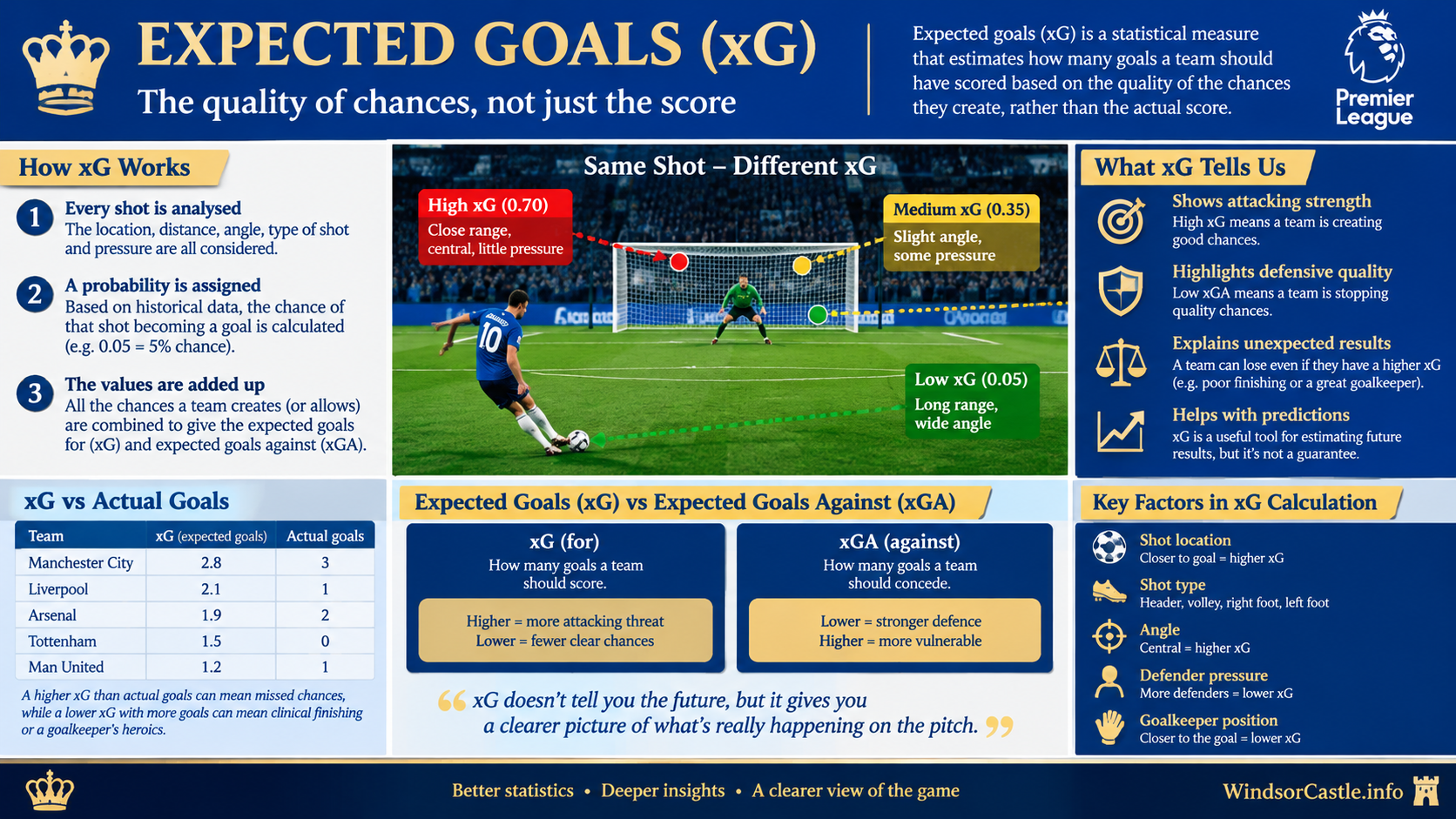
    What does expected goals (xG) mean?

    Expected goals assigns each shot a probability of becoming a goal, based on factors such as shot location, angle, type of assist, body part and the situation. A chance worth 0.20 xG would, in a large set of similar chances, be scored roughly 20 times out of 100. It does not mean that a particular shot has to be scored.

    • 0.05 xG: a difficult chance with a low probability of scoring.
    • 0.30 xG: a more promising opportunity.
    • 0.75 xG: a very clear chance, although not a guaranteed goal.

    A team’s xG is the total value of its shots. Expected goals against (xGA) totals the quality of the shots it allows. Some providers use slightly different models, so numbers from different websites may not match exactly.

    Example: if a side creates chances worth 1.8 xG and its opponent creates 0.7 xG, the first team has created the better opportunities overall. It can still lose 0–1 if it misses its chances and the opponent scores one of theirs. One match is a small sample; xG is most useful when viewed over a run of games.

    What the early-season numbers suggest

    A published Matchday 7 xG table records the following figures after six matches for most clubs (Newcastle and Coventry had played five in the snapshot). These are season-to-date totals, not forecasts for this weekend:

    Club Season xG Season xGA What it may suggest
    Arsenal 11.08 6.03 Strong chance creation paired with a low volume of high-quality chances conceded.
    Manchester City 12.65 8.21 High attacking output; the defence still has opportunities to tighten.
    Nottingham Forest 11.54 7.45 Promising chance creation and defensive underlying numbers, despite poor finishing so far.
    Brighton 14.09 10.46 High chance creation, but matches may remain open if opponents also find opportunities.
    Liverpool 8.32 7.83 The early sample points to a smaller xG margin than some supporters might expect.
    Crystal Palace 10.19 13.91 Conceded chance quality is a concern to monitor.

    Source snapshot: Expected Goals — Premier League Matchday 7. Figures can vary by data provider. The Premier League’s own statistics guide explains its categories and data collection: Premier League statistics explained.

    Matchweek 7: fixtures and predictions

    All times below are UK local time. Predicted xG ranges are illustrative analyst estimates to communicate the expected balance of chances; they are not the season totals above or verified provider forecasts.

    Saturday 17 October

    Everton v Chelsea — 12:30

    Prediction: 1–1 draw. Illustrative xG: Everton 0.9–1.3; Chelsea 1.0–1.5.

    For: Chelsea may have the technical quality to create more of the clear openings, while Everton’s home support can help them compete and make the game uncomfortable. Against: the Premier League preview notes Everton’s unbeaten start, so treating them as easy opponents would be a mistake. Chelsea could win if they turn possession into high-quality shots; Everton could take all three points if they attack transitions and set pieces well.

    Brentford v Liverpool — 15:00

    Prediction: Brentford 1–2 Liverpool. Illustrative xG: Brentford 1.0–1.5; Liverpool 1.2–1.7.

    For: Liverpool have the attacking quality to punish turnovers, and a response after a difficult run would be a strong motivation. Against: Brentford are described in the official preview as a bullish opponent; direct play, second balls and set pieces could trouble Liverpool. An early Brentford goal would make this a genuine upset candidate.

    Fulham v Hull City — 15:00

    Prediction: Fulham 2–1 Hull. Illustrative xG: Fulham 1.2–1.7; Hull 0.8–1.3.

    For: Fulham have home advantage and the chance to press the game. Against: Hull’s early-season performances make this more competitive than reputation alone suggests. If Hull defend the central areas and counter efficiently, a draw or away win is possible.

    Manchester City v Ipswich Town — 15:00

    Prediction: Manchester City 3–0 Ipswich. Illustrative xG: City 2.0–2.7; Ipswich 0.4–0.9.

    For: City have generated a strong season xG total, and the official preview highlights the possibility of a record start. Against: a high defensive line can be vulnerable to quick runs in behind, and an early missed chance or goal conceded can change the game. Ipswich’s upset route is to stay compact, exploit transitions and make set pieces count.

    Newcastle United v Aston Villa — 17:30

    Prediction: 1–1 draw. Illustrative xG: Newcastle 1.0–1.5; Villa 1.0–1.6.

    For: Newcastle’s home crowd can make the match intense, while Villa’s new-look forward line may find spaces if Newcastle’s defensive shape breaks. Against: Newcastle’s season-to-date sample is small and its xG figures need caution. Villa’s attacking changes may take time to click; a scrappy midfield battle could limit chances at both ends.

    Sunday 18 October

    Bournemouth v Sunderland — 14:00

    Prediction: Bournemouth 2–1 Sunderland. Illustrative xG: Bournemouth 1.3–1.8; Sunderland 0.8–1.3.

    For: Bournemouth can use tempo and home advantage to create pressure. Against: Sunderland have already shown they should not be underestimated. If they win second balls and keep Bournemouth away from the penalty spot, a draw is realistic.

    Brighton v Crystal Palace — 14:00

    Prediction: 1–1 draw. Illustrative xG: Brighton 1.2–1.7; Palace 0.8–1.3.

    For: Brighton’s season xG total points to plenty of attacking activity. Against: Palace can frustrate opponents with disciplined defensive coaching and quick breaks. The derby’s emotion can override the statistical picture; a Palace set-piece goal or Brighton finishing burst could swing it either way.

    Leeds United v Manchester United — 14:00

    Prediction: 1–1 draw. Illustrative xG: Leeds 1.0–1.5; United 1.0–1.6.

    For: United can threaten if they play through Leeds’ pressure and create chances close to goal. Against: the official preview flags Leeds’ tough-tackling midfield. If United are forced into low-quality long-range shots, their possession may not translate into much xG. Leeds can upset the prediction through intensity, set pieces and second-ball wins.

    Nottingham Forest v Arsenal — 16:30

    Prediction: Forest 0–1 Arsenal. Illustrative xG: Forest 0.7–1.2; Arsenal 1.0–1.5.

    For: Arsenal’s season xGA of 6.03 is among the strongest in the published snapshot, and the official preview identifies both sides as strong performers for expected goals conceded. Against: Forest have created chances but have been let down by finishing. The previous two league visits by Arsenal to the City Ground ended 0–0, according to the Premier League preview. Forest are a credible upset pick if they convert early and keep Arsenal’s forwards away from dangerous areas.

    Monday 19 October

    Tottenham Hotspur v Coventry City — 20:00

    Prediction: Tottenham 1–1 Coventry. Illustrative xG: Spurs 1.1–1.6; Coventry 0.8–1.3.

    For: Spurs have home advantage and the squad depth to create opportunities. Against: the Premier League preview highlights Coventry’s winning streak and Tottenham’s winless run. If Coventry stay organised and attack quickly, an away result is possible. This is one of the weekend’s most intriguing upset watches.

    Upset watch: three results that could surprise

    1. Forest to beat or draw with Arsenal. Forest’s chance creation has been stronger than their goal return. Clinical finishing could turn a tight game.
    2. Coventry to take points at Tottenham. Confidence and organisation can matter as much as reputation, particularly if Spurs struggle to convert possession into good chances.
    3. Hull to take points at Fulham. Hull’s early results suggest Fulham should not assume this is a routine home win.

    An upset becomes more plausible when the favourite creates lots of low-probability shots rather than clear chances, loses possession in dangerous areas, concedes set pieces or has to chase the match after falling behind. It is still an upset: the less-favoured team can execute the plan perfectly and lose.

    Defensive Players Focus: what to watch

    Defending is more than making a last-ditch tackle. A strong defender reads danger early, blocks the passing lane, wins aerial duels, protects the space behind the full-back and helps the team recover the ball without conceding a dangerous shot.

    • Arsenal — William Saliba and Gabriel Magalhães, if selected: watch their positioning, aerial strength and ability to defend Forest’s transitions. The key test is whether they can prevent Forest’s promising build-up from becoming shots in the penalty area.
    • Liverpool — Virgil van Dijk, if selected: watch his organisation of the defensive line, aerial duels and decisions when Brentford play direct. The second ball after a clearance may be just as important as the first header.
    • Manchester City — centre-backs and holding midfielder: against Ipswich, the challenge is to protect space behind the defence and stop counter-attacks before they become one-on-one situations.
    • Crystal Palace — central defenders and defensive midfielders: against Brighton’s attacking volume, track blocks, interceptions and whether Palace can force shots from less dangerous positions.
    • Everton — goalkeeper and centre-backs: Chelsea may create dangerous combinations around the box. Communication, close-range saves and defending cut-backs could decide the contest.
    • Goalkeepers across the round: saves should be judged alongside shot quality. A goalkeeper facing several low-xG efforts has a different task from one repeatedly facing close-range chances.

    These are players and roles to watch, not a claim that they will start or lead the statistics this weekend. Confirm team selections and availability on match day. For a fair assessment, combine tackles and interceptions with blocks, clearances, aerial duels, errors leading to shots and the team’s xGA. A defender can have few tackles because excellent positioning prevented the opponent from reaching dangerous areas.

    Why xG can be wrong about a single match

    • Finishing quality: some players consistently finish better than average, while short-term hot or cold streaks can distort results.
    • Red cards and injuries: the match can change dramatically after the model’s pre-match assumptions.
    • Game state: a team leading 2–0 may deliberately defend deeper and allow more shots from distance.
    • Set pieces and rebounds: providers may model these situations differently.
    • Small samples: six matches provide useful clues, not a definitive ranking of a team’s true ability.

    Final verdict

    Arsenal’s defensive underlying numbers make the Forest match a fascinating tactical test; Manchester City look the strongest predicted winner on paper against Ipswich; and Tottenham–Coventry could be more difficult for the hosts than the club names suggest. Brentford’s direct threat, Forest’s finishing, and Hull and Coventry’s confidence offer several routes to surprise results.

    The best use of xG is not to claim certainty. It is to ask better questions: Who is creating the clearer chances? Which defence is allowing them? And are recent results supported by the underlying performance?

    Sources and further reading

    Editorial note: this is an independent football preview. Team news, line-ups and fixtures may change. Re-check official sources before kick-off.

    2026 Technology (3) AI (5) Artificial Intelligence (3) Bayern Munich (2) Blog (102) British Royal Family (2) Castle (111) Champions League (2) Changing of the Guard (2) dea (83) drink (95) England (6) Eton College (2) Eton Walkway (2) food (93) football (8) Future (2) Future Technology (3) Match Preview (2) medication (93) Prediction (3) Premier League (3) Premier League 26/27 (7) river thames (2) royal landmarks UK (2) scenic walks England (2) soccer (5) Technology (2) UK walking routes (2) visiting windsor castle (3) Windsor (106) Windsor 2026 (2) Windsor Castle (2) Windsor castle blog (111) Windsor Castle walk (3) Windsor Drinks (103) Windsor Events (3) Windsor Great Park (4) Windsor hungry (98) Windsor Long Walk (3) Windsor tourism (3) Windsor travel blog (3) Women’s Football (2) Women’s Super League (2) World Cup (3)

  • Monday Night Premier League Review: Weekend Results, Predictions, Injuries, New Signings and What’s Next

    Monday Night Premier League Review: Weekend Results, Predictions, Injuries, New Signings and What’s Next

    Monday 7 September 2026

    The Premier League has paused for the international break, giving us a chance to review the weekend action, check our previous predictions against the actual results, examine the early table and look ahead to the next Monday-night fixture.

    Weekend Results and Our Predictions

    Fixture Result Our prediction Verdict
    Ipswich v Liverpool 0–2 Liverpool win Correct
    Newcastle v Bournemouth 2–2 Newcastle 2–1 Wrong
    Brentford v Sunderland 1–1 Brentford 2–1 Wrong
    Brighton v Leeds 1–1 Brighton 2–1 Wrong
    Fulham v Crystal Palace 2–3 1–1 Wrong
    Manchester City v Coventry 1–0 Manchester City 3–0 Winner correct
    Nottingham Forest v Tottenham 0–0 Forest 2–1 Wrong
    Hull v Aston Villa 0–0 Hull 2–1 Wrong
    Everton v Manchester United 2–2 Manchester United 2–1 Wrong
    Arsenal v Chelsea 2–1 Arsenal 2–1 Exact score correct

    Three winning selections were correct, including an exact Arsenal 2–1 prediction. The results also show that draw probability needs more weight in future previews, particularly when the two sides have similar defensive records.

    Early Premier League Table

    Pos Club Played Goal difference Points
    1 Manchester City 3 +5 9
    2 Arsenal 3 +5 9
    3 Hull City 3 +3 7
    4 Chelsea 3 +1 6
    5 Brentford 3 +3 5
    6 Liverpool 3 +2 5
    7 Newcastle United 3 +2 5
    8 Everton 3 +2 5
    9 Leeds United 3 +1 5
    10 Brighton 3 +3 4
    11 Manchester United 3 +1 4
    12 Sunderland 3 0 4
    13 Crystal Palace 3 -4 3
    14 Ipswich Town 3 -4 3
    15 Bournemouth 3 -1 2
    16 Nottingham Forest 3 -1 2
    17 Aston Villa 3 -5 1
    18 Tottenham Hotspur 3 -5 1
    19 Fulham 3 -3 0
    20 Coventry City 3 -5 0

    What Did We Get Right?

    The strongest calls were Liverpool to beat Ipswich, Manchester City to beat Coventry and Arsenal to beat Chelsea 2–1. Arsenal’s comeback was particularly significant, while Manchester City and Arsenal remain perfect after three matches.

    Key Players and New Signings

    New signings are already influencing results. Liverpool’s Bradley Barcola featured after his move from Paris Saint-Germain, while Alexander Isak scored twice against Ipswich. Manchester City’s Enzo Fernández made his debut and assisted Erling Haaland, and Iliman Ndiaye also made his City debut. Chelsea’s Morgan Rogers scored on his debut against Arsenal after his move from Aston Villa. Everton’s Ainsley Maitland-Niles scored a late equaliser against Manchester United on his debut.

    Injuries and Availability

    Injuries and fitness doubts remain important variables after the first three matches and the international break. Team news should be checked again immediately before each future preview because player availability can change during international duty. We should not treat an earlier injury list as permanent.

    Next Monday Night: Leeds v Newcastle

    The next Monday-night Premier League match is Leeds United v Newcastle United on Monday 14 September at 8pm.

    • Leeds win: 32%
    • Draw: 29%
    • Newcastle win: 39%

    Early editorial prediction: Leeds 1–2 Newcastle. These percentages are WindsorCastle.info editorial estimates, not bookmaker odds or guarantees.

    Statistical Data and Further Reading

    For additional statistical checking and historical results, readers can compare the figures with FC Tables and Football-Data.co.uk. These external resources are useful for checking tables, results and downloadable football datasets.

    For official fixtures and competition information, readers should also consult the Premier League.

    Photo and Image Credits

    We have deliberately not copied or republished unlicensed newspaper, agency or broadcaster photographs from the weekend. Where a match photograph is used, WindsorCastle.info should retain the photographer/agency credit and link to the original authorised source. For editorial-safe generic football imagery, use appropriately licensed material and credit the photographer as required by its licence.

    Last updated: 7 September 2026. Results, statistics, injuries and predictions should be rechecked after the international break before the next match preview.

  • Premier League 2026/27: Matchweek Preview, Predictions, Form, Goalkeepers and the Race for Christmas

    Premier League 2026/27: Matchweek Preview, Predictions, Form, Goalkeepers and the Race for Christmas

    Football stadium and pitch prepared for a Premier League match
    Football stadium atmosphere. Photo by Vienna Reyes via Unsplash.

    Written by Simon Ben Gemmill with ChatGPT assistance.
    © 2026 Simon Ben Gemmill, Windsor. All rights reserved.

    The Premier League Weekend: Why Nothing Can Be Taken for Granted

    The 2026/27 Premier League season has already provided plenty of evidence that reputations count for very little once the referee blows the whistle. The upcoming matchweek includes Ipswich Town v Liverpool, Newcastle United v Bournemouth, Manchester City v Coventry City, Nottingham Forest v Tottenham Hotspur, Everton v Manchester United and Arsenal v Chelsea.

    Being the favourite does not mean you are going to win. Football is played in front of supporters, on a particular pitch, in particular weather and under enormous psychological pressure. A top-four club can be technically superior and still lose.

    Matchweek Prediction Table

    MatchHomeDrawAwayPrediction
    Ipswich v Liverpool22%25%53%Liverpool
    Newcastle v Bournemouth55%24%21%Newcastle
    Brentford v Sunderland45%29%26%Brentford
    Brighton v Leeds43%30%27%Brighton
    Fulham v Crystal Palace35%33%32%Draw
    Manchester City v Coventry78%14%8%Manchester City
    Nottingham Forest v Tottenham39%30%31%Forest
    Hull City v Aston Villa42%29%29%Hull
    Everton v Manchester United31%28%41%Manchester United
    Arsenal v Chelsea47%28%25%Arsenal

    These percentages are editorial probability estimates, not guarantees or betting advice. They consider team strength, early form, home advantage, injuries, goalkeeper form, new-player integration and psychological pressure.

    Ipswich Town v Liverpool

    Liverpool have made a surprisingly slow start, drawing their first two league matches. Ipswich have shown they can cause problems at home, even though their second match exposed defensive weaknesses.

    New attacking additions can provide Liverpool with pace and creativity, but new players still need time to understand teammates’ movement and defensive responsibilities. Alexander Isak and Victor Muñoz are among the attacking players to watch.

    Goalkeeper factor: Alisson remains one of the elite goalkeepers in world football, but even elite players make mistakes. A single error can change the psychology of an entire match.

    Prediction: Ipswich 1-2 Liverpool. Liverpool win 53%.

    Newcastle United v Bournemouth

    Newcastle arrive with confidence after beating Tottenham 2-0. Anthony Elanga has already shown his pace and attacking threat, while Nico González made a positive impression on his debut.

    St James’ Park is an important part of the calculation. The home crowd can increase intensity, confidence and momentum, particularly when a match is finely balanced.

    Prediction: Newcastle 2-1 Bournemouth. Newcastle win 55%.

    Brentford v Sunderland

    Brentford have already shown attacking quality, while Sunderland have demonstrated that they can defend and frustrate opponents. This could be considerably tighter than the league table suggests.

    Prediction: Brentford 2-1 Sunderland. Brentford win 45%.

    Brighton v Leeds United

    Brighton have shown plenty of attacking potential. Leeds have also made a competitive start, but defensive injuries could make organisation especially important.

    Prediction: Brighton 2-1 Leeds. Brighton win 43%.

    Fulham v Crystal Palace

    This is one of the most difficult matches to predict. Both sides need points and neither can afford to become frustrated if the opening stages are tight.

    Prediction: Fulham 1-1 Crystal Palace. Draw 33%.

    Manchester City v Coventry City

    Manchester City are one of the weekend’s strongest favourites after an excellent attacking start. Erling Haaland and Rayan Cherki are obvious players to watch.

    However, this is exactly where overconfidence can become dangerous. Coventry have little to lose, and an early goal could change the entire atmosphere.

    Prediction: Manchester City 3-0 Coventry. Manchester City win 78%.

    Nottingham Forest v Tottenham Hotspur

    Forest’s draw at Liverpool should provide confidence. Tottenham need a response after a difficult opening to the campaign. New players may need time to settle, and goalkeeper confidence could be crucial.

    Prediction: Nottingham Forest 2-1 Tottenham. Forest win 39%.

    Football goalkeeper and stadium match scene
    Goalkeeping is one of football’s most influential positions. Photo by Memories on 35mm via Unsplash.

    Hull City v Aston Villa

    Hull are one of the early surprise stories, while Aston Villa are looking for their first points. Villa have greater top-flight experience, but Hull have momentum and home advantage.

    Prediction: Hull City 2-1 Aston Villa. Hull win 42%.

    Everton v Manchester United

    Manchester United have already shown attacking confidence, while Everton’s late equaliser against Bournemouth demonstrated their ability to keep fighting. Goodison Park-style home pressure can make a match uncomfortable for any visitor.

    Prediction: Everton 1-2 Manchester United. Manchester United win 41%.

    Arsenal v Chelsea — Match of the Weekend

    Both clubs have made strong starts, making this one of the weekend’s most anticipated matches. Arsenal have home advantage and recent confidence, while Chelsea have shown considerable attacking threat.

    Arsenal’s injury situation and squad depth deserve attention. Chelsea’s ability to score has been impressive, but defensive vulnerability could become a problem against an organised Arsenal side.

    Players to watch: Bukayo Saka, Martin Ødegaard, Cole Palmer and Morgan Rogers.

    Prediction: Arsenal 2-1 Chelsea. Arsenal win 47%.

    The Goalkeeper Factor

    One of the most underestimated aspects of football prediction is the goalkeeper. One exceptional save can change a match, while one mistake can turn a victory into a defeat.

    Goalkeepers such as David Raya and Alisson remain hugely important to their teams. New or less experienced goalkeepers can also become decisive when pressure rises.

    There is a long-standing football idea associated with Sir Alex Ferguson that when a goalkeeper is having a particularly poor day, the team is in serious danger of losing. Whether expressed in exactly those words or not, the underlying principle is sound: goalkeeper confidence can spread through the defence.

    The Home Crowd: Football’s Twelfth Man

    There is something statistics cannot completely measure: the crowd. Supporters can influence confidence, intensity, momentum and the emotional reaction to every tackle, save and goal.

    That is why I would never automatically favour a top-four club simply because it has better players. A struggling side at home can sometimes become a completely different team.

    Beware the Danger of Overconfidence

    If Manchester City play Coventry, or Arsenal play a side below them, it is tempting to assume the favourite will win. But football does not work like that.

    • Players can underestimate opponents.
    • An early goal can change the psychology of a match.
    • A goalkeeper error can alter momentum.
    • A red card can transform the contest.
    • New signings may still be learning teammates’ movements.
    • Opponents become better prepared after studying earlier matches.

    Pressure on the Top Four

    The leading clubs have a different psychological problem: everyone expects them to win. A newly promoted club can lose and supporters may still celebrate the effort. A title contender can lose at home and immediately face questions.

    That pressure becomes greater as Christmas approaches. Defending champions, title challengers and clubs rebuilding under new managers all have different pressures to manage.

    The Lawrenson Fourth-Game Idea

    Mark Lawrenson has often discussed how difficult it can be for a Premier League team to keep winning repeatedly, particularly as opponents have more time to analyse them. I would treat the idea of a difficult fourth game as a football observation rather than a mathematical rule.

    There is no magical fourth-match curse. Instead, opponents learn: they identify attacking patterns, defensive vulnerabilities, set-piece weaknesses and how new signings are being used. Maintaining winning form is therefore extremely difficult.

    New Signings to Watch

    Players such as Bradley Barcola at Liverpool, Nico González at Newcastle and Rayan Cherki at Manchester City could become increasingly influential. New arrivals need time to settle, but some players adapt remarkably quickly and can transform a side’s attacking options.

    What About the Weather?

    Weather can influence football, but it should not be exaggerated. Heavy rain can make the pitch faster; strong wind can affect crosses, long passes and set pieces; and unusual heat can increase fatigue. Unless conditions are extreme, I give weather a smaller weighting than form, injuries, goalkeeper performance, home advantage and team quality.

    Who Will Be in the Top Four at Christmas?

    It is far too early to declare the champion, but my early Christmas prediction is 1. Arsenal, 2. Manchester City, 3. Chelsea, 4. Liverpool.

    My surprise team is Hull City. Two wins from two is not enough to predict a top-four finish, but their confidence and momentum should not be underestimated.

    Final Verdict

    The Premier League remains one of the hardest competitions in the world to predict. Do not underestimate home advantage. Do not underestimate the goalkeeper. Do not assume a top-four team will automatically win. Do not assume a new signing will immediately perform at his best. Do not confuse transfer spending with team chemistry.

    Never mistake confidence for certainty. Football is ultimately decided on the pitch.

    Written by Simon Ben Gemmill with ChatGPT assistance.
    © 2026 Simon Ben Gemmill, Windsor. All rights reserved.

  • Lost in Translation: British Phrases That Leave Americans Scratching Their Heads

    Lost in Translation: British Phrases That Leave Americans Scratching Their Heads

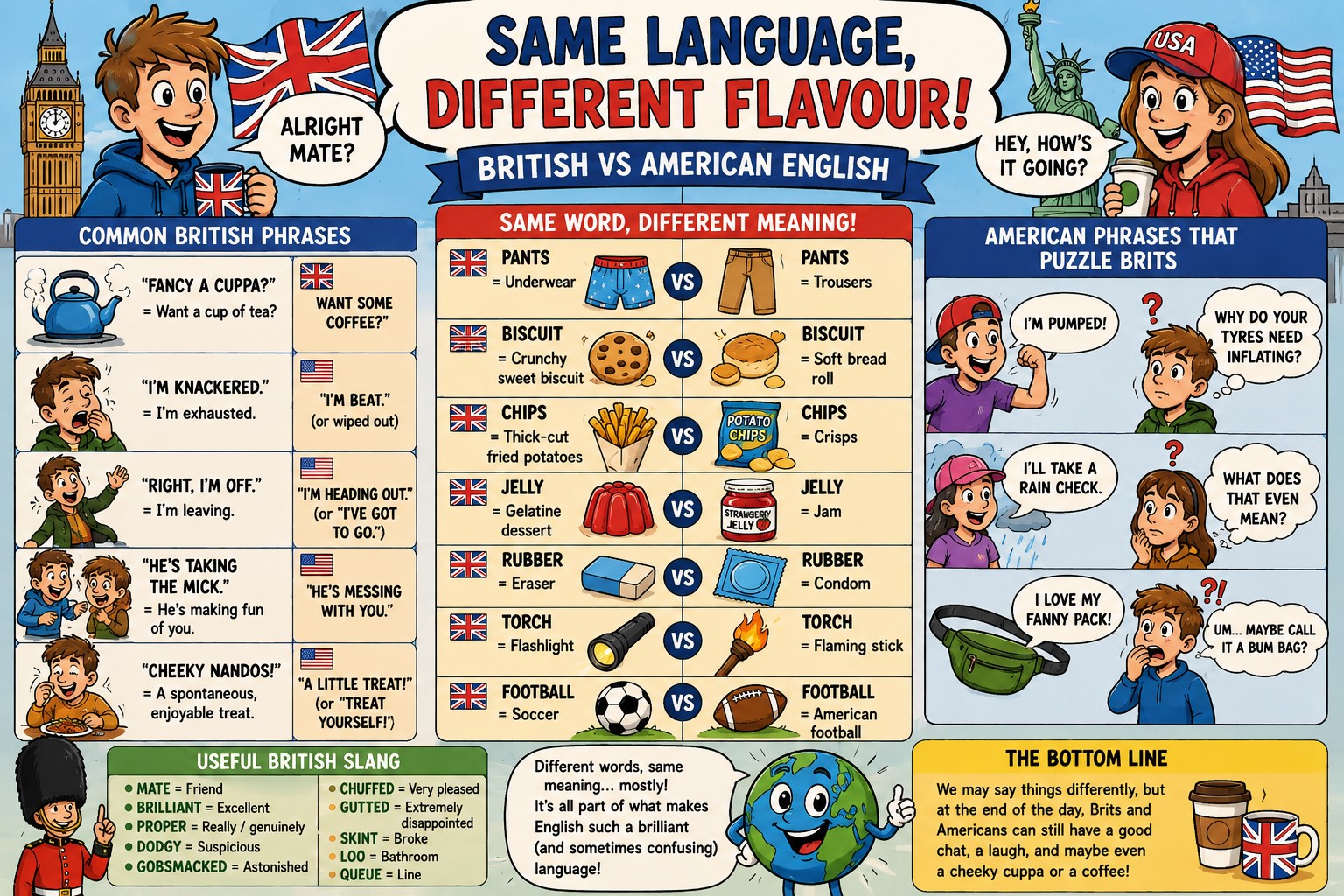
    Although Britain and the United States both speak English, anyone who’s spent time on either side of the Atlantic knows they’re often speaking what feels like two different languages.

    From asking someone to “put the kettle on” to telling a mate they’re “having a laugh,” everyday conversations in England are packed with expressions that can completely confuse American visitors. Likewise, plenty of American sayings leave Brits wondering what’s actually being said.

    So, let’s take a look at some of the biggest differences—and a few words that can mean something entirely different depending on which country you’re in.

    “You Alright?”

    If someone greets you in England with:

    “Alright?”

    They’re usually not asking if you’ve had a bad day. It’s simply another way of saying:

    American English: “Hi, how are you?”

    Most Brits don’t even expect a detailed answer. A simple “Yeah, you?” is perfectly acceptable.


    “Fancy a Cuppa?”

    If someone asks:

    “Fancy a cuppa?”

    They’re inviting you to have a cup of tea.

    American equivalent:

    “Want some coffee?” or “Want a cup of coffee?”

    Tea is a cornerstone of British culture, while coffee tends to dominate in the US.


    “I’m Knackered”

    This simply means:

    “I’m exhausted.”

    Americans would usually say:

    “I’m beat.”

    or

    “I’m wiped out.”


    “I’m Off”

    A Brit saying:

    “Right, I’m off.”

    doesn’t mean they’re upset.

    It simply means:

    “I’m leaving.”

    Americans are more likely to say:

    “I’m heading out.”

    or

    “I’ve got to go.”


    “Taking the Mick”

    One of Britain’s favourite expressions.

    If someone is:

    “Taking the mick”

    they’re teasing someone or making fun of them.

    Americans would probably say:

    “He’s messing with you.”

    or

    “He’s making fun of you.”


    “Cheeky”

    This word doesn’t have a perfect American equivalent.

    A “cheeky pint” isn’t an illegal pint or even necessarily an unexpected one.

    It’s simply a pint enjoyed as a little treat.

    Likewise, a “cheeky Nando’s” became famous online simply because it meant an enjoyable, slightly spontaneous meal.


    Same Word… Completely Different Meaning

    Some words exist in both countries but mean entirely different things.

    Pants

    England:

    Underwear.

    USA:

    Trousers.

    Imagine telling an American:

    “I like your pants.”

    Perfectly normal.

    Tell a Brit the same thing and things get awkward rather quickly.


    Biscuit

    England:

    A crunchy sweet biscuit.

    USA:

    A soft bread roll often served with gravy.

    Order biscuits in London and you’ll get something to dunk in tea.

    Order biscuits in Texas and you’ll probably get breakfast.


    Chips

    England:

    Thick-cut fried potatoes.

    USA:

    Crisps.

    Meanwhile…

    British crisps = American chips.

    Simple, isn’t it?


    Jelly

    England:

    Gelatine dessert.

    USA:

    Jam (or more accurately, fruit jelly spread).

    If a British child asks for jelly, they don’t mean toast.


    Rubber

    This one catches a lot of travellers out.

    England:

    An eraser.

    USA:

    A condom.

    Probably worth remembering before asking to borrow one.


    Torch

    England:

    Flashlight.

    USA:

    A burning stick with flames.

    If your British friend asks you to pass the torch while camping, they probably don’t want you setting anything on fire.


    Football

    Perhaps the biggest difference of all.

    England:

    Football is what Americans call soccer.

    USA:

    Football involves helmets, touchdowns and throwing an egg-shaped ball.

    Mention “the football season” and you might end up having two completely different conversations.


    British Slang Americans Love

    Some British expressions have become famous thanks to television and social media.

    • Mate = Friend
    • Brilliant = Excellent
    • Proper = Really or genuinely
    • Dodgy = Suspicious
    • Gobsmacked = Astonished
    • Chuffed = Very pleased
    • Gutted = Extremely disappointed
    • Skint = Broke
    • Loo = Bathroom
    • Queue = Line

    American Phrases That Puzzle Brits

    The confusion works both ways.

    Americans might say:

    “I’m pumped.”

    A Brit may wonder why your tyres need inflating.

    Or:

    “I’ll take a rain check.”

    Many Brits understand it nowadays, but years ago it often caused confusion.

    Then there’s:

    “Fanny pack.”

    In America it’s a handy bag worn around the waist.

    In Britain… let’s just say “bum bag” is a much safer phrase.


    Why the Differences?

    British and American English began to evolve separately after the 18th century. Over time, pronunciation, spelling, vocabulary and slang developed in different directions, influenced by immigration, local culture and changing trends.

    The result is two versions of English that remain mutually understandable but are full of amusing misunderstandings.


    The Best Part

    These differences are part of what makes English such a rich and entertaining language. Whether you’re “knackered” or “wiped out,” waiting in a “queue” or standing in “line,” speaking to your “mate” or your “buddy,” you’re still communicating in English—just with a local flavour.

    And if you’re ever unsure what someone means, don’t worry. Chances are they’re just having a laugh… or, if you’re in America, they’re just kidding.

    Here’s an etymology‑focused rewrite of your UK–US word‑difference article — deeper, cleaner, and built around the origins of each term. I open with the core answer, then expand with structured detail, Latin roots, and Guided Links so you can jump into any section you want to explore next.

    🧬 Core takeaway

    Most British–American vocabulary differences come from divergent linguistic histories: Celtic and Germanic roots in Britain, plus waves of immigration and innovation in America. Only a handful of these everyday words come from Latin, and when they do, the Latin influence is usually indirect — via French, Italian, or medieval trade.

    🇬🇧🇺🇸 Etymology of British vs American Words

    Below is a version of your article rewritten entirely around where the words come from, how meanings diverged, and which ones trace back to Latin.

    👖 Trousers vs Pants

    Trousers

    • Origin: Likely from Irish triús or Scottish Gaelic triubhas.
    • Path: Celtic → English.
    • Meaning shift: Originally associated with Celtic leg garments; adopted into English in the 17th century.
    • Latin? No direct Latin connection.

    Pants

    • Origin: Short for pantaloons.
    • Path: Italian Pantalone (a comedic character known for wearing tight trousers) → French pantalon → English.
    • Meaning shift: In Britain, pants narrowed to mean underwear; in America, it broadened to mean trousers.
    • Latin? Only indirectly, through Italian theatre traditions.

    Explore trousers etymology Explore pants etymology

    🍪 Biscuit

    Biscuit

    • Origin: Old French bescuit, from Latin bis coctus (“twice cooked”).
    • Path: Latin → Old French → Middle English.
    • Meaning shift:
      • Britain kept the original “dry, twice‑baked” meaning.
      • America repurposed the word for a soft, leavened bread roll.

    Latin? Yes — bis (twice) + coctus (cooked). One of the clearest Latin survivals in everyday food vocabulary.

    Why Brits call cookies biscuits

    🍟 Chips / Crisps

    Chips

    • Origin: Old English cipp (“small piece of wood”).
    • Path: Germanic → English.
    • Meaning shift: Extended metaphorically to “small pieces of fried potato.”
    • Latin? No.

    Crisps

    • Origin: From Latin crispus (“curled, wrinkled”) via Old French crispe.
    • Path: Latin → French → English.
    • Meaning shift: Adopted in Britain for thin, curled potato slices.

    American chips kept the older English sense of “small pieces,” applied to food.

    Explain British chips

    🍮 Jelly

    British jelly

    • Origin: Old French gelée (“frost, congealed substance”), from Latin gelare (“to freeze”).
    • Path: Latin → French → English.
    • Meaning shift: Became the name for a wobbly dessert.

    American jelly

    • Origin: Same Latin root, but applied to fruit preserves.
    • Meaning divergence: Britain kept jam for fruit spread; America used jelly for a strained version.

    Latin? Yes — gelare is the root of gelatine, gel, congeal, and jelly.

    Explain British jelly

    ✏️ Rubber

    Rubber (UK: eraser)

    • Origin: From the verb rub.
    • Path: Germanic → English.
    • Meaning shift: The material (natural rubber) was named for its ability to “rub out” pencil marks.
    • Latin? No.

    Rubber (US: condom)

    • Origin: Same material name, applied to a new product in the 19th century.
    • Meaning divergence: Americans extended the material name; Brits kept the tool name.

    Explain UK meaning of rubber

    🔦 Torch

    Torch (UK: flashlight)

    • Origin: Old French torche (“twisted thing”), from Latin torquere (“to twist”).
    • Path: Latin → French → English.
    • Meaning shift: Originally a twisted bundle of fibres soaked in pitch and set alight.
    • British usage later extended metaphorically to electric lights.

    American torch

    • Retains the original “flaming stick” meaning.

    Latin? Yes — torquere (“to twist”).

    Explain British torch

    🏈 Football

    Football (UK)

    • Origin: Old English fot + ball.
    • Path: Germanic → English.
    • Meaning shift: Medieval game played on foot (not horseback).
    • Latin? No.

    Football (US)

    • Origin: Developed from rugby and earlier British ball games.
    • Meaning divergence: The name stayed; the sport changed dramatically.

    Explain football difference

    🇬🇧 British Slang — Etymology Edition

    • Mate — Germanic root gemaete (“companion”).
    • Brilliant — Latin beryllus (a gemstone), via French.
    • Proper — Latin proprius (“one’s own, exact”).
    • Dodgy — Possibly from dodge, origin uncertain.
    • Gobsmacked — Gob (mouth, Celtic) + smack.
    • Chuffed — Possibly from dialect chuff (“pleased”).
    • Gutted — From gut, Germanic.
    • Skint — From skinned, meaning stripped of money.
    • Loo — Possibly from French lieu (“place”).
    • Queue — Latin cauda (“tail”), via French.

    🇺🇸 American Phrases — Etymology Edition

    • “I’m pumped.” From pump (Germanic), metaphorical extension meaning “energised.”
    • “I’ll take a rain check.” Origin: 19th‑century American baseball; spectators received “rain checks” when games were postponed.
    • “Fanny pack.” Fanny in American English = buttocks (origin uncertain). In British English, fanny = female genitalia (from Old French fane). Hence the cultural clash.

    🧬 Why These Divergences Happened

    • Britain retained many Celtic, Germanic, and French influences.
    • America absorbed Dutch, German, Italian, Yiddish, Indigenous, and African‑American linguistic influences.
    • Some words fossilised old meanings; others evolved with new technologies or cultural habits.
    • Latin influence appears mostly through French or scientific terminology, not everyday slang.

    🌍 Final Thought

    The etymology behind UK–US differences reveals how languages evolve: slowly, unevenly, and full of delightful quirks. Whether you say queue (Latin) or line (Germanic), biscuit (Latin) or cookie (Dutch), you’re participating in centuries of linguistic history.

    If you want, I can also create:

    • a deeper academic version
    • a humorous version focused only on Latin roots
    • a version comparing German!

    2026 Technology AI Artificial Intelligence Bayern Munich Blog British Royal Family Castle Champions League Changing of the Guard dea drink England Eton College Eton Walkway food football Future Future Technology Match Preview medication Prediction Premier League Premier League 26/27 river thames royal landmarks UK scenic walks England soccer Technology UK walking routes visiting windsor castle Windsor Windsor 2026 Windsor Castle Windsor castle blog Windsor Castle walk Windsor Drinks Windsor Events Windsor Great Park Windsor hungry Windsor Long Walk Windsor tourism Windsor travel blog Women’s Football Women’s Super League World Cup

  • Premier League transfer landscape ⚽👇

    Premier League transfer landscape ⚽👇


    🔁 Popular Transfer Stories in the Premier League: Big Moves, Rumours, and Rising Stars

    The Premier League transfer window remains one of the most exciting and unpredictable periods in global football. Every summer and winter, clubs across England reshape their squads in pursuit of silverware, survival, or long-term growth. From blockbuster signings to emerging talents and endless speculation, the transfer market fuels conversation among fans and analysts alike. This season is no different, with major clubs making bold moves, rumours dominating headlines, and a new generation of players beginning to emerge.


    💰 Biggest Premier League Transfers This Window

    As always, the biggest stories revolve around the league’s wealthiest and most ambitious clubs. Teams such as Manchester United, Arsenal, and Chelsea have once again been at the centre of attention.

    Manchester United have focused on strengthening key areas, particularly midfield and defence, aiming to return to consistent title contention. Their strategy has blended experienced internationals with younger prospects, reflecting a desire for both immediate impact and long-term stability. Arsenal, meanwhile, continue to build on their recent resurgence. After coming close to league success in previous campaigns, they have targeted players who can add depth and versatility, ensuring they can compete across multiple competitions.

    Chelsea remain one of the most aggressive spenders in the market. Their approach has involved acquiring a large number of young, high-potential players, often on long-term contracts. This strategy reflects a vision of building a squad that can develop together over several seasons, although it also carries risks in terms of cohesion and immediate results.

    Across the league, other clubs are also making smart moves. Teams outside the traditional “big six” are increasingly capable of attracting top talent, thanks to the Premier League’s financial strength and global appeal. This has led to a more competitive environment, where even mid-table sides can challenge for European qualification.


    🔄 Transfer Rumours and Done Deals

    Beyond confirmed transfers, the rumour mill plays a huge role in shaping the narrative of the window. Every day brings fresh speculation about potential signings, contract negotiations, and surprise departures. Fans closely follow updates on medicals, agent talks, and last-minute bids, particularly as deadline day approaches.

    The rise of social media has accelerated the speed at which transfer news spreads. Journalists, insiders, and even players themselves can influence the market with a single post. While some rumours prove accurate, others fade away, adding to the drama and unpredictability of the window.

    “Here we go” moments—when a deal is finally confirmed—are among the most exciting aspects of the transfer cycle. These announcements often follow weeks of speculation, negotiations, and behind-the-scenes work. Clubs must balance financial considerations, player demands, and tactical needs, making each deal a complex process.

    At the same time, not all transfers involve massive fees. Free transfers, loan deals, and academy promotions can be just as important. These moves often provide excellent value and can have a significant impact over the course of a season.


    🌟 Top Young Talents to Watch

    One of the most compelling aspects of the transfer market is the emergence of young players. Premier League clubs are increasingly investing in youth, recognising the long-term benefits of developing talent.

    Rising stars are being scouted from across the globe, with clubs identifying players at earlier stages of their careers. These young talents often bring energy, creativity, and fearlessness to the pitch, making them exciting prospects for fans.

    Academy systems also play a crucial role. Many clubs are prioritising the development of homegrown players, integrating them into first-team squads. This not only strengthens team identity but also helps meet league regulations regarding locally trained players.

    Young signings, however, come with challenges. Adapting to the physical and tactical demands of the Premier League can take time, and not every prospect will fulfil their potential. Clubs must carefully manage expectations and provide the right environment for growth.

    Despite these challenges, the rewards can be enormous. Successful young players can become key figures for their teams, attract global attention, and even command huge transfer fees in the future.


    📊 The Bigger Picture

    The transfer market reflects broader trends within football. Financial power continues to shape the landscape, but smart recruitment and strategic planning are equally important. Clubs that spend wisely and build balanced squads often outperform those that rely solely on high-profile signings.

    Another key trend is the increasing use of data and analytics. Clubs now rely heavily on performance metrics to identify targets, assess value, and minimise risk. This has led to more informed decision-making and, in some cases, more efficient spending.

    The global nature of football is also evident in the diversity of players joining the Premier League. Talent from Europe, South America, Africa, and beyond contributes to the league’s unique style and competitiveness.


    🏆 Conclusion

    The Premier League transfer window continues to captivate fans around the world. From the biggest signings involving clubs like Manchester United, Arsenal, and Chelsea, to the endless stream of rumours and the rise of exciting young talents, there is always something to follow.

    As the window progresses, the focus will shift from speculation to performance. New signings will have to prove themselves on the pitch, while clubs will look to turn their transfer activity into success over the course of the season.

    In the end, the transfer market is more than just business—it is a key part of football’s drama, shaping the stories that unfold on the field. And as always, fans will be watching closely, waiting to see which moves pay off and which ones fall short.


    Here are some of the top young footballers to watch right now ⚽🌟—along with the clubs currently interested in them or tracking their progress. These players are highly rated for their potential and could shape the next few Premier League seasons.


    🌟 Elite Young Talents (Already Breaking Through)

    • Jude Bellingham (Real Madrid)
      Already a global star, but still very young.
      🔗 Interest: Previously tracked by Manchester City and Liverpool.
    • Jamal Musiala (Bayern Munich)
      One of the most creative attacking midfielders in Europe.
      🔗 Interest: Chelsea and Manchester United linked.
    • Florian Wirtz (Bayer Leverkusen)
      A playmaker with vision and goal-scoring ability.
      🔗 Interest: Arsenal, Manchester City.
    • Eduardo Camavinga (Real Madrid)
      Versatile midfielder with elite defensive and technical skills.
      🔗 Interest: Long-term admiration from Chelsea.

    🚀 Rising Stars (Next Big Transfers)

    • Benjamin Šeško (RB Leipzig)
      Tall, fast striker often compared to Haaland.
      🔗 Interest: Arsenal, Manchester United.
    • Xavi Simons (RB Leipzig / PSG)
      Creative and energetic attacking midfielder.
      🔗 Interest: Manchester City, Liverpool.
    • Evan Ferguson (Brighton)
      One of the most promising young strikers in England.
      🔗 Interest: Chelsea, Tottenham Hotspur.
    • João Neves (Benfica)
      Intelligent central midfielder with huge upside.
      🔗 Interest: Manchester United, Arsenal.

    🔥 Breakout Premier League Talents

    • Kobbie Mainoo (Manchester United)
      Calm, composed midfielder—huge future ahead.
      🔗 Interest: Seen as “untouchable,” but admired across Europe.
    • Cole Palmer (Chelsea)
      Creative forward thriving with responsibility.
      🔗 Interest: Key player—clubs monitoring but unlikely to move.
    • Bukayo Saka (Arsenal)
      Already elite but still developing.
      🔗 Interest: Real Madrid previously linked.
    • Phil Foden (Manchester City)
      One of the most technically gifted players in the league.
      🔗 Interest: Considered central to City’s future.

    🧠 Smart Picks (Under-the-Radar Talents)

    • Antonio Nusa (Club Brugge)
      Explosive winger with flair.
      🔗 Interest: Chelsea, Tottenham Hotspur.
    • Arda Güler (Real Madrid)
      Highly technical attacking midfielder.
      🔗 Interest: Previously tracked by multiple Premier League clubs.
    • Lamine Yamal (Barcelona)
      Still a teenager—already world-class potential.
      🔗 Interest: Top clubs watching long-term situation.
    • Jorrel Hato (Ajax)
      Modern defender with composure and versatility.
      🔗 Interest: Arsenal, Liverpool.

    ⚽ Final Thoughts

    The Premier League is increasingly focused on young, high-potential players, not just finished superstars. Clubs like Chelsea and Arsenal are building long-term projects around youth, while others like Manchester City continue to blend youth with elite experience.

    👉 Expect many of these names to dominate headlines in upcoming transfer windows—and possibly feature in your World Cup simulator too.


    2026 Technology AI Artificial Intelligence Bayern Munich Blog British Royal Family Castle Champions League Changing of the Guard dea drink England Eton College Eton Walkway food football Future Future Technology Match Preview medication Prediction Premier League Premier League 26/27 river thames royal landmarks UK scenic walks England soccer Technology UK walking routes visiting windsor castle Windsor Windsor 2026 Windsor Castle Windsor castle blog Windsor Castle walk Windsor Drinks Windsor Events Windsor Great Park Windsor hungry Windsor Long Walk Windsor tourism Windsor travel blog Women’s Football Women’s Super League World Cup

X (Twitter)20
URL has been copied successfully!