Category: Royal History

  • Windsor Castle: 1,000 Years of Royal History

    Windsor Castle: 1,000 Years of Royal History

    From William the Conqueror to the modern monarchy — discover the remarkable story of one of Britain’s most enduring royal residences.
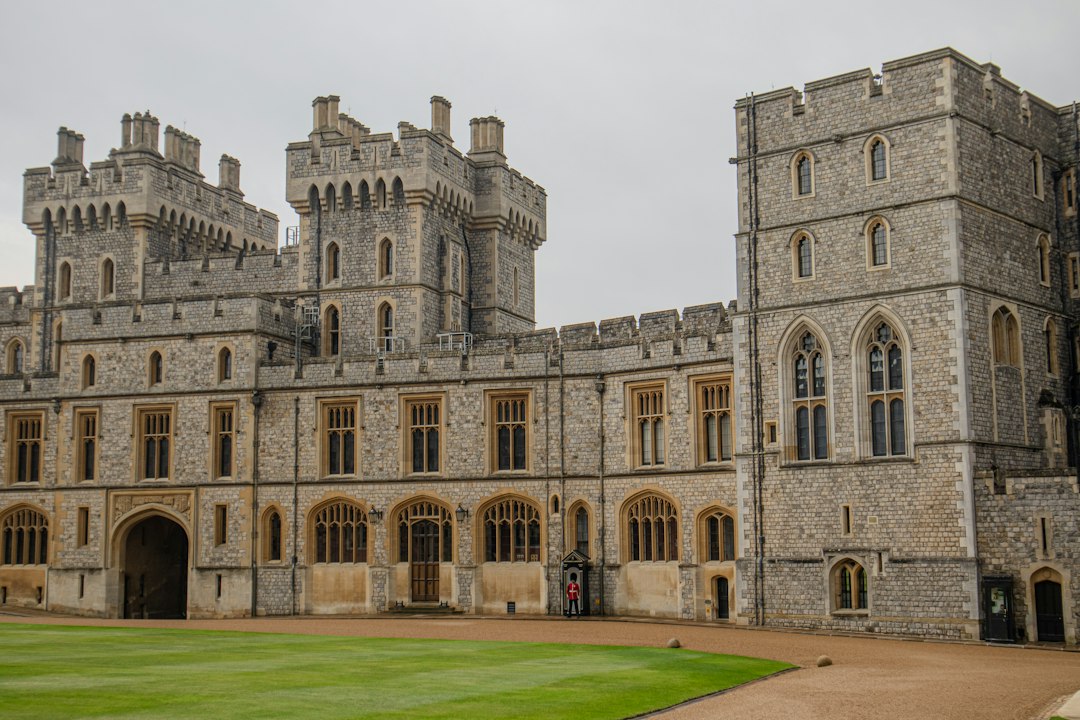
    Historic stone walls of Windsor Castle in Windsor, England.
    Windsor Castle’s historic walls tell a story of defence, royal power and centuries of rebuilding. Photograph by Wyatt Simpson via Unsplash.

    Rising above the River Thames in Berkshire, Windsor Castle is one of Britain’s best-known royal landmarks. Its towers, stone walls, grand apartments and magnificent chapel tell a story of conquest, royal ambition, architecture and national history.

    Founded by William the Conqueror around 1070, the castle developed from a defensive stronghold into a royal residence used by monarchs across almost a thousand years. It remains a working royal palace and an important part of Britain’s living heritage.

    Nearly a millennium of history stands within these walls — and the story of Windsor Castle is still being written.

    1. William the Conqueror and the Norman beginnings

    After the Norman Conquest of 1066, William the Conqueror established a network of fortifications to secure his rule. The elevated ground at Windsor offered a commanding position near the River Thames and close to a royal hunting area. Construction began around 1070, with earthworks and timber defences forming the earliest castle.

    Its position helped protect approaches to London. Over time, Windsor became a place for royal residence as well as defence. Under Henry I, domestic royal quarters were established, while later monarchs strengthened the fortifications and replaced important timber structures with stone.

    2. From fortress to royal palace

    Windsor changed significantly over the centuries. Its central mound and keep evolved into the familiar Round Tower, while successive building campaigns created more comfortable royal apartments and ceremonial spaces. The castle’s layout reflects the different priorities of the monarchs who lived and worked there.

    During the fourteenth century, Edward III oversaw an ambitious transformation. From 1357, major rebuilding helped turn Windsor into a grand Gothic palace. Edward III also founded the Order of the Garter in 1348, a chivalric order closely associated with Windsor and St George’s Chapel.
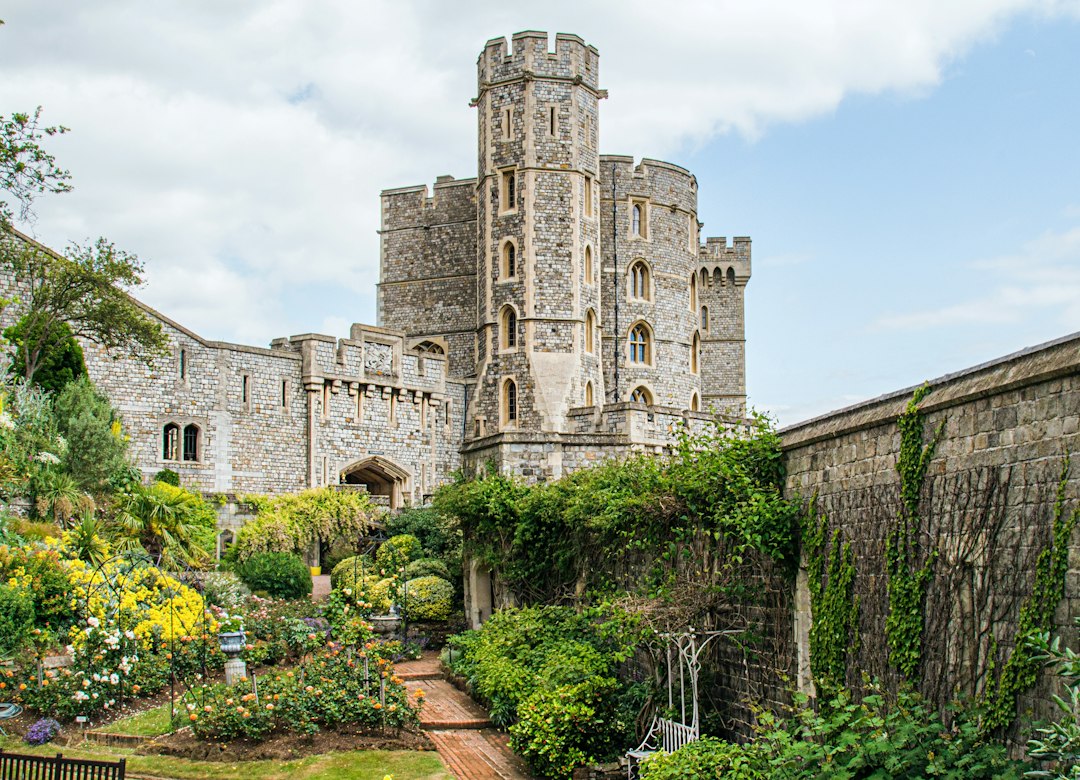
    Windsor Castle with its historic stone walls and Round Tower overlooking Windsor.

    The castle’s towers and fortifications remain powerful symbols of Windsor’s royal heritage. Photograph by E Mens via Unsplash.

    3. Tudor Windsor: Henry VIII and Elizabeth I

    The Tudor monarchs inherited a castle already rich in royal associations. Henry VIII made additions, including the gate that bears his name in the Lower Ward. Windsor continued to be used for hunting, court life and the exercise of royal authority.

    Elizabeth I also used Windsor. The Tudor era brought profound religious and political change, and the castle’s chapel and religious spaces formed part of the wider story of the Crown’s changing relationship with the Church.

    4. Georgian grandeur and Queen Victoria

    In the nineteenth century, George IV commissioned extensive alterations with architect Jeffry Wyatville. These works gave Windsor a more imposing exterior and grander interiors, helping shape the appearance familiar to visitors today.

    Queen Victoria made Windsor an important setting for royal and family life after she came to the throne in 1837. As rail travel expanded, the castle also became more accessible to visitors, and arrangements for public visits developed over time.

    Windsor is not frozen in one period of history: Norman defences, medieval architecture and later royal design exist side by side.

    5. St George’s Chapel: faith, ceremony and remembrance

    St George’s Chapel is one of the castle’s most important historic buildings. The present chapel took shape during the late medieval period, with major work beginning under Edward IV in 1475. Its Gothic architecture, elaborate stonework and rich interior reflect centuries of religious devotion and royal patronage.

    The chapel is associated with the Order of the Garter and has hosted royal weddings and important services. It is also a place of royal burial and remembrance, linking medieval kings and modern generations with the long history of the monarchy.
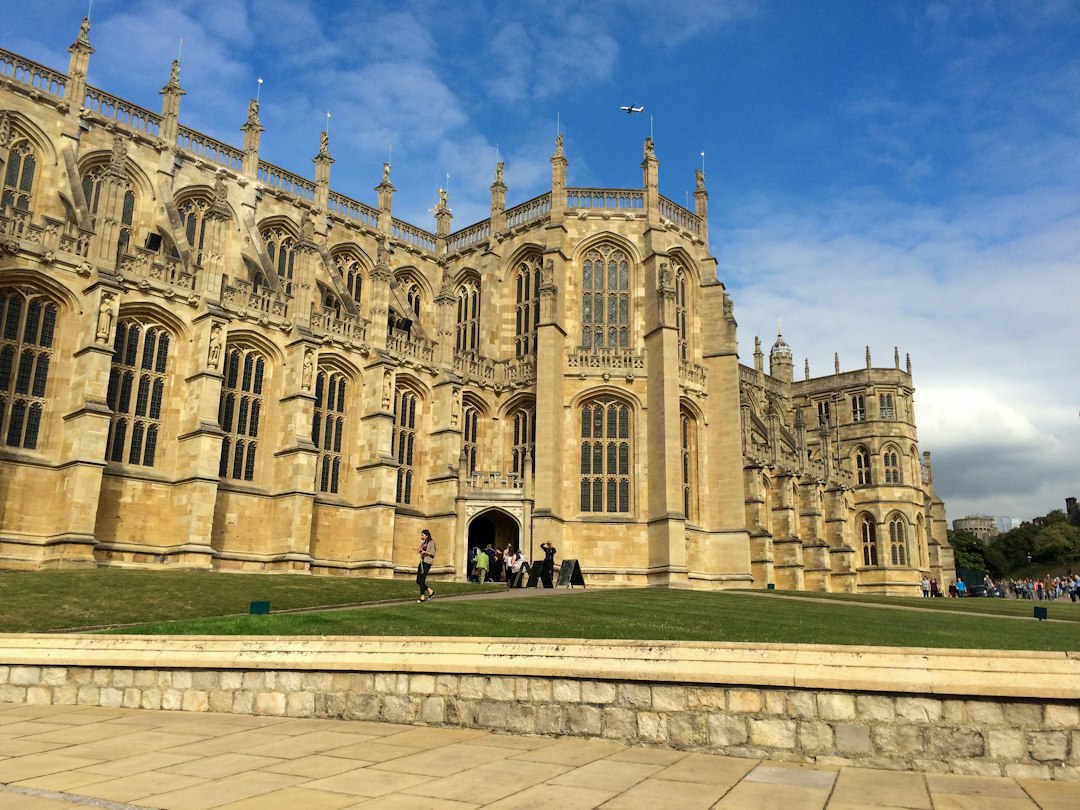
    St George’s Chapel at Windsor Castle showing its historic Gothic architecture.

    St George’s Chapel is a Gothic masterpiece within the castle precincts. Photograph by Malgorzata Bujalska via Unsplash.

    6. The great fire of 1992

    On 20 November 1992, a major fire broke out at Windsor Castle. It began in Queen Victoria’s Private Chapel after a faulty spotlight ignited a curtain. The blaze spread and damaged or destroyed 115 rooms, including nine State Rooms.

    The restoration required years of careful conservation and craftsmanship. The work was completed on 20 November 1997, five years after the fire. The project combined traditional skills with considered modern design, demonstrating how a historic building can recover from devastating damage.

    7. Windsor Castle today

    Windsor Castle remains an active royal residence and a setting for official events, audiences, receptions and state occasions. Its State Apartments, ceremonial spaces, art and architecture offer visitors a window into British history. Access to particular rooms can vary, so check official visitor information before travelling.

    Plan your visit with the Royal Collection Trust.

    Why Windsor Castle matters

    Windsor Castle has endured because successive generations have adapted, maintained and restored it. Its story encompasses conquest, royal authority, architecture, faith, artistry and conservation. Nearly a thousand years after its foundation, it remains a living link between Britain’s medieval past and its modern monarchy — and an essential part of Windsor’s identity.

    Explore further

    Image credits and reuse information

    Castle exterior and walls: E Mens and Wyatt Simpson, via Unsplash. St George’s Chapel: Malgorzata Bujalska, via Unsplash. Images were added to the WindsorCastle.info media library. Photographer profile links are provided above; check the applicable image terms before reuse.


    Author: Simon B. Gemmill — Webmaster, WindsorCastle.info

    2026 Technology (3) Agentic AI (1) AI (5) Artificial Intelligence (3) Blog (101) British Royal Family (2) Castle (109) Changing of the Guard (2) Data Centres (1) dea (82) drink (94) England (5) food (92) football (7) Future (2) Future Technology (3) Investing (1) medication (92) Orbital Data Centres (1) Prediction (3) Premier League 26/27 (5) royal landmarks UK (2) Satellites (1) Science Fiction (2) soccer (5) Space Computing (1) Space Technology (1) SPCX (1) Starmind (1) Starship (1) Technology (2) Thca (2) visiting windsor castle (3) Windsor (103) Windsor 2026 (2) Windsor castle blog (110) Windsor Castle walk (2) Windsor Drinks (102) Windsor Great Park (2) Windsor hungry (97) Windsor Long Walk (3) Windsor tourism (3) Windsor travel blog (3) World Cup (3) World Cup 2026 (2)
  • From Historic Streets to the Small Screen: Windsor’s Film and Television Heritage

    From Historic Streets to the Small Screen: Windsor’s Film and Television Heritage

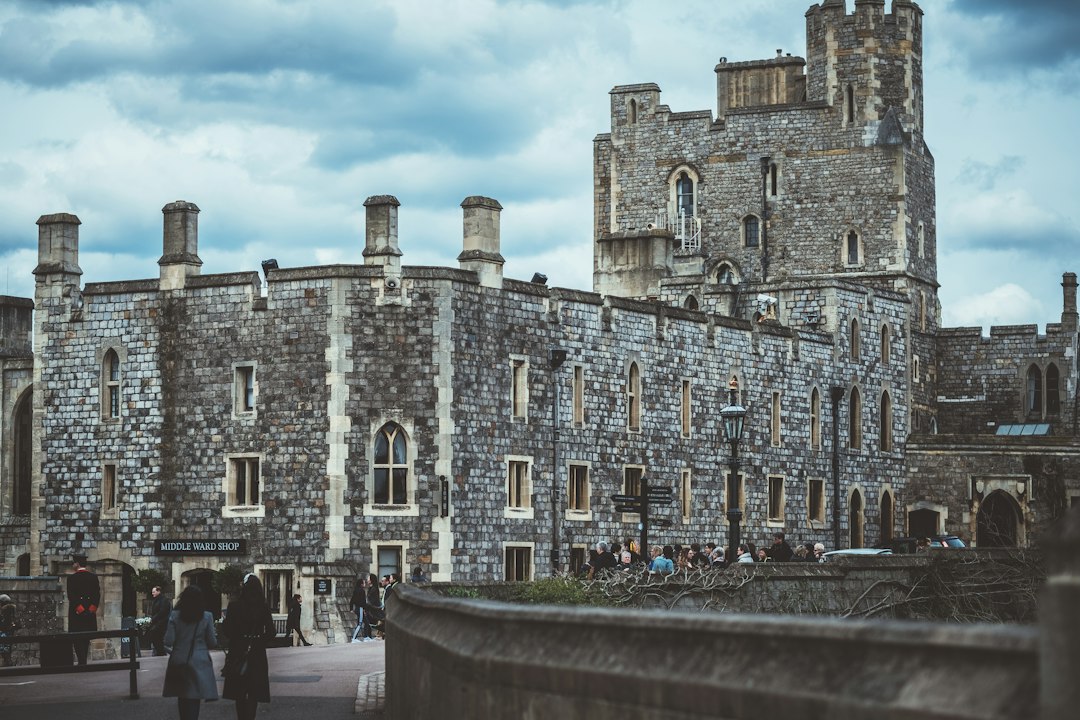
    Windsor Castle rising above the historic town, an evocative setting for stories on screen
    Windsor Castle and the historic landscape that continues to inspire visitors and storytellers. Photograph: Harry Grout via Unsplash.

    WINDSORCASTLE.INFO | FILM, TELEVISION & HERITAGE

    Windsor is known throughout the world for its royal castle, historic streets and sweeping parkland. Yet the wider Royal Borough has another story to tell: its buildings, landscapes and studios have helped bring many different worlds to the screen. From gothic horror and science fiction to period drama and modern television, the area offers a fascinating meeting point between heritage and popular culture.

    This guide explores the wider screen heritage of Windsor and its neighbours. It complements our existing feature, Windsor on Film: Famous Movies and Television Productions Made in the Royal Borough, with a closer look at why local places appeal to filmmakers and how visitors can discover the area responsibly.

    Bray Film Studios: a remarkable local film story

    Just outside Windsor, near Maidenhead, Bray Film Studios became closely associated with Hammer Film Productions and its influential run of British gothic horror films. The studio’s history is part of the region’s contribution to cinema, demonstrating how a comparatively compact production base could help create atmospheric films that travelled around the world.

    Bray is also associated with productions beyond horror, including the science-fiction landmark Alien (1979). These connections make the area especially interesting to film fans: a place familiar from everyday Berkshire life can also have a place in international cinema history.

    For background and location ideas, consult Visit Windsor’s official Film & TV guide. Production credits and location details can vary between individual films, so check a reliable production source before attributing a specific scene to a site.

    Oakley Court and the power of gothic architecture

    The Thames-side area around Bray contains striking historic buildings that have provided memorable settings for screen productions. Oakley Court, with its Victorian Gothic character, is famously connected with The Rocky Horror Picture Show (1975) and the wider tradition of British gothic cinema.

    Buildings with turrets, ornate stonework, dramatic rooflines and mature grounds can communicate atmosphere before a character even speaks. For filmmakers, architecture is a storytelling tool: it can suggest mystery, grandeur, isolation or eccentricity. The same building may feel entirely different when framed with new lighting, costumes, camera angles and set dressing.

    Please remember that a recognisable filming location is not automatically open to the public. Check the property’s own visitor information before planning a visit, and respect private land and residents.

    Windsor Great Park: landscapes with many identities

    Windsor Great Park offers long avenues, woodland, open grassland and far-reaching views. Such varied scenery is valuable to screen productions because a landscape can stand in for more than one fictional place. With carefully chosen camera positions, a stretch of countryside might become a royal estate, a remote road or a fantasy setting.

    The official Visit Windsor film guide lists productions associated with the wider area and provides a useful starting point for anyone interested in screen locations. Treat location lists as a guide rather than a guarantee that every exact filming spot is accessible. Paths, land management, filming arrangements and public access can differ from place to place.

    Historic Windsor and the art of creating a royal setting

    Period dramas and royal stories rely on much more than a grand building. Production designers combine architecture with furniture, props, costumes, lighting and carefully researched details to create a believable period. A location may be altered visually to represent another century or even another country.

    It is also important to distinguish between scenes filmed at Windsor Castle and scenes that merely depict it. Productions frequently combine several real locations, studio sets and visual effects. The presence of a castle on screen does not, by itself, prove that filming took place inside the actual royal residence.

    “A familiar building can become an entirely different world on screen — but the real history of the place is often just as compelling as the fiction.”

    Editorial reflection for WindsorCastle.info; not a quotation attributed to a named person.

    Can productions film inside Windsor Castle?

    Filming at an occupied royal residence is controlled and requires permission. The Royal Collection Trust explains that requests relating to royal residences are considered under specific criteria; uncommissioned location filming and reality filming are not permitted at the official royal residences. Filming requests connected with the Royal Family or Royal Household may need to go through Royal Communications instead.

    Read the current Royal Collection Trust filming and image guidance before making claims about a production’s access to the castle. The Royal Borough also provides practical information about filming permissions for Windsor and Eton, public streets and other local locations: Filming in the Royal Borough of Windsor & Maidenhead.

    Plan a film-inspired day out

    • Begin with Windsor’s historic centre and enjoy the exterior views of the castle from public areas.
    • Explore Windsor Great Park using official access information and a route suited to your time and mobility.
    • Look into the film heritage of Bray and nearby locations, checking access directly with each venue.
    • Pair your outing with a visit to Eton or a riverside walk, allowing time for refreshments.
    • Take photographs only where permitted, and follow signs and the instructions of site staff.

    Before travelling, check the latest opening details, transport options and any restrictions with the relevant official venue. Film locations may be privately owned, and the exact point seen in a production may not be publicly accessible.

    Explore more with WindsorCastle.info

    Windsor’s screen heritage adds another dimension to its royal and architectural history. It connects local landscapes with international cinema, celebrates the craftspeople behind film-making and gives visitors another way to appreciate the character of the Royal Borough.

    Continue with our related article: Windsor on Film: Famous Movies and Television Productions Made in the Royal Borough.


    Sources and further reading

    Image credit: Harry Grout via Unsplash. Image selected from Unsplash search results; verify the image’s current licence and retain attribution when publishing. Film titles are used for editorial identification. This article is independent and is not endorsed by the film studios, broadcasters or royal institutions mentioned.

  • Discover Windsor: The Ultimate Visitor Guide to Royal History, Attractions and Things to Do

    Discover Windsor: The Ultimate Visitor Guide to Royal History, Attractions and Things to Do

    Explore Windsor Castle, historic streets, beautiful parks, the River Thames and the neighbouring town of Eton.

    Welcome to WindsorCastle.info, your guide to discovering one of Britain’s most celebrated historic towns. Situated in Berkshire, Windsor brings together centuries of royal heritage, impressive architecture, peaceful riverside walks, independent shops, restaurants and attractions for visitors of all ages. Whether you are planning a day trip, a family holiday or a longer stay, Windsor offers a wonderful combination of history, culture, countryside and modern British life.

    From the magnificent towers of Windsor Castle to the tree-lined Long Walk and the historic streets of Eton, there is plenty to explore. This guide will help you plan your visit, discover the main attractions, make the most of your time and find useful information before setting off.

    1. Windsor Castle: The Heart of Royal Windsor

    Windsor Castle is the town’s best-known landmark and one of Britain’s most important royal residences. Its history stretches back almost a thousand years, and it remains a working royal palace as well as a major visitor attraction.

    Inside the castle precincts, visitors can discover the magnificent State Apartments, historic works of art and the remarkable architecture associated with the British monarchy. One of the highlights is Queen Mary’s Dolls’ House, an extraordinary miniature residence created with an astonishing level of detail.

    St George’s Chapel is another important feature of the castle. This beautiful Gothic chapel has a long association with royal worship, ceremonies and burials. It remains an active place of worship, so access for sightseeing may be restricted at certain times.

    Visitor tip: Allow around two hours as a starting point for your castle visit, and longer if you wish to explore at a leisurely pace. Wear comfortable shoes, as the route includes substantial walking and some steep areas.

    Check official tickets, opening times and planned closures before travelling:
    https://www.rct.uk/visit/windsor-castle

    2. The Long Walk: One of Windsor’s Most Famous Views

    For one of Windsor’s most memorable outdoor experiences, take a walk along the Long Walk. This celebrated tree-lined avenue creates a dramatic approach towards Windsor Castle and offers excellent opportunities for photography.

    The route is particularly attractive in spring and summer, when the trees are green, and in autumn, when the changing leaves bring warm colours to the landscape. On a clear day, the views towards the castle make a wonderful backdrop for photographs.

    You do not need to enter the castle to appreciate Windsor’s historic setting from the surrounding public areas. The Long Walk is also an excellent choice for visitors who enjoy fresh air, gentle exercise and open scenery.

    Please check local access information and respect signs, wildlife and estate rules.

    3. Windsor Great Park: Gardens, Woodland and Countryside

    Beyond the town centre lies Windsor Great Park, a historic landscape offering open spaces, woodland, gardens and extensive walking opportunities.

    Visitors can choose between a short scenic stroll and a much longer countryside excursion. The wider estate includes notable destinations such as Virginia Water and the Savill Garden, where seasonal planting provides changing displays throughout the year.

    The park is a good option for anyone who wants to balance the busy streets and historic interiors with time outdoors. Families, photographers, nature lovers and walkers can all find something to enjoy.

    Some attractions and facilities have separate admission charges or seasonal arrangements, so check the relevant official website before setting out.

    Useful information:
    https://www.windsorgreatpark.co.uk/

    4. Discover Eton Across the River Thames

    Just across the pedestrian bridge from Windsor lies Eton, a historic town famous for Eton College and its traditional High Street.

    Take time to explore the architecture, independent shops, cafés and historic streets. Eton provides a different atmosphere from Windsor’s busier tourist centre, making it an appealing addition to a day out.

    The Eton Walkway is a self-guided heritage route connecting points of local interest. It is a useful way to discover the town at your own pace while learning more about its buildings and history.

    Find local visitor information:
    https://www.visiteton.info/

    5. The River Thames: Relax by the Water

    The River Thames adds another dimension to a visit to Windsor. Riverside paths, gardens and views across the water provide a welcome break from sightseeing.

    Depending on the season and current services, visitors may be able to enjoy a river cruise or boat trip. Seeing the town from the water offers a different perspective on Windsor Castle, the riverbanks and nearby Eton.

    Alexandra Gardens is another pleasant place to pause, particularly for visitors who want a green space close to the town centre.

    Before booking a cruise, check its operating dates, departure point, journey duration and ticket prices with the provider.

    6. Shops, Cafés and Places to Eat

    Windsor’s town centre offers a mixture of well-known retailers, independent shops, cafés, restaurants and traditional pubs. Peascod Street and the surrounding shopping streets are useful places to begin exploring.

    Whether you are looking for souvenirs, gifts, a quick lunch or a leisurely meal, there are options to suit different tastes and budgets. Afternoon tea is also a popular choice for visitors who want to enjoy a traditional British experience.

    Food prices, menus and opening hours vary between businesses. Check current information directly with each restaurant before visiting, especially during weekends, public holidays and busy tourist periods.

    A useful idea for WindsorCastle.info: Create a dedicated Windsor food and shopping directory featuring menus, indicative prices, business websites, accessibility details and visitor reviews.

    7. Theatre, Family Attractions and Local Entertainment

    Windsor is more than a historic destination. The town and surrounding area offer entertainment for visitors with a range of interests.

    Theatre Royal Windsor presents stage productions throughout the year. Families may also wish to investigate LEGOLAND Windsor Resort, while other attractions, guided tours and seasonal activities provide additional options.

    Check each attraction’s official website for age guidance, advance booking, admission prices and operating dates.

    Official tourism information:
    https://www.windsor.gov.uk/

    8. A Suggested One-Day Windsor Itinerary

    Morning — Discover royal history

    Begin with Windsor Castle. If you intend to enter, book in advance and check the opening arrangements. Prioritise the State Apartments and St George’s Chapel, subject to availability and the day’s visitor route.

    Late morning — Explore the historic streets

    After your castle visit, wander through the town centre and browse the shops around the historic streets.

    Lunch — Enjoy a local café or restaurant

    Choose a place to eat that suits your budget and take a break before the afternoon’s activities.

    Afternoon — Walk the Long Walk or visit Eton

    If you enjoy open scenery, head towards the Long Walk for castle views. Alternatively, cross the bridge to explore Eton’s High Street and heritage trail.

    Late afternoon — Finish by the Thames

    End your day with a riverside stroll, a visit to Alexandra Gardens or a boat trip if services are operating.

    This itinerary is flexible. Visitors with mobility requirements, young children or limited time may prefer to choose two or three highlights rather than trying to fit everything into one day.

    9. Getting to Windsor

    Windsor is served by two railway stations:

    • Windsor & Eton Central, with services connecting through Slough.
    • Windsor & Eton Riverside, with services connecting to London Waterloo.

    Both stations are within walking distance of the town centre and castle, although the route and gradients differ.

    If travelling by car, plan your parking in advance. Do not assume that visitor parking is available inside the castle grounds. Check current town-centre car parks, charges and any restrictions before travelling.

    For up-to-date travel advice, consult National Rail:
    https://www.nationalrail.co.uk/

    For local transport and visitor information:
    https://www.windsor.gov.uk/

    10. Practical Tips for Your Visit

    • Check before you travel: Windsor Castle is a working royal palace, and parts or all of the visitor route can close for official events.
    • Book important attractions ahead: Advance booking can help avoid disappointment.
    • Wear comfortable footwear: Historic streets, slopes and longer walking routes make suitable shoes worthwhile.
    • Plan around the weather: Bring a waterproof layer and check the forecast before spending extended periods outdoors.
    • Allow time for breaks: Cafés, gardens and riverside areas can make a busy day more enjoyable.
    • Consider accessibility: Check official access information for individual attractions and routes before setting off.
    • Respect historic places: Follow photography rules, local signs and instructions from staff.
    • Check prices directly: Ticket costs, transport fares, menus and parking charges can change.

    11. Free and Lower-Cost Ways to Enjoy Windsor

    You can appreciate much of Windsor without purchasing an admission ticket to every attraction.

    Explore the town’s historic streets, enjoy public riverside areas, photograph the castle from suitable public viewpoints and discover the Long Walk. A self-guided heritage walk can also be an enjoyable way to learn about Windsor and Eton.

    If you are planning a budget-conscious trip, compare transport costs, food options and paid attraction tickets before travelling. A little planning can help you decide which experiences matter most.

    Always check access restrictions and any charges that apply to specific gardens, estates or facilities.

    12. Discover Windsor with WindsorCastle.info

    Windsor is a destination where history and everyday life meet. Its royal residence, historic chapel, grand avenues, green spaces, riverside setting and neighbouring Eton offer visitors a memorable introduction to Britain’s heritage.

    At WindsorCastle.info, our aim is to help readers discover these places through practical visitor guides, historical features, local recommendations, photography, interactive quizzes and useful links.

    Whether you are visiting for a few hours or planning a longer stay, take your time, explore beyond the main attractions and discover your own favourite part of Windsor.

    Plan ahead, explore respectfully and enjoy your visit to Royal Windsor.

    Official visitor resources

    • Royal Collection Trust — Windsor Castle tickets, opening information and visitor guidance: https://www.rct.uk/visit/windsor-castle
    • Visit Windsor and the Royal Borough — attractions, events, travel and visitor information: https://www.windsor.gov.uk/
    • Windsor Great Park — gardens, estate information and visitor planning: https://www.windsorgreatpark.co.uk/
    • Visit Eton — local heritage, walks and visitor information: https://www.visiteton.info/
    • National Rail — train services and journey planning: https://www.nationalrail.co.uk/

    Visitor information should be checked against the official sources before publication and updated when opening arrangements, prices or services change.

    2026 Technology Agentic AI AI Artificial Intelligence Blog British Royal Family Castle Changing of the Guard Data Centres dea drink England food football Future Future Technology Investing medication Orbital Data Centres Prediction Premier League 26/27 royal landmarks UK Satellites Science Fiction soccer Space Computing Space Technology SPCX Starmind Starship Technology Thca visiting windsor castle Windsor Windsor 2026 Windsor castle blog Windsor Castle walk Windsor Drinks Windsor Great Park Windsor hungry Windsor Long Walk Windsor tourism Windsor travel blog World Cup World Cup 2026

    • Windsor Castle: 1,000 Years of Royal History

      Windsor Castle: 1,000 Years of Royal History

      From William the Conqueror to the modern monarchy — discover the remarkable story of one of Britain’s most enduring royal residences.

      Historic stone walls of Windsor Castle in Windsor, England.
      Windsor Castle’s historic walls tell a story of defence, royal power and centuries of rebuilding. Photograph by Wyatt Simpson via Unsplash.

      Rising above the River Thames in Berkshire, Windsor Castle is one of Britain’s best-known royal landmarks. Its towers, stone walls, grand apartments and magnificent chapel tell a story of conquest, royal ambition, architecture and national history.

      Founded by William the Conqueror around 1070, the castle developed from a defensive stronghold into a royal residence used by monarchs across almost a thousand years. It remains a working royal palace and an important part of Britain’s living heritage.

      Nearly a millennium of history stands within these walls — and the story of Windsor Castle is still being written.

      1. William the Conqueror and the Norman beginnings

      After the Norman Conquest of 1066, William the Conqueror established a network of fortifications to secure his rule. The elevated ground at Windsor offered a commanding position near the River Thames and close to a royal hunting area. Construction began around 1070, with earthworks and timber defences forming the earliest castle.

      Its position helped protect approaches to London. Over time, Windsor became a place for royal residence as well as defence. Under Henry I, domestic royal quarters were established, while later monarchs strengthened the fortifications and replaced important timber structures with stone.

      2. From fortress to royal palace

      Windsor changed significantly over the centuries. Its central mound and keep evolved into the familiar Round Tower, while successive building campaigns created more comfortable royal apartments and ceremonial spaces. The castle’s layout reflects the different priorities of the monarchs who lived and worked there.

      During the fourteenth century, Edward III oversaw an ambitious transformation. From 1357, major rebuilding helped turn Windsor into a grand Gothic palace. Edward III also founded the Order of the Garter in 1348, a chivalric order closely associated with Windsor and St George’s Chapel.

      Windsor Castle with its historic stone walls and Round Tower overlooking Windsor.

      The castle’s towers and fortifications remain powerful symbols of Windsor’s royal heritage. Photograph by E Mens via Unsplash.

      3. Tudor Windsor: Henry VIII and Elizabeth I

      The Tudor monarchs inherited a castle already rich in royal associations. Henry VIII made additions, including the gate that bears his name in the Lower Ward. Windsor continued to be used for hunting, court life and the exercise of royal authority.

      Elizabeth I also used Windsor. The Tudor era brought profound religious and political change, and the castle’s chapel and religious spaces formed part of the wider story of the Crown’s changing relationship with the Church.

      4. Georgian grandeur and Queen Victoria

      In the nineteenth century, George IV commissioned extensive alterations with architect Jeffry Wyatville. These works gave Windsor a more imposing exterior and grander interiors, helping shape the appearance familiar to visitors today.

      Queen Victoria made Windsor an important setting for royal and family life after she came to the throne in 1837. As rail travel expanded, the castle also became more accessible to visitors, and arrangements for public visits developed over time.

      Windsor is not frozen in one period of history: Norman defences, medieval architecture and later royal design exist side by side.

      5. St George’s Chapel: faith, ceremony and remembrance

      St George’s Chapel is one of the castle’s most important historic buildings. The present chapel took shape during the late medieval period, with major work beginning under Edward IV in 1475. Its Gothic architecture, elaborate stonework and rich interior reflect centuries of religious devotion and royal patronage.

      The chapel is associated with the Order of the Garter and has hosted royal weddings and important services. It is also a place of royal burial and remembrance, linking medieval kings and modern generations with the long history of the monarchy.

      St George’s Chapel at Windsor Castle showing its historic Gothic architecture.

      St George’s Chapel is a Gothic masterpiece within the castle precincts. Photograph by Malgorzata Bujalska via Unsplash.

      6. The great fire of 1992

      On 20 November 1992, a major fire broke out at Windsor Castle. It began in Queen Victoria’s Private Chapel after a faulty spotlight ignited a curtain. The blaze spread and damaged or destroyed 115 rooms, including nine State Rooms.

      The restoration required years of careful conservation and craftsmanship. The work was completed on 20 November 1997, five years after the fire. The project combined traditional skills with considered modern design, demonstrating how a historic building can recover from devastating damage.

      7. Windsor Castle today

      Windsor Castle remains an active royal residence and a setting for official events, audiences, receptions and state occasions. Its State Apartments, ceremonial spaces, art and architecture offer visitors a window into British history. Access to particular rooms can vary, so check official visitor information before travelling.

      Plan your visit with the Royal Collection Trust.

      Why Windsor Castle matters

      Windsor Castle has endured because successive generations have adapted, maintained and restored it. Its story encompasses conquest, royal authority, architecture, faith, artistry and conservation. Nearly a thousand years after its foundation, it remains a living link between Britain’s medieval past and its modern monarchy — and an essential part of Windsor’s identity.

      Explore further

      Image credits and reuse information

      Castle exterior and walls: E Mens and Wyatt Simpson, via Unsplash. St George’s Chapel: Malgorzata Bujalska, via Unsplash. Images were added to the WindsorCastle.info media library. Photographer profile links are provided above; check the applicable image terms before reuse.


      Author: Simon B. Gemmill — Webmaster, WindsorCastle.info

      2026 Technology (3) Agentic AI (1) AI (5) Artificial Intelligence (3) Blog (101) British Royal Family (2) Castle (109) Changing of the Guard (2) Data Centres (1) dea (82) drink (94) England (5) food (92) football (7) Future (2) Future Technology (3) Investing (1) medication (92) Orbital Data Centres (1) Prediction (3) Premier League 26/27 (5) royal landmarks UK (2) Satellites (1) Science Fiction (2) soccer (5) Space Computing (1) Space Technology (1) SPCX (1) Starmind (1) Starship (1) Technology (2) Thca (2) visiting windsor castle (3) Windsor (103) Windsor 2026 (2) Windsor castle blog (110) Windsor Castle walk (2) Windsor Drinks (102) Windsor Great Park (2) Windsor hungry (97) Windsor Long Walk (3) Windsor tourism (3) Windsor travel blog (3) World Cup (3) World Cup 2026 (2)
    • From Historic Streets to the Small Screen: Windsor’s Film and Television Heritage

      From Historic Streets to the Small Screen: Windsor’s Film and Television Heritage

      Windsor Castle rising above the historic town, an evocative setting for stories on screen
      Windsor Castle and the historic landscape that continues to inspire visitors and storytellers. Photograph: Harry Grout via Unsplash.

      WINDSORCASTLE.INFO | FILM, TELEVISION & HERITAGE

      Windsor is known throughout the world for its royal castle, historic streets and sweeping parkland. Yet the wider Royal Borough has another story to tell: its buildings, landscapes and studios have helped bring many different worlds to the screen. From gothic horror and science fiction to period drama and modern television, the area offers a fascinating meeting point between heritage and popular culture.

      This guide explores the wider screen heritage of Windsor and its neighbours. It complements our existing feature, Windsor on Film: Famous Movies and Television Productions Made in the Royal Borough, with a closer look at why local places appeal to filmmakers and how visitors can discover the area responsibly.

      Bray Film Studios: a remarkable local film story

      Just outside Windsor, near Maidenhead, Bray Film Studios became closely associated with Hammer Film Productions and its influential run of British gothic horror films. The studio’s history is part of the region’s contribution to cinema, demonstrating how a comparatively compact production base could help create atmospheric films that travelled around the world.

      Bray is also associated with productions beyond horror, including the science-fiction landmark Alien (1979). These connections make the area especially interesting to film fans: a place familiar from everyday Berkshire life can also have a place in international cinema history.

      For background and location ideas, consult Visit Windsor’s official Film & TV guide. Production credits and location details can vary between individual films, so check a reliable production source before attributing a specific scene to a site.

      Oakley Court and the power of gothic architecture

      The Thames-side area around Bray contains striking historic buildings that have provided memorable settings for screen productions. Oakley Court, with its Victorian Gothic character, is famously connected with The Rocky Horror Picture Show (1975) and the wider tradition of British gothic cinema.

      Buildings with turrets, ornate stonework, dramatic rooflines and mature grounds can communicate atmosphere before a character even speaks. For filmmakers, architecture is a storytelling tool: it can suggest mystery, grandeur, isolation or eccentricity. The same building may feel entirely different when framed with new lighting, costumes, camera angles and set dressing.

      Please remember that a recognisable filming location is not automatically open to the public. Check the property’s own visitor information before planning a visit, and respect private land and residents.

      Windsor Great Park: landscapes with many identities

      Windsor Great Park offers long avenues, woodland, open grassland and far-reaching views. Such varied scenery is valuable to screen productions because a landscape can stand in for more than one fictional place. With carefully chosen camera positions, a stretch of countryside might become a royal estate, a remote road or a fantasy setting.

      The official Visit Windsor film guide lists productions associated with the wider area and provides a useful starting point for anyone interested in screen locations. Treat location lists as a guide rather than a guarantee that every exact filming spot is accessible. Paths, land management, filming arrangements and public access can differ from place to place.

      Historic Windsor and the art of creating a royal setting

      Period dramas and royal stories rely on much more than a grand building. Production designers combine architecture with furniture, props, costumes, lighting and carefully researched details to create a believable period. A location may be altered visually to represent another century or even another country.

      It is also important to distinguish between scenes filmed at Windsor Castle and scenes that merely depict it. Productions frequently combine several real locations, studio sets and visual effects. The presence of a castle on screen does not, by itself, prove that filming took place inside the actual royal residence.

      “A familiar building can become an entirely different world on screen — but the real history of the place is often just as compelling as the fiction.”

      Editorial reflection for WindsorCastle.info; not a quotation attributed to a named person.

      Can productions film inside Windsor Castle?

      Filming at an occupied royal residence is controlled and requires permission. The Royal Collection Trust explains that requests relating to royal residences are considered under specific criteria; uncommissioned location filming and reality filming are not permitted at the official royal residences. Filming requests connected with the Royal Family or Royal Household may need to go through Royal Communications instead.

      Read the current Royal Collection Trust filming and image guidance before making claims about a production’s access to the castle. The Royal Borough also provides practical information about filming permissions for Windsor and Eton, public streets and other local locations: Filming in the Royal Borough of Windsor & Maidenhead.

      Plan a film-inspired day out

      • Begin with Windsor’s historic centre and enjoy the exterior views of the castle from public areas.
      • Explore Windsor Great Park using official access information and a route suited to your time and mobility.
      • Look into the film heritage of Bray and nearby locations, checking access directly with each venue.
      • Pair your outing with a visit to Eton or a riverside walk, allowing time for refreshments.
      • Take photographs only where permitted, and follow signs and the instructions of site staff.

      Before travelling, check the latest opening details, transport options and any restrictions with the relevant official venue. Film locations may be privately owned, and the exact point seen in a production may not be publicly accessible.

      Explore more with WindsorCastle.info

      Windsor’s screen heritage adds another dimension to its royal and architectural history. It connects local landscapes with international cinema, celebrates the craftspeople behind film-making and gives visitors another way to appreciate the character of the Royal Borough.

      Continue with our related article: Windsor on Film: Famous Movies and Television Productions Made in the Royal Borough.


      Sources and further reading

      Image credit: Harry Grout via Unsplash. Image selected from Unsplash search results; verify the image’s current licence and retain attribution when publishing. Film titles are used for editorial identification. This article is independent and is not endorsed by the film studios, broadcasters or royal institutions mentioned.

    • What Can Pint and Half-Pint Bottles Be Used For?

      What Can Pint and Half-Pint Bottles Be Used For?

      Discover practical household uses, garden decorations, craft projects and environmentally responsible ways to make the most of glass bottles.

      Glass bottles come in many shapes, sizes and colours. Pint bottles and half-pint bottles can be found in homes, kitchens, pubs, restaurants and recycling collections. Before sending an empty bottle for recycling, it may be worth considering whether it has a useful second life.

      From miniature flower vases to craft projects, storage ideas and decorative lighting, these everyday containers can inspire a range of creative activities.

      1. Flower vases and table decorations

      One of the simplest ways to reuse a bottle is to turn it into a small flower vase.

      • Pint bottles: Display a few garden flowers, decorative branches or seasonal arrangements.
      • Half-pint bottles: Hold single stems, small wildflower bunches or miniature floral arrangements.
      • Coloured bottles: Brown, green and blue glass can add colour to a windowsill, dining table or garden display.

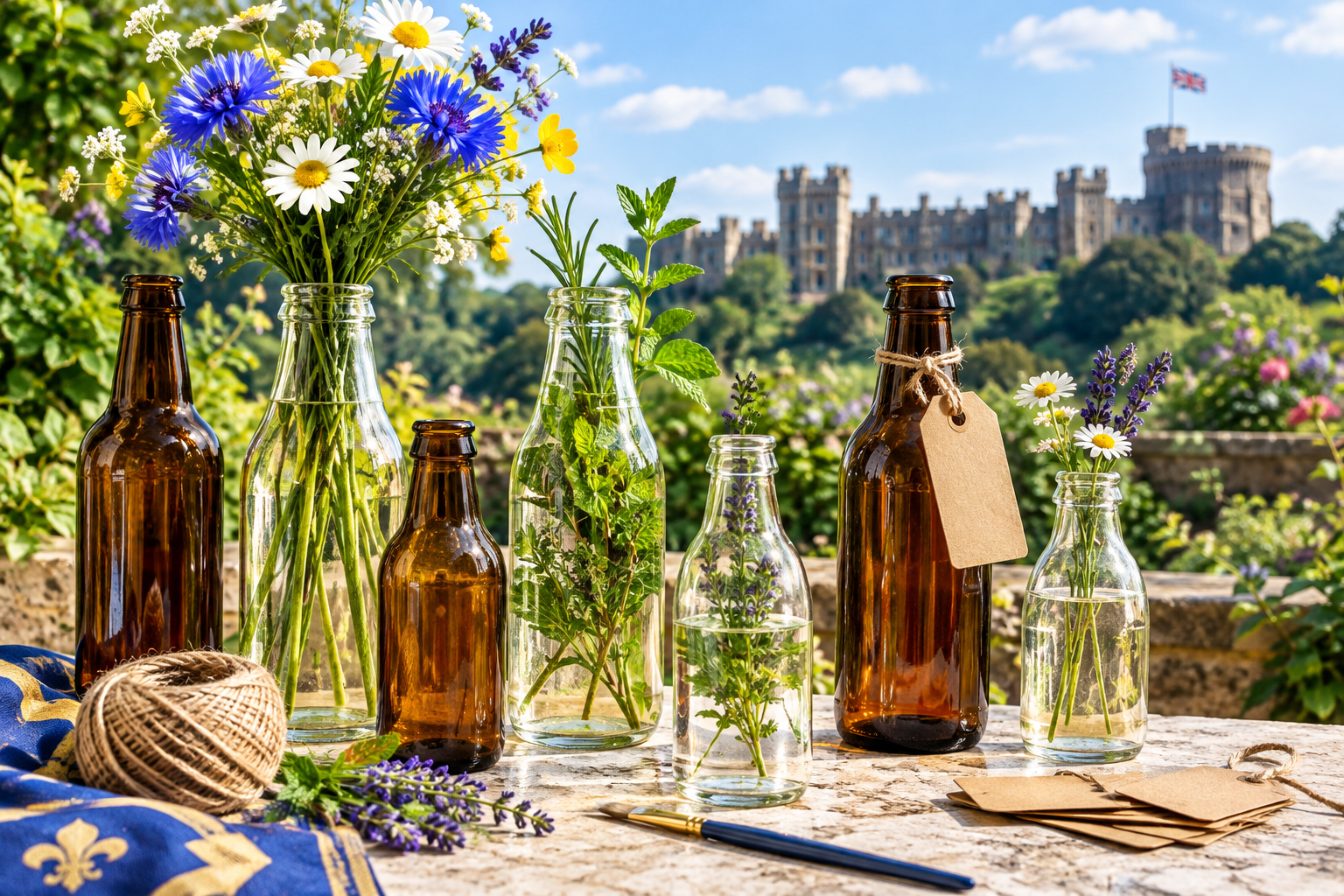
      For a royal blue-and-gold theme, decorate the outside with gold ribbon, blue fabric or a removable decorative label. These can make attractive table decorations for parties, weddings and special occasions.

      “A simple glass bottle can become a charming decorative feature with a little imagination.”

      2. Herb growing and garden projects

      Clean bottles can inspire small gardening projects, especially where space is limited.

      Possible uses include:

      • Displaying freshly cut herbs in water for short periods.
      • Holding cuttings while roots develop, where the plant is suitable for water propagation.
      • Creating a collection of small vases for herbs and flowers.
      • Displaying dried grasses and ornamental stems.
      • Organising plant labels and lightweight gardening accessories nearby.

      Important: Glass bottles are not automatically suitable planters. Their narrow openings can make planting and drainage difficult. For plants that need soil, use a purpose-made planter or a suitable container with drainage.

      Keep glass bottles stable, out of walkways and away from places where they could fall or break.

      3. Homemade decorations and craft projects

      Empty pint and half-pint bottles can be used for a variety of craft projects.

      Ideas for adults and supervised family activities

      • Painted bottle decorations: Use suitable glass paint to create seasonal patterns.
      • Decorative centrepieces: Combine clean bottles with ribbons, artificial flowers and paper tags.
      • Wedding table displays: Give each bottle a number or table name.
      • Christmas decorations: Add battery-operated lights designed for decorative use.
      • Miniature message bottles: Place a rolled-up note inside a clean, dry bottle for a novelty gift.

      Avoid cutting or drilling glass at home unless you have the proper equipment, training and protective measures. Sharp edges can cause serious injuries.

      4. Storage for small household items

      Some bottles may be useful for storing non-food items, provided the openings are suitable.

      Examples include:

      • Decorative beads and craft materials.
      • Small quantities of dry decorative items.
      • Paper labels, where they fit.
      • Coloured sand or similar display materials.
      • Small craft components that need to be kept together.

      Keep bottles clearly labelled and out of reach of young children. Never use a drinks bottle to store chemicals, cleaning products or anything that could be mistaken for a beverage.

      5. Bottle lighting and lantern decorations

      Glass bottles can form part of attractive lighting displays.

      For example, a clean bottle can hold a purpose-made, battery-operated LED light string, creating a decorative glow for a shelf or covered outdoor display.

      Choose lights intended for the proposed use, follow the manufacturer’s instructions and keep batteries and electrical components dry.

      Safety tip: Do not put a burning candle inside an ordinary drinks bottle. Heat can cause damage, and an unsuitable bottle may crack or break. Never leave decorative lighting unattended.

      6. Creative uses for pubs, cafés and events

      Pubs, cafés and event organisers may find small bottles useful for non-food decorative purposes.

      Possible applications include:

      • Table decorations.
      • Flower displays at private events.
      • Displaying themed colours for celebrations.
      • Craft workshops.
      • Reusable-looking decorative props for photographs.
      • Display arrangements for heritage, food and drink themed exhibitions.

      Businesses should distinguish decorative reuse from commercial refilling. A bottle that looks clean is not necessarily suitable for filling with drinks again.

      British Glass explains that many glass containers are designed for single use and are not built to withstand the additional stresses of repeated commercial reuse. Containers intended for refill systems should be specifically designed and tested for that purpose.

      Source: British Glass — Statement on the Unsuitability of Single-Use Containers for Reuse.

      7. Can pint and half-pint bottles be used for drinks?

      This depends on the bottle’s original purpose, condition and design.

      A bottle originally intended for a particular beverage should not automatically be treated as a safe, refillable drinks container. Chips, cracks, damaged necks, unsuitable closures and contamination can all create problems.

      For drinking water, homemade drinks or other food and drink storage, use containers intended for that purpose and follow appropriate cleaning and food-safety guidance. For commercial filling, use packaging designed and validated for the intended product and filling process.

      Never use an ordinary glass bottle for hot liquids unless its manufacturer specifically confirms that it is suitable for the temperature involved.

      8. Reuse or recycle: which is best?

      Reuse can be helpful when an item has a practical purpose and can be used safely. However, reuse is not appropriate for every bottle.

      The environmental benefits depend on the bottle’s design, how it is used, how far it is transported and whether cleaning or other processing is required.

      The Waste and Resources Action Programme and local waste authorities provide guidance on reducing waste and recycling glass. In England, government guidance also explains the household recycling arrangements introduced from 31 March 2026.

      Useful resources:

      Check your local council’s instructions before placing bottles in a recycling collection. Ordinary glass bottles and jars are generally recyclable, but drinking glasses, mirrors and heat-resistant cookware may require different disposal arrangements.

      9. A simple project to try at home

      Create a miniature bottle garden display

      You will need:

      • One clean, intact pint bottle.
      • One clean, intact half-pint bottle.
      • A few fresh flowers or suitable decorative stems.
      • Water, if using fresh flowers.
      • Optional blue-and-gold ribbon or removable tags.

      Instructions:

      1. Inspect both bottles carefully and reject any with chips or cracks.
      2. Wash and rinse them thoroughly.
      3. Fill each with an appropriate amount of water if using fresh flowers.
      4. Arrange a small flower display in each bottle.
      5. Add ribbon or a decorative tag without obstructing the bottle opening.
      6. Place the bottles on a stable surface away from edges and busy walkways.

      The result is a simple, inexpensive display for a windowsill, desk, dining table or garden room.

      Conclusion: Small Bottles, Big Possibilities

      Pint and half-pint bottles can offer plenty of creative possibilities. They can become flower vases, decorative centrepieces, craft materials and display pieces, helping people make thoughtful use of everyday objects.

      The key is to choose a suitable purpose, inspect the glass carefully and avoid uses for which the original container was not designed.

      “The best reuse project is one that is useful, safe and makes thoughtful use of the materials already available.”

      For more lifestyle, home, garden and sustainability ideas, continue exploring WindsorCastle.info.

      Article prepared for WindsorCastle.info.

      Recommended source links

      These are relevant reference sources for the article. They provide background and guidance; they are not endorsements of every craft idea described above.

      Practical suggestions for reusing bottles and jars, including home decorations and garden uses.

      Important safety information about single-use bottles versus containers designed for repeated commercial use.

      Official information about household recycling requirements in England.

      Editorial note: The article is a draft ready for review and copying into WordPress. It has not been published to WindsorCastle.info. The external links are supplied as reference resources; their continued availability should be checked before publication.

      2026 Technology (3) Agentic AI (1) AI (5) Artificial Intelligence (3) Blog (101) British Royal Family (2) Castle (109) Changing of the Guard (2) Data Centres (1) dea (82) drink (94) England (5) food (92) football (7) Future (2) Future Technology (3) Investing (1) medication (92) Orbital Data Centres (1) Prediction (3) Premier League 26/27 (5) royal landmarks UK (2) Satellites (1) Science Fiction (2) soccer (5) Space Computing (1) Space Technology (1) SPCX (1) Starmind (1) Starship (1) Technology (2) Thca (2) visiting windsor castle (3) Windsor (103) Windsor 2026 (2) Windsor castle blog (110) Windsor Castle walk (2) Windsor Drinks (102) Windsor Great Park (2) Windsor hungry (97) Windsor Long Walk (3) Windsor tourism (3) Windsor travel blog (3) World Cup (3) World Cup 2026 (2)
    • Windsor on Film: Famous Movies and Television Productions Made in the Royal Borough

      Windsor on Film: Famous Movies and Television Productions Made in the Royal Borough

      Discover the real-life locations behind British cinema, Hammer Horror, Harry Potter, James Bond and some of television’s best-loved productions.

      Windsor is famous around the world for its historic castle, royal traditions and beautiful countryside. Yet the surrounding area has another fascinating story to tell: it has provided the backdrop for films, television dramas, comedies and fantasy adventures enjoyed by audiences across the globe.

      From the atmospheric buildings of Bray to the sweeping landscapes of Windsor Great Park, the Royal Borough of Windsor and Maidenhead offers film enthusiasts plenty to discover.

      Whether you love classic British cinema, supernatural adventures, period dramas or modern blockbusters, you may be surprised by how many familiar productions have connections with this part of Berkshire.

      1. Bray Film Studios: A home of British horror

      One of the most important names in the area’s film history is Bray Film Studios, situated between Windsor and Maidenhead.

      The studios became closely associated with Hammer Film Productions, the British company famous for its gothic horror films. Productions featuring legendary performers Christopher Lee and Peter Cushing helped establish Hammer’s distinctive style, combining atmospheric country houses, dramatic lighting, elaborate make-up and memorable monsters.

      Among the celebrated productions associated with Bray are The Curse of Frankenstein (1957), Dracula (1958) and The Mummy (1959).

      Bray’s film-making heritage extends beyond horror. The studios were also involved in the production of Alien (1979), the science-fiction classic directed by Ridley Scott, and The Rocky Horror Picture Show (1975) has an important connection to the local film-making story.

      For film historians, Bray illustrates how a location can become part of cinema history through the creative work of directors, actors, designers, technicians and special-effects artists.

      Explore further: Bray Studios — official history

      2. Oakley Court and the gothic look of British cinema

      Near Bray stands Oakley Court, a striking Victorian Gothic building overlooking the Thames.

      Its distinctive architecture has made it an enduring part of the area’s screen heritage. The building’s dramatic exterior, elaborate stonework and unusual atmosphere made it particularly suitable for productions requiring a mysterious mansion or a grand, slightly unsettling setting.

      Oakley Court is famously associated with The Rocky Horror Picture Show (1975), whose extraordinary blend of musical comedy, science fiction and gothic imagery has attracted generations of fans.

      The building is also connected with the wider Hammer horror tradition, including The Curse of Frankenstein (1957).

      These locations demonstrate why filmmakers are attracted to historic British buildings: they can create a convincing atmosphere without relying entirely on constructed sets or computer-generated imagery.

      Before visiting, check the venue’s current access arrangements. A film location may be privately owned or operating as a hotel rather than a public attraction.

      3. Windsor Great Park: Countryside on the big screen

      Windsor Great Park offers a very different cinematic landscape.

      Its avenues, woodland, open countryside and expansive views can represent a variety of places on screen. The official Visit Windsor film-location guide lists numerous productions associated with the park, including Harry Potter, Robin Hood, Bridget Jones’s Baby, Snow White and the Huntsman and No Time to Die.

      The park’s versatility helps explain its appeal. One landscape might become an enchanted forest in a fantasy film, a secluded country road in a thriller or a romantic setting in a period drama.

      For visitors, the pleasure lies in appreciating the scenery while learning how filmmakers transform real locations into fictional worlds.

      Visitor tip: Windsor Great Park is extensive, so plan your route before setting out. Check the relevant access information and remember that a location appearing in a film does not necessarily mean that the exact filming spot is accessible to the public.

      Read the official guide: Visit Windsor — Film and TV locations.

      4. Harry Potter and the magic of British locations

      The Harry Potter films helped introduce a new generation of viewers to Britain’s historic buildings and dramatic landscapes.

      The Windsor area has a connection with the wider filming story through locations associated with the films, including Windsor Great Park. The Royal Borough’s official guide lists the Harry Potter films among productions filmed in the area.

      It is worth remembering that a film’s fictional Hogwarts School is not one single real building. The filmmakers used a combination of locations, sets, visual effects and other production techniques to create its magical world.

      That combination is part of what makes location research so interesting: the finished scene may bring together several different places to create one convincing setting.

      For fans, a day exploring the Windsor area can therefore become an opportunity to appreciate both the real landscape and the imagination that transforms it on screen.

      5. James Bond: British landscapes and international adventures

      The James Bond films are renowned for their spectacular locations, from international cities to elegant country estates and dramatic countryside.

      The Royal Borough’s official film-location guide lists A View to a Kill (1985) in connection with Ascot Racecourse and No Time to Die (2021) among productions associated with Windsor Great Park.

      These connections highlight the importance of British locations to international cinema. Familiar landscapes can be presented in a completely new way through camera angles, lighting, editing and the movement of actors and vehicles.

      For Bond fans, discovering a filming location adds another dimension to watching a favourite film. A landscape that lasts only a few seconds on screen may have a much longer story in real life.

      6. Period dramas, historic houses and royal Britain

      Historic buildings around Windsor have also helped bring earlier centuries to life.

      The official Visit Windsor guide records productions associated with locations such as Cliveden, Dorney Court and Eton College. The titles listed include Elizabeth (1998), The Other Boleyn Girl (2008), The Social Network (2010) and Bridgerton.

      Each production presents different challenges. A historical drama might require an authentic-looking exterior, while a modern story might use the same type of building to represent wealth, education or social status.

      Filmmakers may also change the appearance of a location through carefully selected props, costumes, lighting and set decoration.

      The result is a reminder that architecture is more than a background: it can help communicate the period, atmosphere and social world of a story.

      7. How a real location becomes a film set

      What happens when a film crew arrives at a historic property or a public landscape?

      The process can involve location managers, directors, cinematographers, production designers, lighting teams, sound technicians, costume departments and many other specialists.

      Before filming begins, a production generally needs to assess practical matters such as access, transport, electricity, parking, safety and the protection of the site.

      The crew then works to capture the required scenes while respecting any conditions attached to filming permission.

      Historic locations can be especially demanding because their owners and managers must balance the needs of a production with the preservation of the building and the experience of visitors.

      In Windsor, filming on public streets, in the park and at heritage sites may involve different permissions. The Royal Borough provides official guidance for productions seeking to film locally.

      Official information: Filming in the Royal Borough of Windsor and Maidenhead.

      8. Plan your own film-location day around Windsor

      If you want to explore the area’s screen heritage, consider making a day of it.

      Start with Windsor and Eton, where historic streets and riverside views provide a wonderful introduction to the area. Continue towards Bray to learn about the history of British horror cinema, and investigate the locations around the Royal Borough that appear in the official film guide.

      If you have more time, consider a visit to Windsor Great Park, checking access and travel arrangements beforehand.

      Some filming locations are privately owned, and others may be visible only from public viewpoints. Do not enter private property or restricted filming areas without permission.

      You can use the official location guide to identify places associated with productions that interest you, then plan a route that suits your available time.

      9. Why Windsor’s film heritage matters

      Film and television help people see familiar places in new ways. A country house becomes a haunted mansion, a woodland path becomes a fantasy landscape, and an English country estate becomes part of an international adventure.

      For Windsor, this screen heritage complements the area’s better-known royal history. It offers another reason to explore the surrounding countryside, discover historic buildings and appreciate the creative industries that bring stories to life.

      It also provides opportunities for future articles on WindsorCastle.info, including interviews with local historians, film-location guides, classic cinema features and quizzes about famous productions.

      Test your film knowledge

      Question 1: Which British production company became famous for gothic horror films associated with Bray?

      Question 2: Which science-fiction film directed by Ridley Scott is part of Bray Studios’ history?

      Question 3: Name one film associated with Windsor Great Park in the official Visit Windsor guide.

      Question 4: Which 1975 musical comedy is famously associated with Oakley Court?

      Question 5: Why do filmmakers use real historic buildings and landscapes?

      Answers: 1. Hammer Film Productions. 2. Alien. 3. Examples include Harry Potter, No Time to Die or Bridget Jones’s Baby. 4. The Rocky Horror Picture Show. 5. To provide authentic architecture, atmosphere and scenery for their stories.

      Discover more with WindsorCastle.info

      The next time you watch a British film or television drama, look beyond the actors and the story. You may discover that the setting has a history of its own.

      Explore Windsor’s royal heritage, enjoy its historic streets and countryside, and discover the films that have helped bring this remarkable part of England to the screen.

      Article prepared for WindsorCastle.info. Film titles and location associations are provided for educational and tourism purposes. All film titles, production names and related trademarks remain the property of their respective owners.

      2026 Technology Agentic AI AI Artificial Intelligence Blog British Royal Family Castle Changing of the Guard Data Centres dea drink England food football Future Future Technology Investing medication Orbital Data Centres Prediction Premier League 26/27 royal landmarks UK Satellites Science Fiction soccer Space Computing Space Technology SPCX Starmind Starship Technology Thca visiting windsor castle Windsor Windsor 2026 Windsor castle blog Windsor Castle walk Windsor Drinks Windsor Great Park Windsor hungry Windsor Long Walk Windsor tourism Windsor travel blog World Cup World Cup 2026

    • Queen Mary’s Dolls’ House: 10 Amazing Facts

      Queen Mary’s Dolls’ House: 10 Amazing Facts

      Queen Mary’s Dolls’ House: 10 Amazing Facts

      The extraordinary miniature royal residence at Windsor Castle

      Queen Mary's Dolls' House at Windsor Castle, showing its detailed miniature rooms and architecture
      Queen Mary’s Dolls’ House at Windsor Castle. Image credit: Royal Collection Trust / © His Majesty King Charles III.

      Few objects at Windsor Castle combine royal history, architecture, craftsmanship and technology quite like Queen Mary’s Dolls’ House. Built between 1921 and 1924 for Queen Mary, wife of King George V, it is far more than a conventional dolls’ house: it is a meticulously made miniature Edwardian residence.

      “This is a miniature mansion such as the King & Queen might live in… in every detail complete.”
      Sir Edwin Lutyens, 1923

      10 Amazing Facts

      1. Sir Edwin Lutyens designed it

      The celebrated British architect Sir Edwin Lutyens designed the house with Princess Marie Louise, a cousin of King George V and childhood friend of Queen Mary.

      2. It was built from 1921 to 1924

      The three-year project was created as a gift to Queen Mary from the nation after the First World War, while also providing a showcase for British artists, manufacturers and craftspeople.

      3. Everything follows a 1:12 scale

      The architecture, furniture, fittings and household objects were designed at a precise one-twelfth scale, creating the appearance of a complete Edwardian residence in miniature.

      4. More than 1,500 contributors worked on it

      Royal Collection Trust records contributions from more than 1,500 artists, craftspeople and manufacturers. The wider project included artists, decorators, writers and donors.

      5. It has electricity, water and working lifts

      This is one of its most remarkable features. The house includes electricity, running water and working lifts, reflecting the fascination with modern technology in the early twentieth century.

      6. The library contains nearly 600 tiny books

      The library runs across the ground floor and contains nearly 600 miniature books. Royal Collection Trust records that around 170 authors of the day supplied works, creating a snapshot of 1920s literary culture.

      7. Some miniature objects really work

      Its treasures include a miniature concert grand piano with functioning keys, a sewing machine with thread and tiny scissors, miniature Crown Jewels containing real precious stones, and a copper kettle made from a coin.

      8. More than 1.5 million people saw it at Wembley

      The finished house was displayed at the Empire Exhibition at Wembley in 1924. Royal Collection Trust says more than 1.5 million people visited during its seven-month display.

      9. It arrived at Windsor Castle in 1925

      In July 1925, the Dolls’ House was moved to Windsor Castle and installed in a specially designed room created by Lutyens. It has remained there ever since.

      10. It preserves everyday household life

      The kitchens, pantry, cellar, servants’ rooms and nurseries show more than royal splendour: they record how a large household operated. In 2016, Royal Collection Trust carried out a room-by-room condition and inventory check, with objects assessed, cleaned and photographed.

      Why the Dolls’ House matters

      Queen Mary’s Dolls’ House brings together architecture, decorative arts, engineering, literature and social history in one extraordinary object. Its miniature scale makes it fascinating to look at, while its contents preserve an unusually detailed record of British craftsmanship and Edwardian domestic life.

      Official resources

      SEO title: Queen Mary’s Dolls’ House: 10 Amazing Facts | WindsorCastle.info

      SEO description: Discover 10 amazing facts about Queen Mary’s Dolls’ House at Windsor Castle, including its 1:12 scale, working technology, miniature library and remarkable craftsmanship.

      Keywords: Queen Mary’s Dolls’ House, Windsor Castle, Queen Mary, Edwin Lutyens, miniature royal residence, royal history, Windsor tourism, British craftsmanship, Royal Collection

      Tags: Queen Mary, Queen Mary’s Dolls’ House, Edwin Lutyens, Royal Collection, British Royal Family

      © Simon Ben Gemmill — WindsorCastle.info

  • What Can Pint and Half-Pint Bottles Be Used For?

    What Can Pint and Half-Pint Bottles Be Used For?

    Discover practical household uses, garden decorations, craft projects and environmentally responsible ways to make the most of glass bottles.

    Glass bottles come in many shapes, sizes and colours. Pint bottles and half-pint bottles can be found in homes, kitchens, pubs, restaurants and recycling collections. Before sending an empty bottle for recycling, it may be worth considering whether it has a useful second life.

    From miniature flower vases to craft projects, storage ideas and decorative lighting, these everyday containers can inspire a range of creative activities.

    1. Flower vases and table decorations

    One of the simplest ways to reuse a bottle is to turn it into a small flower vase.

    • Pint bottles: Display a few garden flowers, decorative branches or seasonal arrangements.
    • Half-pint bottles: Hold single stems, small wildflower bunches or miniature floral arrangements.
    • Coloured bottles: Brown, green and blue glass can add colour to a windowsill, dining table or garden display.

    For a royal blue-and-gold theme, decorate the outside with gold ribbon, blue fabric or a removable decorative label. These can make attractive table decorations for parties, weddings and special occasions.

    “A simple glass bottle can become a charming decorative feature with a little imagination.”

    2. Herb growing and garden projects

    Clean bottles can inspire small gardening projects, especially where space is limited.

    Possible uses include:

    • Displaying freshly cut herbs in water for short periods.
    • Holding cuttings while roots develop, where the plant is suitable for water propagation.
    • Creating a collection of small vases for herbs and flowers.
    • Displaying dried grasses and ornamental stems.
    • Organising plant labels and lightweight gardening accessories nearby.

    Important: Glass bottles are not automatically suitable planters. Their narrow openings can make planting and drainage difficult. For plants that need soil, use a purpose-made planter or a suitable container with drainage.

    Keep glass bottles stable, out of walkways and away from places where they could fall or break.

    3. Homemade decorations and craft projects

    Empty pint and half-pint bottles can be used for a variety of craft projects.

    Ideas for adults and supervised family activities

    • Painted bottle decorations: Use suitable glass paint to create seasonal patterns.
    • Decorative centrepieces: Combine clean bottles with ribbons, artificial flowers and paper tags.
    • Wedding table displays: Give each bottle a number or table name.
    • Christmas decorations: Add battery-operated lights designed for decorative use.
    • Miniature message bottles: Place a rolled-up note inside a clean, dry bottle for a novelty gift.

    Avoid cutting or drilling glass at home unless you have the proper equipment, training and protective measures. Sharp edges can cause serious injuries.

    4. Storage for small household items

    Some bottles may be useful for storing non-food items, provided the openings are suitable.

    Examples include:

    • Decorative beads and craft materials.
    • Small quantities of dry decorative items.
    • Paper labels, where they fit.
    • Coloured sand or similar display materials.
    • Small craft components that need to be kept together.

    Keep bottles clearly labelled and out of reach of young children. Never use a drinks bottle to store chemicals, cleaning products or anything that could be mistaken for a beverage.

    5. Bottle lighting and lantern decorations

    Glass bottles can form part of attractive lighting displays.

    For example, a clean bottle can hold a purpose-made, battery-operated LED light string, creating a decorative glow for a shelf or covered outdoor display.

    Choose lights intended for the proposed use, follow the manufacturer’s instructions and keep batteries and electrical components dry.

    Safety tip: Do not put a burning candle inside an ordinary drinks bottle. Heat can cause damage, and an unsuitable bottle may crack or break. Never leave decorative lighting unattended.

    6. Creative uses for pubs, cafés and events

    Pubs, cafés and event organisers may find small bottles useful for non-food decorative purposes.

    Possible applications include:

    • Table decorations.
    • Flower displays at private events.
    • Displaying themed colours for celebrations.
    • Craft workshops.
    • Reusable-looking decorative props for photographs.
    • Display arrangements for heritage, food and drink themed exhibitions.

    Businesses should distinguish decorative reuse from commercial refilling. A bottle that looks clean is not necessarily suitable for filling with drinks again.

    British Glass explains that many glass containers are designed for single use and are not built to withstand the additional stresses of repeated commercial reuse. Containers intended for refill systems should be specifically designed and tested for that purpose.

    Source: British Glass — Statement on the Unsuitability of Single-Use Containers for Reuse.

    7. Can pint and half-pint bottles be used for drinks?

    This depends on the bottle’s original purpose, condition and design.

    A bottle originally intended for a particular beverage should not automatically be treated as a safe, refillable drinks container. Chips, cracks, damaged necks, unsuitable closures and contamination can all create problems.

    For drinking water, homemade drinks or other food and drink storage, use containers intended for that purpose and follow appropriate cleaning and food-safety guidance. For commercial filling, use packaging designed and validated for the intended product and filling process.

    Never use an ordinary glass bottle for hot liquids unless its manufacturer specifically confirms that it is suitable for the temperature involved.

    8. Reuse or recycle: which is best?

    Reuse can be helpful when an item has a practical purpose and can be used safely. However, reuse is not appropriate for every bottle.

    The environmental benefits depend on the bottle’s design, how it is used, how far it is transported and whether cleaning or other processing is required.

    The Waste and Resources Action Programme and local waste authorities provide guidance on reducing waste and recycling glass. In England, government guidance also explains the household recycling arrangements introduced from 31 March 2026.

    Useful resources:

    Check your local council’s instructions before placing bottles in a recycling collection. Ordinary glass bottles and jars are generally recyclable, but drinking glasses, mirrors and heat-resistant cookware may require different disposal arrangements.

    9. A simple project to try at home

    Create a miniature bottle garden display

    You will need:

    • One clean, intact pint bottle.
    • One clean, intact half-pint bottle.
    • A few fresh flowers or suitable decorative stems.
    • Water, if using fresh flowers.
    • Optional blue-and-gold ribbon or removable tags.

    Instructions:

    1. Inspect both bottles carefully and reject any with chips or cracks.
    2. Wash and rinse them thoroughly.
    3. Fill each with an appropriate amount of water if using fresh flowers.
    4. Arrange a small flower display in each bottle.
    5. Add ribbon or a decorative tag without obstructing the bottle opening.
    6. Place the bottles on a stable surface away from edges and busy walkways.

    The result is a simple, inexpensive display for a windowsill, desk, dining table or garden room.

    Conclusion: Small Bottles, Big Possibilities

    Pint and half-pint bottles can offer plenty of creative possibilities. They can become flower vases, decorative centrepieces, craft materials and display pieces, helping people make thoughtful use of everyday objects.

    The key is to choose a suitable purpose, inspect the glass carefully and avoid uses for which the original container was not designed.

    “The best reuse project is one that is useful, safe and makes thoughtful use of the materials already available.”

    For more lifestyle, home, garden and sustainability ideas, continue exploring WindsorCastle.info.

    Article prepared for WindsorCastle.info.

    Recommended source links

    These are relevant reference sources for the article. They provide background and guidance; they are not endorsements of every craft idea described above.

    Practical suggestions for reusing bottles and jars, including home decorations and garden uses.

    Important safety information about single-use bottles versus containers designed for repeated commercial use.

    Official information about household recycling requirements in England.

    Editorial note: The article is a draft ready for review and copying into WordPress. It has not been published to WindsorCastle.info. The external links are supplied as reference resources; their continued availability should be checked before publication.

    2026 Technology (3) Agentic AI (1) AI (5) Artificial Intelligence (3) Blog (101) British Royal Family (2) Castle (109) Changing of the Guard (2) Data Centres (1) dea (82) drink (94) England (5) food (92) football (7) Future (2) Future Technology (3) Investing (1) medication (92) Orbital Data Centres (1) Prediction (3) Premier League 26/27 (5) royal landmarks UK (2) Satellites (1) Science Fiction (2) soccer (5) Space Computing (1) Space Technology (1) SPCX (1) Starmind (1) Starship (1) Technology (2) Thca (2) visiting windsor castle (3) Windsor (103) Windsor 2026 (2) Windsor castle blog (110) Windsor Castle walk (2) Windsor Drinks (102) Windsor Great Park (2) Windsor hungry (97) Windsor Long Walk (3) Windsor tourism (3) Windsor travel blog (3) World Cup (3) World Cup 2026 (2)
  • Windsor on Film: Famous Movies and Television Productions Made in the Royal Borough

    Windsor on Film: Famous Movies and Television Productions Made in the Royal Borough

    Discover the real-life locations behind British cinema, Hammer Horror, Harry Potter, James Bond and some of television’s best-loved productions.

    Windsor is famous around the world for its historic castle, royal traditions and beautiful countryside. Yet the surrounding area has another fascinating story to tell: it has provided the backdrop for films, television dramas, comedies and fantasy adventures enjoyed by audiences across the globe.

    From the atmospheric buildings of Bray to the sweeping landscapes of Windsor Great Park, the Royal Borough of Windsor and Maidenhead offers film enthusiasts plenty to discover.

    Whether you love classic British cinema, supernatural adventures, period dramas or modern blockbusters, you may be surprised by how many familiar productions have connections with this part of Berkshire.

    1. Bray Film Studios: A home of British horror

    One of the most important names in the area’s film history is Bray Film Studios, situated between Windsor and Maidenhead.

    The studios became closely associated with Hammer Film Productions, the British company famous for its gothic horror films. Productions featuring legendary performers Christopher Lee and Peter Cushing helped establish Hammer’s distinctive style, combining atmospheric country houses, dramatic lighting, elaborate make-up and memorable monsters.

    Among the celebrated productions associated with Bray are The Curse of Frankenstein (1957), Dracula (1958) and The Mummy (1959).

    Bray’s film-making heritage extends beyond horror. The studios were also involved in the production of Alien (1979), the science-fiction classic directed by Ridley Scott, and The Rocky Horror Picture Show (1975) has an important connection to the local film-making story.

    For film historians, Bray illustrates how a location can become part of cinema history through the creative work of directors, actors, designers, technicians and special-effects artists.

    Explore further: Bray Studios — official history

    2. Oakley Court and the gothic look of British cinema

    Near Bray stands Oakley Court, a striking Victorian Gothic building overlooking the Thames.

    Its distinctive architecture has made it an enduring part of the area’s screen heritage. The building’s dramatic exterior, elaborate stonework and unusual atmosphere made it particularly suitable for productions requiring a mysterious mansion or a grand, slightly unsettling setting.

    Oakley Court is famously associated with The Rocky Horror Picture Show (1975), whose extraordinary blend of musical comedy, science fiction and gothic imagery has attracted generations of fans.

    The building is also connected with the wider Hammer horror tradition, including The Curse of Frankenstein (1957).

    These locations demonstrate why filmmakers are attracted to historic British buildings: they can create a convincing atmosphere without relying entirely on constructed sets or computer-generated imagery.

    Before visiting, check the venue’s current access arrangements. A film location may be privately owned or operating as a hotel rather than a public attraction.

    3. Windsor Great Park: Countryside on the big screen

    Windsor Great Park offers a very different cinematic landscape.

    Its avenues, woodland, open countryside and expansive views can represent a variety of places on screen. The official Visit Windsor film-location guide lists numerous productions associated with the park, including Harry Potter, Robin Hood, Bridget Jones’s Baby, Snow White and the Huntsman and No Time to Die.

    The park’s versatility helps explain its appeal. One landscape might become an enchanted forest in a fantasy film, a secluded country road in a thriller or a romantic setting in a period drama.

    For visitors, the pleasure lies in appreciating the scenery while learning how filmmakers transform real locations into fictional worlds.

    Visitor tip: Windsor Great Park is extensive, so plan your route before setting out. Check the relevant access information and remember that a location appearing in a film does not necessarily mean that the exact filming spot is accessible to the public.

    Read the official guide: Visit Windsor — Film and TV locations.

    4. Harry Potter and the magic of British locations

    The Harry Potter films helped introduce a new generation of viewers to Britain’s historic buildings and dramatic landscapes.

    The Windsor area has a connection with the wider filming story through locations associated with the films, including Windsor Great Park. The Royal Borough’s official guide lists the Harry Potter films among productions filmed in the area.

    It is worth remembering that a film’s fictional Hogwarts School is not one single real building. The filmmakers used a combination of locations, sets, visual effects and other production techniques to create its magical world.

    That combination is part of what makes location research so interesting: the finished scene may bring together several different places to create one convincing setting.

    For fans, a day exploring the Windsor area can therefore become an opportunity to appreciate both the real landscape and the imagination that transforms it on screen.

    5. James Bond: British landscapes and international adventures

    The James Bond films are renowned for their spectacular locations, from international cities to elegant country estates and dramatic countryside.

    The Royal Borough’s official film-location guide lists A View to a Kill (1985) in connection with Ascot Racecourse and No Time to Die (2021) among productions associated with Windsor Great Park.

    These connections highlight the importance of British locations to international cinema. Familiar landscapes can be presented in a completely new way through camera angles, lighting, editing and the movement of actors and vehicles.

    For Bond fans, discovering a filming location adds another dimension to watching a favourite film. A landscape that lasts only a few seconds on screen may have a much longer story in real life.

    6. Period dramas, historic houses and royal Britain

    Historic buildings around Windsor have also helped bring earlier centuries to life.

    The official Visit Windsor guide records productions associated with locations such as Cliveden, Dorney Court and Eton College. The titles listed include Elizabeth (1998), The Other Boleyn Girl (2008), The Social Network (2010) and Bridgerton.

    Each production presents different challenges. A historical drama might require an authentic-looking exterior, while a modern story might use the same type of building to represent wealth, education or social status.

    Filmmakers may also change the appearance of a location through carefully selected props, costumes, lighting and set decoration.

    The result is a reminder that architecture is more than a background: it can help communicate the period, atmosphere and social world of a story.

    7. How a real location becomes a film set

    What happens when a film crew arrives at a historic property or a public landscape?

    The process can involve location managers, directors, cinematographers, production designers, lighting teams, sound technicians, costume departments and many other specialists.

    Before filming begins, a production generally needs to assess practical matters such as access, transport, electricity, parking, safety and the protection of the site.

    The crew then works to capture the required scenes while respecting any conditions attached to filming permission.

    Historic locations can be especially demanding because their owners and managers must balance the needs of a production with the preservation of the building and the experience of visitors.

    In Windsor, filming on public streets, in the park and at heritage sites may involve different permissions. The Royal Borough provides official guidance for productions seeking to film locally.

    Official information: Filming in the Royal Borough of Windsor and Maidenhead.

    8. Plan your own film-location day around Windsor

    If you want to explore the area’s screen heritage, consider making a day of it.

    Start with Windsor and Eton, where historic streets and riverside views provide a wonderful introduction to the area. Continue towards Bray to learn about the history of British horror cinema, and investigate the locations around the Royal Borough that appear in the official film guide.

    If you have more time, consider a visit to Windsor Great Park, checking access and travel arrangements beforehand.

    Some filming locations are privately owned, and others may be visible only from public viewpoints. Do not enter private property or restricted filming areas without permission.

    You can use the official location guide to identify places associated with productions that interest you, then plan a route that suits your available time.

    9. Why Windsor’s film heritage matters

    Film and television help people see familiar places in new ways. A country house becomes a haunted mansion, a woodland path becomes a fantasy landscape, and an English country estate becomes part of an international adventure.

    For Windsor, this screen heritage complements the area’s better-known royal history. It offers another reason to explore the surrounding countryside, discover historic buildings and appreciate the creative industries that bring stories to life.

    It also provides opportunities for future articles on WindsorCastle.info, including interviews with local historians, film-location guides, classic cinema features and quizzes about famous productions.

    Test your film knowledge

    Question 1: Which British production company became famous for gothic horror films associated with Bray?

    Question 2: Which science-fiction film directed by Ridley Scott is part of Bray Studios’ history?

    Question 3: Name one film associated with Windsor Great Park in the official Visit Windsor guide.

    Question 4: Which 1975 musical comedy is famously associated with Oakley Court?

    Question 5: Why do filmmakers use real historic buildings and landscapes?

    Answers: 1. Hammer Film Productions. 2. Alien. 3. Examples include Harry Potter, No Time to Die or Bridget Jones’s Baby. 4. The Rocky Horror Picture Show. 5. To provide authentic architecture, atmosphere and scenery for their stories.

    Discover more with WindsorCastle.info

    The next time you watch a British film or television drama, look beyond the actors and the story. You may discover that the setting has a history of its own.

    Explore Windsor’s royal heritage, enjoy its historic streets and countryside, and discover the films that have helped bring this remarkable part of England to the screen.

    Article prepared for WindsorCastle.info. Film titles and location associations are provided for educational and tourism purposes. All film titles, production names and related trademarks remain the property of their respective owners.

    2026 Technology Agentic AI AI Artificial Intelligence Blog British Royal Family Castle Changing of the Guard Data Centres dea drink England food football Future Future Technology Investing medication Orbital Data Centres Prediction Premier League 26/27 royal landmarks UK Satellites Science Fiction soccer Space Computing Space Technology SPCX Starmind Starship Technology Thca visiting windsor castle Windsor Windsor 2026 Windsor castle blog Windsor Castle walk Windsor Drinks Windsor Great Park Windsor hungry Windsor Long Walk Windsor tourism Windsor travel blog World Cup World Cup 2026

  • Queen Mary’s Dolls’ House: 10 Amazing Facts

    Queen Mary’s Dolls’ House: 10 Amazing Facts

    Queen Mary’s Dolls’ House: 10 Amazing Facts

    The extraordinary miniature royal residence at Windsor Castle

    Queen Mary's Dolls' House at Windsor Castle, showing its detailed miniature rooms and architecture
    Queen Mary’s Dolls’ House at Windsor Castle. Image credit: Royal Collection Trust / © His Majesty King Charles III.

    Few objects at Windsor Castle combine royal history, architecture, craftsmanship and technology quite like Queen Mary’s Dolls’ House. Built between 1921 and 1924 for Queen Mary, wife of King George V, it is far more than a conventional dolls’ house: it is a meticulously made miniature Edwardian residence.

    “This is a miniature mansion such as the King & Queen might live in… in every detail complete.”
    Sir Edwin Lutyens, 1923

    10 Amazing Facts

    1. Sir Edwin Lutyens designed it

    The celebrated British architect Sir Edwin Lutyens designed the house with Princess Marie Louise, a cousin of King George V and childhood friend of Queen Mary.

    2. It was built from 1921 to 1924

    The three-year project was created as a gift to Queen Mary from the nation after the First World War, while also providing a showcase for British artists, manufacturers and craftspeople.

    3. Everything follows a 1:12 scale

    The architecture, furniture, fittings and household objects were designed at a precise one-twelfth scale, creating the appearance of a complete Edwardian residence in miniature.

    4. More than 1,500 contributors worked on it

    Royal Collection Trust records contributions from more than 1,500 artists, craftspeople and manufacturers. The wider project included artists, decorators, writers and donors.

    5. It has electricity, water and working lifts

    This is one of its most remarkable features. The house includes electricity, running water and working lifts, reflecting the fascination with modern technology in the early twentieth century.

    6. The library contains nearly 600 tiny books

    The library runs across the ground floor and contains nearly 600 miniature books. Royal Collection Trust records that around 170 authors of the day supplied works, creating a snapshot of 1920s literary culture.

    7. Some miniature objects really work

    Its treasures include a miniature concert grand piano with functioning keys, a sewing machine with thread and tiny scissors, miniature Crown Jewels containing real precious stones, and a copper kettle made from a coin.

    8. More than 1.5 million people saw it at Wembley

    The finished house was displayed at the Empire Exhibition at Wembley in 1924. Royal Collection Trust says more than 1.5 million people visited during its seven-month display.

    9. It arrived at Windsor Castle in 1925

    In July 1925, the Dolls’ House was moved to Windsor Castle and installed in a specially designed room created by Lutyens. It has remained there ever since.

    10. It preserves everyday household life

    The kitchens, pantry, cellar, servants’ rooms and nurseries show more than royal splendour: they record how a large household operated. In 2016, Royal Collection Trust carried out a room-by-room condition and inventory check, with objects assessed, cleaned and photographed.

    Why the Dolls’ House matters

    Queen Mary’s Dolls’ House brings together architecture, decorative arts, engineering, literature and social history in one extraordinary object. Its miniature scale makes it fascinating to look at, while its contents preserve an unusually detailed record of British craftsmanship and Edwardian domestic life.

    Official resources

    SEO title: Queen Mary’s Dolls’ House: 10 Amazing Facts | WindsorCastle.info

    SEO description: Discover 10 amazing facts about Queen Mary’s Dolls’ House at Windsor Castle, including its 1:12 scale, working technology, miniature library and remarkable craftsmanship.

    Keywords: Queen Mary’s Dolls’ House, Windsor Castle, Queen Mary, Edwin Lutyens, miniature royal residence, royal history, Windsor tourism, British craftsmanship, Royal Collection

    Tags: Queen Mary, Queen Mary’s Dolls’ House, Edwin Lutyens, Royal Collection, British Royal Family

    © Simon Ben Gemmill — WindsorCastle.info

X (Twitter)20
URL has been copied successfully!