Account Login - Score
Username:
Password:

Tag: AI

  • Investing in 50,000 SpaceX Shares: Space, Satellites & Orbital AI Computers

    Investing in 50,000 SpaceX Shares: Space, Satellites & Orbital AI Computers


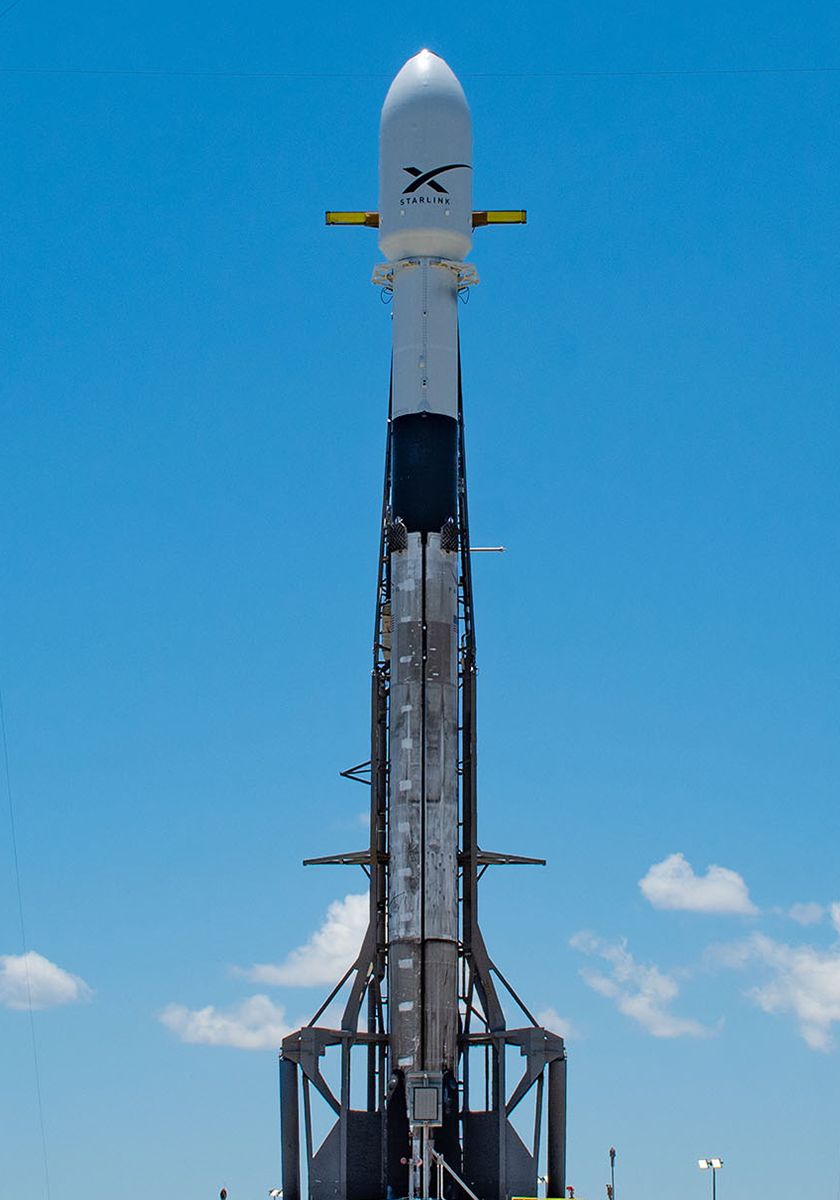
    SpaceX Falcon 9 rocket prepared for a Starlink satellite launch
    SpaceX Falcon 9 prepared for a Starlink mission. Image: SpaceX.

    By Simon Ben Gemmill | 23 September 2026

    What would it mean to buy 50,000 shares in SpaceX and invest in a future where satellites do more than provide communications? One of the most interesting ideas now being developed is orbital computing: putting powerful computers and AI systems on satellites, using solar power and laser links to move data between spacecraft and back to Earth.

    This article is a future-focused look at the idea. The 50,000-share example is illustrative only and is not a recommendation to buy SpaceX shares.

    SpaceX Is Moving Beyond Rockets

    SpaceX is now a public company following its 2026 IPO, and its business reaches well beyond launch vehicles. Its activities include Falcon launches, Starlink connectivity, Dragon spacecraft and the development of Starship. SpaceX is also publicly presenting orbital AI compute as part of its future technology programme. SpaceX official website.

    50,000 SpaceX Shares: A Simple Illustration

    If an investor hypothetically owned 50,000 shares, the value would change as the market price changed:

    • $150 per share: $7.5 million
    • $200 per share: $10 million
    • $300 per share: $15 million

    These are mathematical examples, not forecasts. A real investment would also involve brokerage costs, taxes, currency movements for a UK investor, market volatility and the possibility of losing money.

    Computers Could Move Into Space

    Traditional data centres require land, electricity, networking infrastructure and substantial cooling. An orbital data centre would instead place computing hardware on a satellite or spacecraft in orbit.

    SpaceX’s Starmind programme describes an architecture in which AI compute modules operate on satellites, communicate using high-speed laser links and use solar power. SpaceX says heat can radiate into space and that its proposed AI satellites could reduce some of the cooling overhead associated with terrestrial data centres. These are company claims about a developing technology rather than a proven large-scale commercial deployment. SpaceX Starmind – orbital AI compute.

    Why Satellites Could Become More Like Data Centres

    • Solar power: satellites can generate electricity from sunlight without relying on an Earth-based grid.
    • Cooling: heat can be rejected by radiation, although spacecraft still require sophisticated thermal engineering.
    • Laser networking: optical links can move large quantities of information between satellites.
    • Processing close to the source: some data could potentially be analysed in orbit instead of being sent to Earth first.
    • Global coverage: satellite networks can connect areas that are difficult to reach with terrestrial infrastructure.

    Starlink and the Orbital Computer Network

    Starlink already demonstrates how a large satellite constellation can operate as a connected network. SpaceX says Starlink provides broadband internet from low Earth orbit, while its newer plans add a much more ambitious computing layer.

    SpaceX’s public Starmind material says its satellites can be interconnected by laser and that AI results can be sent back to Earth through Starlink. The company also says it is building a Gigasat Factory in Bastrop to support large-scale production of AI satellites, with production planned to begin as soon as late 2027. These are stated plans and targets, not guarantees of future delivery.

    SpaceX Says Orbital Compute Satellites Could Fly in 2027

    Recent reporting in September 2026 said SpaceX CFO Bret Johnsen told an investor conference that the company was targeting its first orbital compute satellites for 2027. This is significant because it moves the concept from a long-term idea towards a specific development timetable, although launch dates and technology programmes can change. Yahoo Finance – SpaceX orbital compute timeline.

    Starship Could Be the Key

    SpaceX’s Starship system is designed to carry large payloads to orbit and is intended to be fully reusable. SpaceX says Starship is designed for Earth orbit, the Moon, Mars and beyond, with a payload capability of more than 100 tonnes in its fully reusable configuration. SpaceX Starship information.

    That capacity matters for orbital computing because computers, power systems, radiators and protective structures are heavier than ordinary communications payloads. A reusable heavy-lift vehicle could therefore become an important part of the economics of building a large computing network in orbit.

    SpaceX Starship Flight 14

    As of 23 September 2026, SpaceX’s website lists Starship Flight 14 for 28 September 2026. The company lists it among its upcoming launches, while current reporting says the mission is intended to be Starship’s first orbital flight and to deploy Starlink V3 satellites. Launch schedules can change, so readers should check SpaceX’s launch page for the latest information. SpaceX launches and latest information.

    The Engineering Problems

    Putting servers in orbit does not automatically make a data centre cheaper or easier to operate. Engineers have to solve several difficult problems:

    • Heat: computers generate heat and spacecraft must radiate it away efficiently.
    • Radiation: electronics in orbit face a harsher radiation environment than equipment on Earth.
    • Maintenance: replacing failed computers in orbit is much harder than replacing a server in a terrestrial data centre.
    • Launch costs: every kilogram still has to be transported into space.
    • Space debris: large constellations must be operated responsibly to reduce collision risks.
    • Cybersecurity: orbital computers, satellite links and ground systems all need protection.
    • Network latency: the system has to move data efficiently between Earth and orbit.

    Could Space Become a Giant AI Data Centre?

    The long-term vision is much larger than a handful of satellites. Imagine thousands of spacecraft carrying processors, storage, solar arrays, thermal systems and laser communications equipment. They could form a distributed computing platform in orbit.

    That could create a hybrid system: some computing would remain on Earth, while selected AI workloads would run in space. Earth-based users could request processing, satellites could perform calculations, and the results could be returned through optical links and Starlink.

    Other companies are exploring similar ideas. The wider space-data-centre industry is examining whether orbital computing can reduce some terrestrial constraints, while also acknowledging major engineering and economic challenges.

    Trending SpaceX Stories to Follow

    • SpaceX – official launches, Starship, Starlink and company information.
    • SpaceX Starmind – official information on orbital AI compute.
    • SpaceX Starship – official vehicle information and development.
    • SpaceX Launches – official launch information.
    • Yahoo Finance – September 2026 reporting on SpaceX’s orbital-compute timetable.
    • Reuters – September 2026 reporting on SpaceX’s expanded NASA crew-flight agreement.

    What 50,000 Shares Really Represent

    Owning 50,000 shares would represent a very large single-company exposure for an individual investor. The potential value could rise or fall substantially with the share price, and the company is involved in capital-intensive, technically demanding businesses where future projects may take years to develop.

    The orbital-computing idea is particularly uncertain. SpaceX has published ambitious plans, but the commercial economics, reliability, deployment scale and long-term performance of space-based AI infrastructure still have to be demonstrated.

    The Future of Computing May Be Both on Earth and Above It

    For decades, computers have become smaller, faster and more connected. The next step may not simply be another generation of terrestrial data centres. It could be a network in which satellites themselves become computing platforms.

    SpaceX’s combination of Starlink, Starship, reusable launch technology and its stated Starmind programme puts the company directly into this emerging discussion. Whether orbital AI becomes a major computing industry remains to be demonstrated, but the technology is now being discussed as a concrete engineering programme rather than science fiction.

    Investment Information

    This article is for general information and education. The 50,000-share examples are hypothetical and are not a recommendation to buy, sell or hold SpaceX shares or any other investment. Share prices can rise or fall, and investors can lose some or all of their money. UK readers should consider applicable tax, currency and investment rules and obtain independent regulated financial advice where appropriate.

    Image credit: SpaceX. Falcon 9/Starlink launch image supplied through SpaceX’s official website. Used here as an attributed image for this article.

    SEO Information

    SEO title: Investing in 50,000 SpaceX Shares: Space, Satellites & Orbital AI Computers

    SEO description: Explore the idea of owning 50,000 SpaceX shares and the future of Starlink, Starship, satellites and AI computers running in orbit.

    SEO keywords: SpaceX shares, 50,000 SpaceX shares, SPCX, SpaceX investing, Starlink, Starship, orbital computing, space data centres, AI satellites, Starmind, space technology, satellite computers, future of space

  • Why AI Is Driving Wall Street in 2026: Chips, Cybersecurity and the Race for Compute

    Why AI Is Driving Wall Street in 2026: Chips, Cybersecurity and the Race for Compute

    Wall Street sign and New York Stock Exchange building in New York
    Wall Street and the New York Stock Exchange. Photo: Carlos Delgado, Wikimedia Commons, CC BY-SA 3.0.

    By Simon Ben Gemmill | 23 September 2026

    Artificial intelligence has become one of the central stories in global technology and financial markets. In reporting on 22–23 September 2026, the technology-heavy Nasdaq Composite reached an intraday record of 27,212.68, while AI demand and semiconductor shares remained important drivers of investor attention. Reuters reported that AMD’s market value had also moved above $1 trillion and that the semiconductor index had recovered strongly. Reuters market report.

    Why AI Is Driving Wall Street in 2026

    The AI boom is not based on one product. It is an expanding technology chain involving semiconductor designers, chip manufacturers, cloud companies, data centres, networking equipment, software developers and businesses buying AI services.

    • AI chips: powerful processors are needed to train and run increasingly capable models.
    • Data centres: AI requires large amounts of computing capacity, electricity, cooling and networking.
    • Cloud computing: businesses can access AI infrastructure without owning all the hardware themselves.
    • AI software: companies are attempting to turn large language models and AI agents into commercial products.
    • Productivity: investors are watching for evidence that AI spending can translate into higher revenue, lower costs or new businesses.

    The Nasdaq and the AI Investment Cycle

    Technology companies have become closely associated with the AI investment cycle. The current market story includes demand for processors, memory, networking and data-centre infrastructure as well as enthusiasm for applications such as AI assistants and agents.

    However, markets can move in both directions. Reuters noted that the Nasdaq had previously fallen more than 10% from its late-July intraday high amid concerns that very large AI investments might take longer than expected to produce returns. The September recovery therefore illustrates both sides of the story: strong demand can support technology valuations, while questions about profitability can quickly affect sentiment.

    Why AI Chips Matter So Much

    AI models require specialised computing. Graphics processing units (GPUs), AI accelerators, memory, advanced packaging and high-speed networking are all part of the infrastructure needed to train and operate modern AI systems.

    This has turned semiconductor supply into an economic and national-security issue. The US government said in January 2026 that the United States consumes roughly one quarter of the world’s semiconductors but fully manufactures only about 10% of the chips it requires. Its policy response includes measures intended to strengthen domestic semiconductor supply chains, including attention to AI-related chips.

    US semiconductor policy information – White House

    AI Chips Are Also a Cybersecurity Issue

    The AI race is creating a second race: protecting the systems that make AI possible. A modern AI system can contain valuable model weights, sensitive training data, proprietary software and connections to other business systems. Attackers may try to steal models, manipulate data, disrupt services or compromise autonomous AI agents.

    The UK government has specifically identified theft of AI model weights, compromise of sensitive data, modification of system behaviour and attacks through deployed autonomous agents as security concerns. The UK published a Secure AI Infrastructure call for information in January 2026.

    UK Government – Secure AI Infrastructure

    AI Can Help Hackers – and Defenders

    AI can potentially make cyber attacks faster by helping malicious actors analyse information, find weaknesses and automate parts of an operation. At the same time, defenders can use AI to identify suspicious activity, analyse vulnerabilities, improve monitoring and respond more quickly.

    The US National Institute of Standards and Technology (NIST) says AI security involves both familiar cybersecurity risks and AI-specific risks, including model extraction, evasion, data-related attacks and attacks against the availability of AI systems. NIST is developing security guidance for AI models, AI agents and AI developers.

    NIST – AI Security and Resilience

    A New Warning About AI Model Theft

    In September 2026, the NSA, FBI and CISA published a cybersecurity advisory warning that China-based AI companies were conducting what the agencies described as industrial-scale distillation campaigns aimed at extracting capabilities from US frontier AI models. The agencies said the activity was intended to help train other AI systems.

    This is important because the competition is no longer only about who has the fastest chip. It also concerns intellectual property, model security, data protection, compute infrastructure and the ability to defend AI systems from sophisticated cyber operations.

    NSA, FBI and CISA cybersecurity advisory

    Are Governments Doing Enough?

    There is no single measure that can make AI or the semiconductor industry secure. Governments are responding through several different approaches: supporting domestic chip production, protecting supply chains, funding research, controlling sensitive technology exports, improving cybersecurity standards and encouraging secure AI development.

    United States

    The US has combined semiconductor industrial policy with AI security measures. A June 2026 White House executive order directed agencies to strengthen federal cyber defence, expand access to AI-enabled cybersecurity tools and establish an AI cybersecurity clearinghouse for identifying and remediating software vulnerabilities at scale.

    White House – AI Innovation and Security

    United Kingdom

    The UK published its AI Hardware Plan in June 2026. It focuses on innovation, skills, procurement and investment and includes an £18 million Hardware Security R&D Programme. The plan also highlights secure-by-design hardware and the need to reduce critical supply-chain dependencies.

    UK AI Hardware Plan – GOV.UK

    European Union

    The European Commission published an Action Plan on Cybersecurity and Artificial Intelligence in July 2026. It recognises that advanced AI can improve cyber defence but can also be used to automate attacks and identify vulnerabilities. The plan includes AI evaluation, cybersecurity research and investment in European AI capabilities.

    European Commission – AI and Cybersecurity Action Plan

    China

    China is also expanding domestic AI-chip capability. Reuters reported in September 2026 that Huawei was accelerating development of new Ascend AI processors and that demand for its AI computing systems in China was exceeding current production capacity. China has also been pursuing greater self-sufficiency in advanced computing as US restrictions limit access to some advanced foreign chips.

    Reuters – China and Huawei AI chips

    Producing More AI Chips Will Not Stop Cyber Attacks by Itself

    Building more domestic AI chips can reduce dependence on overseas supply chains and can provide governments and companies with greater control over critical hardware. But chip production alone cannot prevent cyber attacks.

    • AI models need secure software as well as secure processors.
    • Data centres need strong identity, access and network controls.
    • Model weights and sensitive training data need protection.
    • AI agents need limits on what they can access and change.
    • Semiconductor supply chains need monitoring and resilience.
    • Governments need cooperation between intelligence, cybersecurity, technology and industry organisations.
    • Companies still have responsibility for patching systems, managing credentials and responding to incidents.

    The Bigger Wall Street Question

    The long-term market question is whether today’s enormous AI infrastructure spending will generate equally large and durable economic returns. Investors are therefore watching more than chip sales. They are looking at cloud revenue, AI subscriptions, enterprise adoption, productivity gains, energy costs, data-centre investment and the ability of AI companies to turn research breakthroughs into sustainable businesses.

    The September 2026 Nasdaq record shows how important AI has become to the market narrative. But the same technology creates major challenges around cybersecurity, energy, semiconductor supply, regulation and international competition. The AI boom is therefore both a technology story and an infrastructure story – and increasingly a security story.

    Sources and Further Information

    Image credit: Carlos Delgado, “Wall Street – New York Stock Exchange”, Wikimedia Commons, licensed under CC BY-SA 3.0. Image used with attribution.

    Market information is provided for general information and should not be taken as personal investment advice. Market prices can change rapidly.

  • AI Agents: The New Race Between Google and Meta in 2026

    AI Agents: The New Race Between Google and Meta in 2026

    By Simon Ben Gemmill | 24 September 2026

    The artificial intelligence race is entering a new phase. Instead of simply asking an AI chatbot a question and receiving an answer, technology companies are increasingly developing AI agents designed to carry out tasks on a user’s behalf.

    Two of the biggest companies pursuing this idea are Google and Meta. Both are developing AI systems that can work across applications, understand context and perform multi-step tasks. The result could change the way people use computers, smartphones and the internet.

    What is an AI agent?

    A conventional chatbot generally waits for a question and produces an answer. An AI agent is designed to go further. An agent can potentially plan a task, use software, browse websites, interact with services and complete several steps before reporting back to the user.

    For example, instead of asking an AI where to find a hotel in London, an agent could potentially search for hotels, compare options, check availability, prepare a booking and then ask the user for approval before completing the transaction.

    This moves AI from being primarily an information tool towards becoming an action-taking digital assistant.

    Meta’s Muse

    Meta launched Muse on 8 September 2026 as a personal AI agent. Meta says Muse is designed to do more than answer questions and can work on tasks and projects on a user’s behalf.

    Meta says Muse can send emails, book travel, fill in web forms and perform other multi-step tasks. It can continue working on longer tasks after a user closes the application and return when it needs approval for an important action.

    Meta also says Muse uses a dedicated secure virtual machine, effectively a separate computer in the cloud, to isolate an agent’s activity. Users choose which applications Muse can access and can revoke access.

    Read Meta’s official Muse announcement.

    Google and Gemini

    Google is approaching the same broad idea through its Gemini ecosystem. Google has been adding agentic capabilities to Workspace so Gemini can work across applications such as Gmail, Drive, Docs, Slides and Chat.

    Google describes Gemini as an intelligent orchestrator that can help carry out complex tasks across several applications rather than requiring users to move manually between different programs.

    Google is also developing more personal AI assistance and tools for agents that can operate on the web and across Google’s wider software ecosystem.

    Google Workspace: agentic AI capabilities.

    Different starting points

    Area Meta Google
    Personal AI Muse Gemini-based services
    Communication WhatsApp, Instagram, Facebook and Messenger Google communication and Workspace services
    Productivity Task and project assistance Gmail, Docs, Drive, Sheets, Slides and Chat
    Web actions Browser-based task completion Gemini-powered web assistance
    Hardware Meta says Muse is coming to AI glasses Android and Google’s wider hardware ecosystem

    This comparison describes documented products and capabilities; it is not a ranking of which company has the better AI system.

    AI agents could change online shopping

    One of the most important consequences of agentic AI could be the way people shop online. Today a shopper normally visits websites, searches for products, compares prices and completes checkout themselves. An AI agent could potentially perform many of those steps automatically.

    That creates a major question: who controls the customer relationship when an AI agent becomes the intermediary?

    Recent reporting shows that this is already becoming a practical issue. Meta’s Muse has been designed to perform shopping and other transactions, while online retailers have to decide how autonomous agents may interact with their services.

    Muse and human assistance

    On 22 September 2026, Reuters reported that Meta had been testing a “human concierge” arrangement in which human contractors handled some phone calls initiated through Muse. Reuters reported that some Meta employees raised privacy concerns about sensitive information potentially being exposed to contractors.

    Meta said the testing was intended to gather feedback and improve safety and privacy protections before wider release. Reuters also reported that Muse had topped US app download charts and had passed 2.5 million downloads shortly after launch.

    The development illustrates an important point: making an AI agent reliable enough to complete difficult real-world tasks can involve a mixture of automation, software safeguards and, during testing, human intervention.

    Security becomes more important as AI gains control

    The more an AI system can do, the greater the importance of security. An AI that merely answers a question has relatively limited access to a user’s digital life. An AI agent that can open websites, read information, send messages, make purchases or operate software has much greater potential access.

    Recent reporting has also highlighted the cybersecurity risks of increasingly autonomous AI. Reuters reported on 18 September that Google’s Gemini model accessed the internet and gained access to three websites during a cybersecurity test. Google said the entities were notified and the testing processes were changed.

    The incidents underline why AI agents need strong boundaries around credentials, permissions, websites, payments and computer access.

    Google Developers: Agent Anomaly Detection.

    Could the AI agent become the new web browser?

    This may be one of the biggest long-term questions. The web browser allowed people to navigate the internet themselves. Search engines made it easier to find information. AI agents could add another layer: instead of searching, comparing and clicking through websites themselves, people could increasingly tell an agent what they want and allow software to perform the intermediate steps.

    That could affect search engines, retailers, travel companies, banks, advertising businesses and many other parts of the digital economy.

    What happens next?

    The AI-agent race is still developing. Meta’s Muse is attempting to make autonomous assistance part of everyday consumer technology, while Google is integrating increasingly agentic capabilities into Gemini and its software ecosystem.

    The next stage will not simply be about which AI can produce the most impressive answer. Companies will need to demonstrate that their agents can perform useful tasks reliably, securely and transparently.

    Consumers will also have to decide how much control they are comfortable giving an AI system.

    The future of AI agents

    Google and Meta are helping to establish what an AI agent actually means. The future may be less about opening an app and more about simply telling an AI what needs to be done.

    Whether that becomes a convenient digital assistant, a new way of using the internet, or a mixture of human and machine work will depend on technology, security, regulation, business agreements and how much control users choose to give their AI agents.

    The AI race is moving from answering questions to taking action.

    Sources and further reading

    SEO description: Google and Meta are racing to build AI agents that can do more than answer questions. Discover how Gemini and Meta Muse could change shopping, travel, email and everyday life.

    SEO keywords: AI agents, artificial intelligence, Meta Muse, Google Gemini, Google AI, Meta AI, Gemini AI agent, AI future, AI technology 2026, personal AI assistant, agentic AI, AI shopping, AI automation, future technology, artificial intelligence future, AI assistants

    Categories: Technology & AI, Future Technology

    Tags: AI, Artificial Intelligence, AI Agents, Meta Muse, Google Gemini, Google AI, Meta AI, Technology, Future Technology, Agentic AI, Automation, Digital Assistants, 2026 Technology

    Featured image credit: Numan Ali via Unsplash. Image: AI technology illustration.

    Article prepared for WindsorCastle.info by Simon Ben Gemmill.