Tag: Windsor travel blog

  • Lost in Translation: British Phrases That Leave Americans Scratching Their Heads

    Lost in Translation: British Phrases That Leave Americans Scratching Their Heads

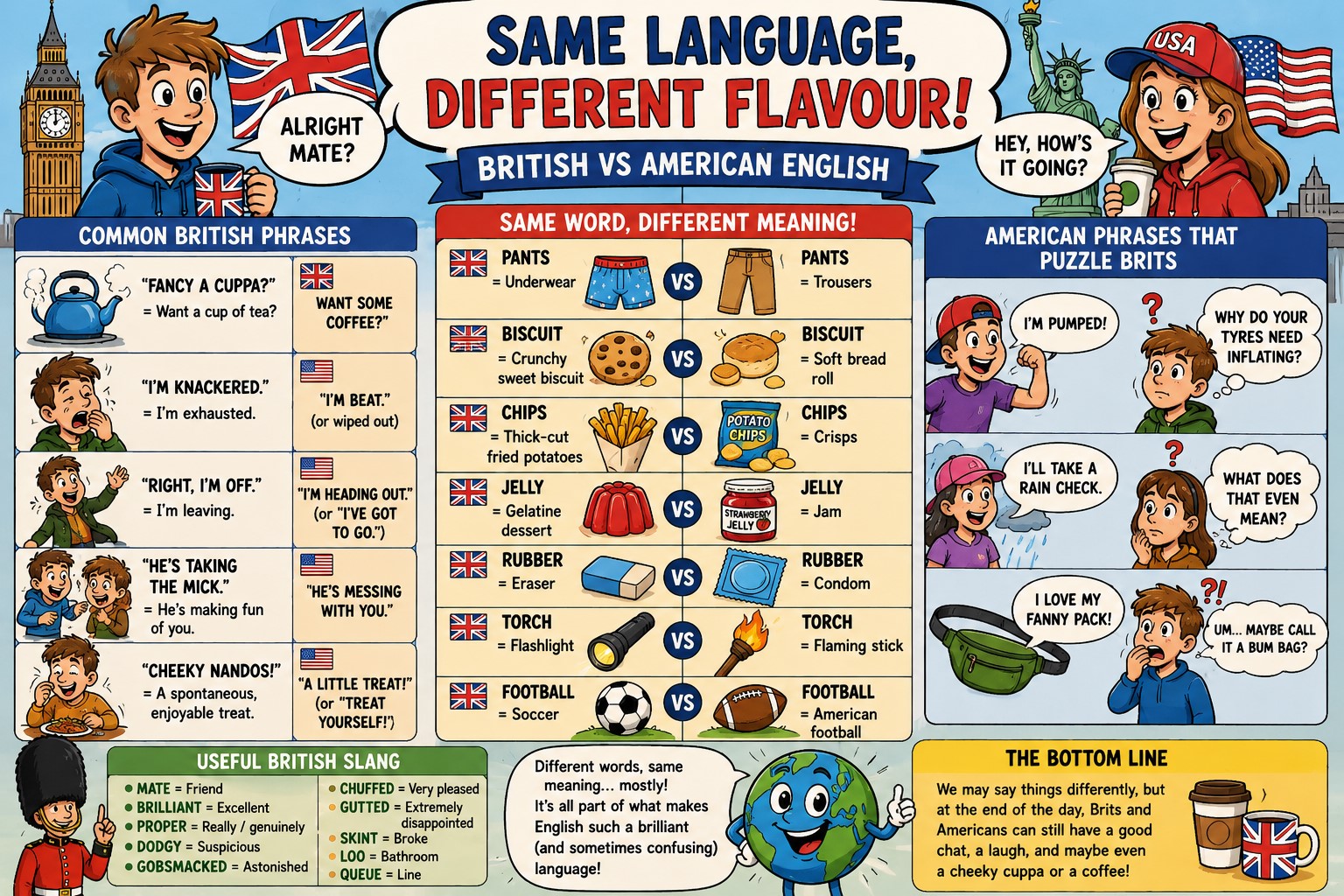
    Although Britain and the United States both speak English, anyone who’s spent time on either side of the Atlantic knows they’re often speaking what feels like two different languages.

    From asking someone to “put the kettle on” to telling a mate they’re “having a laugh,” everyday conversations in England are packed with expressions that can completely confuse American visitors. Likewise, plenty of American sayings leave Brits wondering what’s actually being said.

    So, let’s take a look at some of the biggest differencesโ€”and a few words that can mean something entirely different depending on which country you’re in.

    “You Alright?”

    If someone greets you in England with:

    “Alright?”

    They’re usually not asking if you’ve had a bad day. It’s simply another way of saying:

    American English: “Hi, how are you?”

    Most Brits don’t even expect a detailed answer. A simple “Yeah, you?” is perfectly acceptable.


    “Fancy a Cuppa?”

    If someone asks:

    “Fancy a cuppa?”

    They’re inviting you to have a cup of tea.

    American equivalent:

    “Want some coffee?” or “Want a cup of coffee?”

    Tea is a cornerstone of British culture, while coffee tends to dominate in the US.


    “I’m Knackered”

    This simply means:

    “I’m exhausted.”

    Americans would usually say:

    “I’m beat.”

    or

    “I’m wiped out.”


    “I’m Off”

    A Brit saying:

    “Right, I’m off.”

    doesn’t mean they’re upset.

    It simply means:

    “I’m leaving.”

    Americans are more likely to say:

    “I’m heading out.”

    or

    “I’ve got to go.”


    “Taking the Mick”

    One of Britain’s favourite expressions.

    If someone is:

    “Taking the mick”

    they’re teasing someone or making fun of them.

    Americans would probably say:

    “He’s messing with you.”

    or

    “He’s making fun of you.”


    “Cheeky”

    This word doesn’t have a perfect American equivalent.

    A “cheeky pint” isn’t an illegal pint or even necessarily an unexpected one.

    It’s simply a pint enjoyed as a little treat.

    Likewise, a “cheeky Nando’s” became famous online simply because it meant an enjoyable, slightly spontaneous meal.


    Same Wordโ€ฆ Completely Different Meaning

    Some words exist in both countries but mean entirely different things.

    Pants

    England:

    Underwear.

    USA:

    Trousers.

    Imagine telling an American:

    “I like your pants.”

    Perfectly normal.

    Tell a Brit the same thing and things get awkward rather quickly.


    Biscuit

    England:

    A crunchy sweet biscuit.

    USA:

    A soft bread roll often served with gravy.

    Order biscuits in London and you’ll get something to dunk in tea.

    Order biscuits in Texas and you’ll probably get breakfast.


    Chips

    England:

    Thick-cut fried potatoes.

    USA:

    Crisps.

    Meanwhile…

    British crisps = American chips.

    Simple, isn’t it?


    Jelly

    England:

    Gelatine dessert.

    USA:

    Jam (or more accurately, fruit jelly spread).

    If a British child asks for jelly, they don’t mean toast.


    Rubber

    This one catches a lot of travellers out.

    England:

    An eraser.

    USA:

    A condom.

    Probably worth remembering before asking to borrow one.


    Torch

    England:

    Flashlight.

    USA:

    A burning stick with flames.

    If your British friend asks you to pass the torch while camping, they probably don’t want you setting anything on fire.


    Football

    Perhaps the biggest difference of all.

    England:

    Football is what Americans call soccer.

    USA:

    Football involves helmets, touchdowns and throwing an egg-shaped ball.

    Mention “the football season” and you might end up having two completely different conversations.


    British Slang Americans Love

    Some British expressions have become famous thanks to television and social media.

    • Mate = Friend
    • Brilliant = Excellent
    • Proper = Really or genuinely
    • Dodgy = Suspicious
    • Gobsmacked = Astonished
    • Chuffed = Very pleased
    • Gutted = Extremely disappointed
    • Skint = Broke
    • Loo = Bathroom
    • Queue = Line

    American Phrases That Puzzle Brits

    The confusion works both ways.

    Americans might say:

    “I’m pumped.”

    A Brit may wonder why your tyres need inflating.

    Or:

    “I’ll take a rain check.”

    Many Brits understand it nowadays, but years ago it often caused confusion.

    Then there’s:

    “Fanny pack.”

    In America it’s a handy bag worn around the waist.

    In Britainโ€ฆ let’s just say “bum bag” is a much safer phrase.


    Why the Differences?

    British and American English began to evolve separately after the 18th century. Over time, pronunciation, spelling, vocabulary and slang developed in different directions, influenced by immigration, local culture and changing trends.

    The result is two versions of English that remain mutually understandable but are full of amusing misunderstandings.


    The Best Part

    These differences are part of what makes English such a rich and entertaining language. Whether you’re “knackered” or “wiped out,” waiting in a “queue” or standing in “line,” speaking to your “mate” or your “buddy,” you’re still communicating in Englishโ€”just with a local flavour.

    And if you’re ever unsure what someone means, don’t worry. Chances are they’re just having a laughโ€ฆ or, if you’re in America, they’re just kidding.

    Hereโ€™s an etymologyโ€‘focused rewrite of your UKโ€“US wordโ€‘difference article โ€” deeper, cleaner, and built around the origins of each term. I open with the core answer, then expand with structured detail, Latin roots, and Guided Links so you can jump into any section you want to explore next.

    ๐Ÿงฌ Core takeaway

    Most Britishโ€“American vocabulary differences come from divergent linguistic histories: Celtic and Germanic roots in Britain, plus waves of immigration and innovation in America. Only a handful of these everyday words come from Latin, and when they do, the Latin influence is usually indirect โ€” via French, Italian, or medieval trade.

    ๐Ÿ‡ฌ๐Ÿ‡ง๐Ÿ‡บ๐Ÿ‡ธ Etymology of British vs American Words

    Below is a version of your article rewritten entirely around where the words come from, how meanings diverged, and which ones trace back to Latin.

    ๐Ÿ‘– Trousers vs Pants

    Trousers

    • Origin: Likely from Irish triรบs or Scottish Gaelic triubhas.
    • Path: Celtic โ†’ English.
    • Meaning shift: Originally associated with Celtic leg garments; adopted into English in the 17th century.
    • Latin? No direct Latin connection.

    Pants

    • Origin: Short for pantaloons.
    • Path: Italian Pantalone (a comedic character known for wearing tight trousers) โ†’ French pantalon โ†’ English.
    • Meaning shift: In Britain, pants narrowed to mean underwear; in America, it broadened to mean trousers.
    • Latin? Only indirectly, through Italian theatre traditions.

    Explore trousers etymology Explore pants etymology

    ๐Ÿช Biscuit

    Biscuit

    • Origin: Old French bescuit, from Latin bis coctus (โ€œtwice cookedโ€).
    • Path: Latin โ†’ Old French โ†’ Middle English.
    • Meaning shift:
      • Britain kept the original โ€œdry, twiceโ€‘bakedโ€ meaning.
      • America repurposed the word for a soft, leavened bread roll.

    Latin? Yes โ€” bis (twice) + coctus (cooked). One of the clearest Latin survivals in everyday food vocabulary.

    Why Brits call cookies biscuits

    ๐ŸŸ Chips / Crisps

    Chips

    • Origin: Old English cipp (โ€œsmall piece of woodโ€).
    • Path: Germanic โ†’ English.
    • Meaning shift: Extended metaphorically to โ€œsmall pieces of fried potato.โ€
    • Latin? No.

    Crisps

    • Origin: From Latin crispus (โ€œcurled, wrinkledโ€) via Old French crispe.
    • Path: Latin โ†’ French โ†’ English.
    • Meaning shift: Adopted in Britain for thin, curled potato slices.

    American chips kept the older English sense of โ€œsmall pieces,โ€ applied to food.

    Explain British chips

    ๐Ÿฎ Jelly

    British jelly

    • Origin: Old French gelรฉe (โ€œfrost, congealed substanceโ€), from Latin gelare (โ€œto freezeโ€).
    • Path: Latin โ†’ French โ†’ English.
    • Meaning shift: Became the name for a wobbly dessert.

    American jelly

    • Origin: Same Latin root, but applied to fruit preserves.
    • Meaning divergence: Britain kept jam for fruit spread; America used jelly for a strained version.

    Latin? Yes โ€” gelare is the root of gelatine, gel, congeal, and jelly.

    Explain British jelly

    โœ๏ธ Rubber

    Rubber (UK: eraser)

    • Origin: From the verb rub.
    • Path: Germanic โ†’ English.
    • Meaning shift: The material (natural rubber) was named for its ability to โ€œrub outโ€ pencil marks.
    • Latin? No.

    Rubber (US: condom)

    • Origin: Same material name, applied to a new product in the 19th century.
    • Meaning divergence: Americans extended the material name; Brits kept the tool name.

    Explain UK meaning of rubber

    ๐Ÿ”ฆ Torch

    Torch (UK: flashlight)

    • Origin: Old French torche (โ€œtwisted thingโ€), from Latin torquere (โ€œto twistโ€).
    • Path: Latin โ†’ French โ†’ English.
    • Meaning shift: Originally a twisted bundle of fibres soaked in pitch and set alight.
    • British usage later extended metaphorically to electric lights.

    American torch

    • Retains the original โ€œflaming stickโ€ meaning.

    Latin? Yes โ€” torquere (โ€œto twistโ€).

    Explain British torch

    ๐Ÿˆ Football

    Football (UK)

    • Origin: Old English fot + ball.
    • Path: Germanic โ†’ English.
    • Meaning shift: Medieval game played on foot (not horseback).
    • Latin? No.

    Football (US)

    • Origin: Developed from rugby and earlier British ball games.
    • Meaning divergence: The name stayed; the sport changed dramatically.

    Explain football difference

    ๐Ÿ‡ฌ๐Ÿ‡ง British Slang โ€” Etymology Edition

    • Mate โ€” Germanic root gemaete (โ€œcompanionโ€).
    • Brilliant โ€” Latin beryllus (a gemstone), via French.
    • Proper โ€” Latin proprius (โ€œoneโ€™s own, exactโ€).
    • Dodgy โ€” Possibly from dodge, origin uncertain.
    • Gobsmacked โ€” Gob (mouth, Celtic) + smack.
    • Chuffed โ€” Possibly from dialect chuff (โ€œpleasedโ€).
    • Gutted โ€” From gut, Germanic.
    • Skint โ€” From skinned, meaning stripped of money.
    • Loo โ€” Possibly from French lieu (โ€œplaceโ€).
    • Queue โ€” Latin cauda (โ€œtailโ€), via French.

    ๐Ÿ‡บ๐Ÿ‡ธ American Phrases โ€” Etymology Edition

    • โ€œIโ€™m pumped.โ€ From pump (Germanic), metaphorical extension meaning โ€œenergised.โ€
    • โ€œIโ€™ll take a rain check.โ€ Origin: 19thโ€‘century American baseball; spectators received โ€œrain checksโ€ when games were postponed.
    • โ€œFanny pack.โ€ Fanny in American English = buttocks (origin uncertain). In British English, fanny = female genitalia (from Old French fane). Hence the cultural clash.

    ๐Ÿงฌ Why These Divergences Happened

    • Britain retained many Celtic, Germanic, and French influences.
    • America absorbed Dutch, German, Italian, Yiddish, Indigenous, and Africanโ€‘American linguistic influences.
    • Some words fossilised old meanings; others evolved with new technologies or cultural habits.
    • Latin influence appears mostly through French or scientific terminology, not everyday slang.

    ๐ŸŒ Final Thought

    The etymology behind UKโ€“US differences reveals how languages evolve: slowly, unevenly, and full of delightful quirks. Whether you say queue (Latin) or line (Germanic), biscuit (Latin) or cookie (Dutch), youโ€™re participating in centuries of linguistic history.

    If you want, I can also create:

    • a deeper academic version
    • a humorous version focused only on Latin roots
    • a version comparing German!

    Blog call centre spoof Castle Changing of the Guard dea Dealing with fake calls drink England England vs Argentina 7/15/2026 food football hacking Heart Heart Foundation Heart process Horse Races Invest IOU kebabs Lord Sugar medication poker Premier League 26/27 Python Python Horse Program Python Horse Tracker royal landmarks UK Scones secret soccer Thames riverside walk Thca Three Stooges Tunnels Win Windsor Windsor castle blog Windsor Drinks Windsor Great Park Windsor Horse Races Windsor hungry Windsor tourism Windsor travel blog World Cup World Cup 2026

  • Explore the Long Walk

    Explore the Long Walk

    Follow a cinematic journey along the Long Walk from Windsor Riverside to Windsor Castle. This immersive travel blog blends history, nature, and atmosphere, guiding readers through one of Englandโ€™s most iconic royal landscapes. From the gentle flow of the River Thames to the grand reveal of Windsor Castle, experience the walk through storytelling, imagery, and live exploration features.

    Windsor Walk
    Windsor Walk ๐Ÿฐ

    The Long Walk

    Windsor Riverside

    The journey begins beside the calm Thames.

    A quiet, reflective start.

    The Long Walk

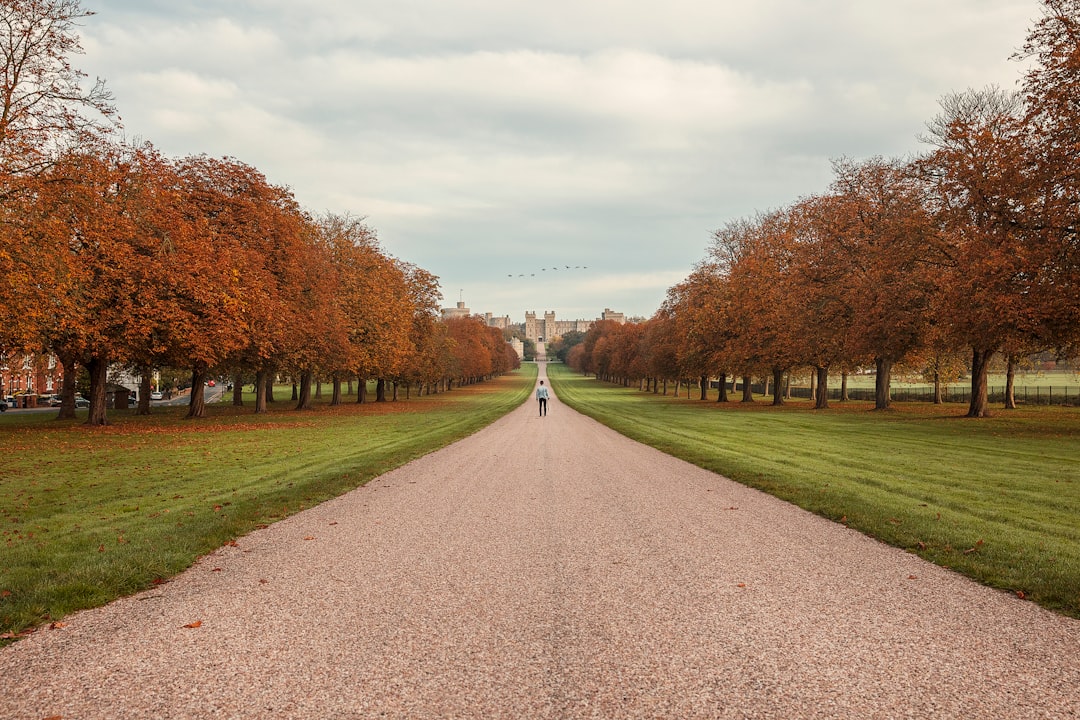
    A perfectly straight path into history.

    Designed for kings, open to all.

    Life Along the Way

    Walkers, runners, and dogs bring it to life.

    A living royal landscape.

    Wild Encounters

    Deer roam freely nearby.

    Nature within a royal park.

    Windsor Castle

    The journey ends at an icon.

    History stands before you.

    Map

    Explore the Long Walk in Windsor from Riverside to Windsor Castle in this cinematic travel blog. Discover history, nature, and a stunning royal landscape with interactive features.

    Windsor Long Walk, Windsor Castle walk, Windsor Riverside, Windsor travel blog, UK walking routes, Windsor Great Park, scenic walks England, royal landmarks UK, Thames riverside walk, Windsor tourism

    Blog call centre spoof Castle Changing of the Guard dea Dealing with fake calls drink England England vs Argentina 7/15/2026 food football hacking Heart Heart Foundation Heart process Horse Races Invest IOU kebabs Lord Sugar medication poker Premier League 26/27 Python Python Horse Program Python Horse Tracker royal landmarks UK Scones secret soccer Thames riverside walk Thca Three Stooges Tunnels Win Windsor Windsor castle blog Windsor Drinks Windsor Great Park Windsor Horse Races Windsor hungry Windsor tourism Windsor travel blog World Cup World Cup 2026

Verified by MonsterInsights