Football • Sport • Rules • Facts
The Most Unusual Football Rules You Probably Didn’t Know
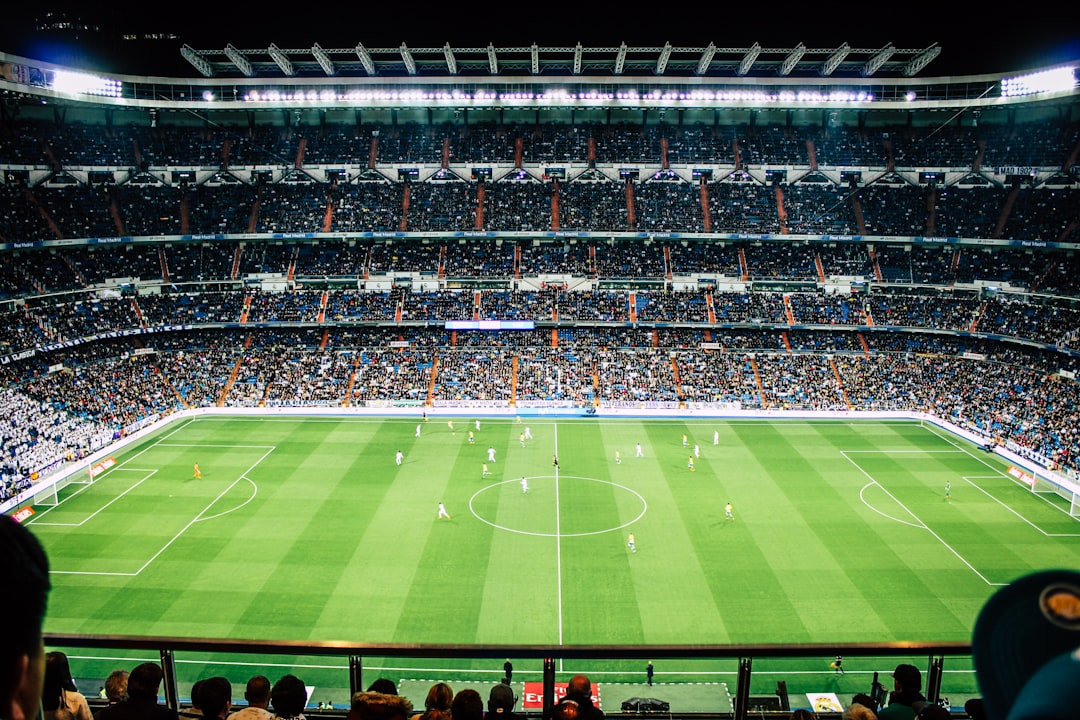
Football looks simple — but underneath the beautiful game is a fascinating collection of laws covering almost every situation that can happen on the pitch.

Football Is Full of Surprising Rules
Football looks remarkably simple when you watch it from the stands or from your sofa.
Twenty-two players, one ball, two goals, a referee and ninety minutes.
But underneath that simple idea is an enormous collection of Laws governing almost every situation that can occur during a match.
Some of those laws are so unusual that even experienced supporters can occasionally find themselves asking:
“Really? That’s actually a football rule?”
The International Football Association Board (IFAB) is responsible for the Laws of the Game. Its 2026/27 changes include several measures designed to improve match flow and reduce deliberate time-wasting.
1. A Player Cannot Take Forever to Leave the Pitch
Substitutions have traditionally provided one of football’s most obvious opportunities for time-wasting.
A player is substituted, receives applause from the crowd, walks towards the touchline, stops for a moment, shakes a teammate’s hand and eventually leaves the pitch.
Under the 2026/27 Laws, a substituted player has ten seconds to leave the field after the substitution signal is displayed or given by the referee.
If the player takes longer, the substitute still cannot enter immediately. The substitute must wait until the first stoppage after one minute of playing time has elapsed.
The rule is designed to discourage players from deliberately taking a long time to leave the field when their team is protecting a lead.
2. A Throw-In Can Actually Be Lost
Throw-ins look harmless.
The ball goes out, a player picks it up and throws it back into play.
But deliberately delaying a throw-in can now have a very unusual consequence.
Under the 2026/27 Laws, if the referee considers that a throw-in is being unfairly delayed, a visual five-second countdown can be started.
If the ball has not been put into play when the countdown reaches zero, the throw-in is awarded to the opposition.
Five seconds.
That’s not much time to decide where to throw the ball.
Imagine a team leading 1–0 late in the match. The defender walks slowly towards the ball. The referee starts counting.
Five… Four… Three… Two… One…
Suddenly the ball belongs to the opposition.
3. A Delayed Goal Kick Can Become a Corner
This may be one of the strangest consequences of the new anti-time-wasting measures.
If a team unfairly delays a goal kick, the referee can use the five-second countdown.
If the ball is not put into play before the countdown expires, the opposition is awarded a corner kick.
Think about that for a moment…
A team trying to waste time from a goal kick could potentially give the opposition a dangerous attacking opportunity.
What looked like a safe restart can suddenly become a corner in front of the goal.
4. Goalkeepers Cannot Hold the Ball Forever
Anyone who has watched football for decades will remember goalkeepers being criticised for holding onto the ball for too long.
The Laws contain restrictions on how long a goalkeeper can control the ball with their hands.
The 2026/27 Laws specify that a corner can be awarded when a goalkeeper is penalised for controlling the ball with their hands or arms for more than eight seconds.
The change reflects football’s continuing attempt to reduce deliberate delays and increase the amount of meaningful playing time.
5. VAR Has Some Surprisingly Specific Powers
Video Assistant Referee technology has transformed modern football.
But VAR is not simply a television replay system that can be used to examine absolutely everything.
The 2026/27 VAR protocol includes additional circumstances in which VAR may assist when there is clear evidence.
- A red card resulting from a clearly incorrect second yellow card.
- Mistaken identity where the wrong player or team has been penalised.
- In competitions that adopt the option, certain clearly incorrect corner-kick decisions where the review can be completed immediately.
However, competitions can decide which optional measures they implement.
The Laws of the Game and the competition regulations are not always exactly the same thing. A competition may choose not to use an optional protocol.
6. An Injured Player May Have to Leave the Pitch
Injuries are part of football, and genuine injuries must always be treated seriously.
However, football has also had a long-running problem with stoppages being used to slow the game down.
Under the 2026/27 changes, where a player receives an on-field injury assessment or their injury causes play to stop, the player may be required to leave the field and remain off it for one minute after play restarts.
The objective is to reduce tactical delays while ensuring that medical situations continue to receive appropriate attention.
7. There Is a Minimum Number of Players
A football team starts a match with eleven players.
Players can subsequently be sent off, but there is a limit to how far this can go.
Under the Laws of the Game, a match cannot start or continue if either team has fewer than seven players, subject to the specific exceptions contained within the Laws.
Seven players is the normal minimum threshold for a match to continue.
8. A Throw-In Has More Rules Than You Might Think
A throw-in may be one of football’s most underestimated restarts.
The thrower must face the field of play and use both hands. The ball must be delivered from behind and over the head.
At the moment the ball is delivered, part of each foot must be on the touchline or on the ground outside the touchline.
The opposition must also normally remain at least two metres from the place where the throw-in is taken.
And there is another interesting rule:
A goal cannot be scored directly from a throw-in.
If the ball goes directly into the opponents’ goal, a goal kick is awarded.
If it goes directly into the thrower’s own goal, a corner kick is awarded.
9. Even the Referee Can Become Part of the Play
Referees are supposed to control the game without becoming part of the action.
But sometimes the ball hits the referee.
The Laws contain specific provisions for what happens when the ball touches a match official.
If contact with the referee causes possession to change, creates a promising attack or results in the ball entering the goal directly, play may need to be restarted with a dropped ball.
So yes — there are actually rules for the possibility that the referee accidentally gets in the way.
10. Football Is Still Full of Unexpected Situations
Perhaps the strangest thing about football is that the Laws have to anticipate situations that most supporters would never imagine.
What happens if the ball hits the referee?
What happens if a player deliberately delays a throw-in?
What happens if a goalkeeper holds the ball for too long?
What happens if a substituted player refuses to leave quickly?
What happens if a team is reduced to too few players?
Football has an answer for all of these situations.
⭐ Did You Know?
The Laws of the Game are continually reviewed and updated. The 2026/27 edition contains several changes specifically aimed at reducing time-wasting and improving match flow.
That means football’s rulebook is not simply an old book sitting on a shelf.
It is a living set of laws that continues to evolve as football changes.
Why Do These Rules Matter?
Football supporters sometimes complain that modern football has too many rules.
But the alternative would be even more complicated.
Without clearly defined Laws, referees would have to make decisions based almost entirely on personal interpretation.
The Laws provide a common framework that allows football to be played in different countries, leagues and competitions.
From a local youth match to a major international tournament, the same basic principles provide the foundation for the game.
The Beautiful Game Has Some Very Complicated Rules
Football may appear simple, but the Laws of the Game are anything but simple.
The next time you see a referee pointing towards the corner flag, ordering a player off the pitch, starting a countdown or stopping a goalkeeper from delaying a restart, there is probably a very specific Law behind the decision.
The 2026/27 changes show that football’s governing bodies are continuing to look for ways to reduce time-wasting, increase effective playing time and keep the game flowing.
So the next time you hear the referee’s whistle, remember — there is probably a rule for it!
Official Sources & Image Credit
Football Laws
- International Football Association Board (IFAB): 2026/27 Law Changes
- IFAB: Law 15 — The Throw-in
- IFAB: Laws of the Game
Featured Image
Image: Football referee.jpg
Photographer: Robo Michalec
Source: Wikimedia Commons
Licence: CC0 / Public Domain
Image information: https://commons.wikimedia.org/wiki/File:Football_referee.jpg
Leave a Reply
You must be logged in to post a comment.