How Emerging Companies Are Quietly Powering the Future Alongside Google, Amazon, Tesla, and the NHS
In the fast-moving world of artificial intelligence, automation, healthcare, and clean technology, most people focus on the giant names — Google, Amazon, Tesla, and the National Health Service.
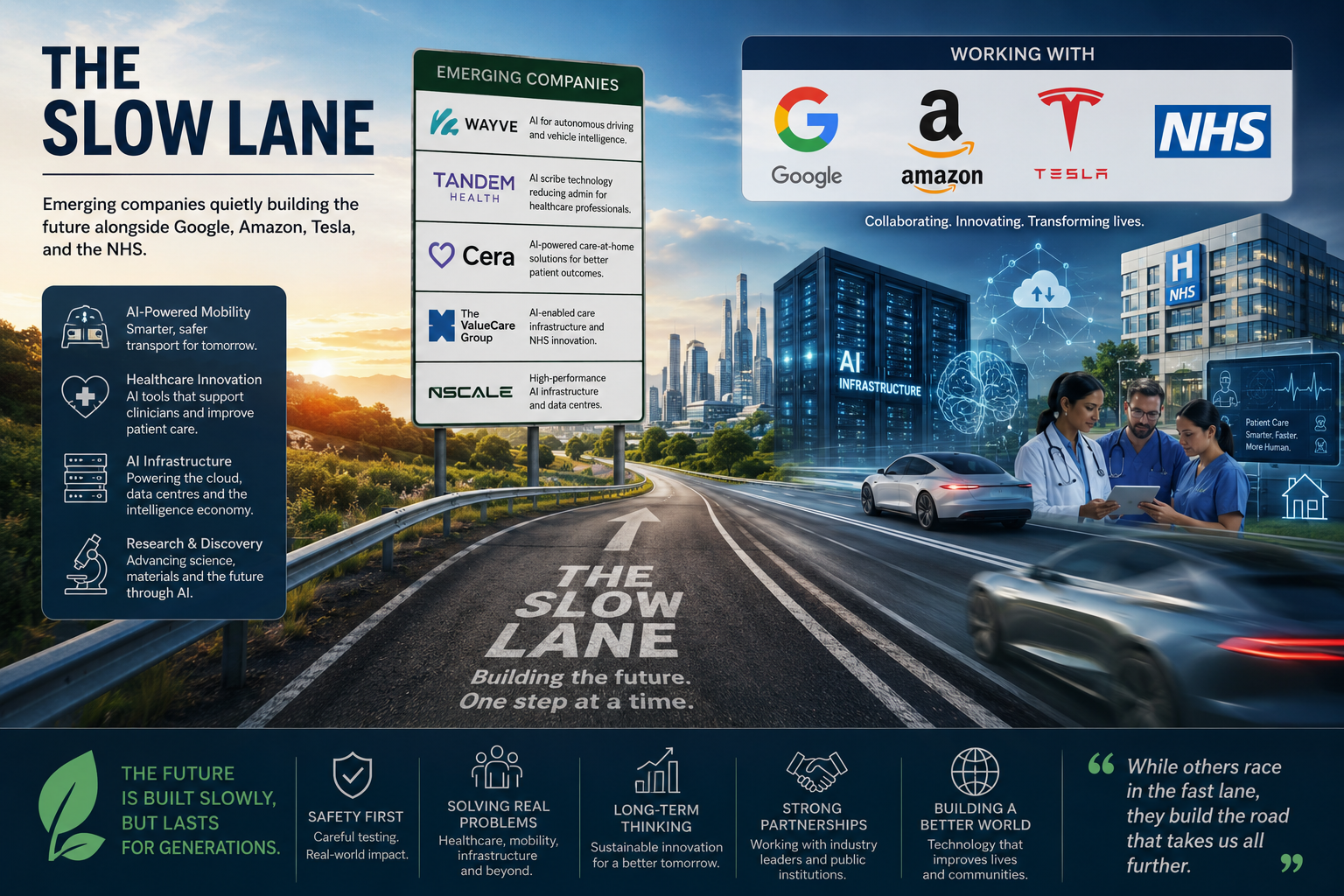
Yet behind the headlines, a quieter revolution is happening in what could be called the slow lane — where emerging companies build the infrastructure, software, healthcare systems, and AI tools that may eventually reshape daily life.
These businesses are not always household names, but many already collaborate with major technology ecosystems, cloud providers, autonomous vehicle research, or NHS healthcare innovation programs. Their work is gradually influencing transport, medicine, data centres, and patient care across the UK and beyond.
AI Driving the Roads of Tomorrow
One of the most fascinating British AI firms is Wayve. Founded in London, the company develops AI systems for autonomous vehicles using camera-led machine learning instead of traditional mapped navigation systems.
Wayve has attracted major investment attention and has worked alongside autonomous mobility initiatives involving ride-hailing and vehicle manufacturers. Its technology reflects a broader trend seen across the automotive world — the race toward AI-assisted transport similar to the ambitions associated with Tesla.
Unlike flashy consumer launches, companies like Wayve operate in a slower, research-heavy environment. Years of testing, regulation, simulation, and safety analysis are required before autonomous systems become part of everyday roads.
That “slow lane” may actually prove more sustainable than the rapid hype cycles often surrounding artificial intelligence.
Healthcare AI and the NHS Transformation
Another major area of quiet innovation is healthcare technology.
Companies such as Tandem Health are developing AI-powered clinical documentation systems designed to reduce administrative workload for doctors and clinicians. The company’s AI scribe technology has been linked to NHS-facing healthcare workflows and integrations.
The challenge facing healthcare systems worldwide is enormous:
- Rising patient demand
- Staff shortages
- Administrative overload
- Aging populations
- Increased chronic illness
Emerging health-tech firms are trying to solve these issues using artificial intelligence rather than simply adding more paperwork or bureaucracy.
Similarly, Cera Care has become one of Britain’s most recognised digital healthcare-at-home providers. The company uses predictive technology and AI-assisted care systems to support elderly and vulnerable patients in their homes.
This reflects a growing shift inside the NHS toward preventative and remote healthcare, where technology helps detect problems earlier and reduce unnecessary hospital admissions.
Another interesting newcomer is The ValueCare Group, a London-based firm focused on AI-powered care infrastructure and monitoring systems connected to NHS innovation programs and research trials.
These businesses rarely dominate headlines, but collectively they may help shape the future of healthcare far more than flashy gadgets or social media trends.
The Cloud, Data Centres, and the AI Infrastructure Race
Artificial intelligence depends on enormous computing power.
Behind every chatbot, autonomous vehicle system, or AI medical platform are huge data centres filled with specialised processors and cloud infrastructure.
One emerging player in this sector is Nscale, which has rapidly expanded within the UK AI infrastructure market. Reports suggest partnerships involving large-scale GPU deployment and data-centre expansion connected with major technology ecosystems.
The company reflects a broader transformation happening quietly across Britain:
- AI server farms
- High-performance computing centres
- Renewable-powered infrastructure
- Advanced semiconductor demand
- Cloud partnerships
While companies like Google and Amazon dominate public awareness through services such as cloud computing and online platforms, smaller infrastructure firms are increasingly becoming the hidden engines behind the AI economy.
Google DeepMind and Britain’s Scientific AI Future
Britain remains a major centre for artificial intelligence research thanks largely to Google DeepMind.
Recent developments indicate new UK-based AI science initiatives involving materials research, semiconductors, superconductors, and public-sector AI collaboration.
This is where “the slow lane” becomes particularly important.
True technological revolutions are rarely instant. They are usually built slowly:
- Through university research
- NHS partnerships
- government trials
- startup incubators
- cloud infrastructure
- patient testing
- safety reviews
- long-term investment
Many emerging firms spend years refining systems before the public ever notices them.
Why the Slow Lane Matters
The technology industry often celebrates speed:
- faster apps
- faster profits
- faster disruption
- faster AI
But some of the most important innovations happen slowly and carefully.
Healthcare systems cannot move recklessly. Autonomous vehicles require years of safety testing. Scientific AI research demands precision. Infrastructure projects take massive planning and energy resources.
That is why the “slow lane” may actually become the most valuable lane of all.
The companies quietly working with ecosystems connected to Google, Amazon, Tesla, or the NHS are helping build the foundations of future society — often without celebrity founders or viral marketing campaigns.
Their success may ultimately determine how safely and effectively artificial intelligence becomes part of everyday life.
Final Thoughts
Emerging companies across Britain and Europe are increasingly shaping the next era of AI, transport, healthcare, and cloud infrastructure.
Whether through autonomous driving, NHS healthcare tools, AI data centres, or scientific research partnerships, these firms represent a quieter but highly influential side of technological progress.
The future may not belong solely to the giants.
It may belong to the companies patiently building in the slow lane while the rest of the world races ahead looking for shortcuts.
2026 Technology AI Artificial Intelligence Blog British Royal Family Castle Changing of the Guard Data Centres dea drink England food football Future Future Technology Investing medication Orbital Data Centres Prediction Premier League Premier League 26/27 royal landmarks UK Satellites Science Fiction soccer Space Technology Starmind Technology Thca Unusual football visiting windsor castle Windsor Windsor 2026 Windsor Castle Windsor castle blog Windsor Castle walk Windsor Drinks Windsor Events Windsor Great Park Windsor hungry Windsor Long Walk Windsor tourism Windsor travel blog World Cup World Cup 2026
-
AI Agents: The New Race Between Google and Meta in 2026

Google and Meta are racing to build AI agents that can do more than answer questions. Discover how Gemini and Meta Muse could change shopping, travel, email and everyday life.
-
Premier League Round-up: Villa Shock City, Arsenal Close In and Sunday Predictions

Aston Villa end Manchester City’s perfect start, Arsenal keep pace and Tottenham win the derby. Read Saturday’s Premier League round-up and our predictions for Sunday 25 October’s five fixtures.
-
Windsor Events November & December 2026: Christmas Guide
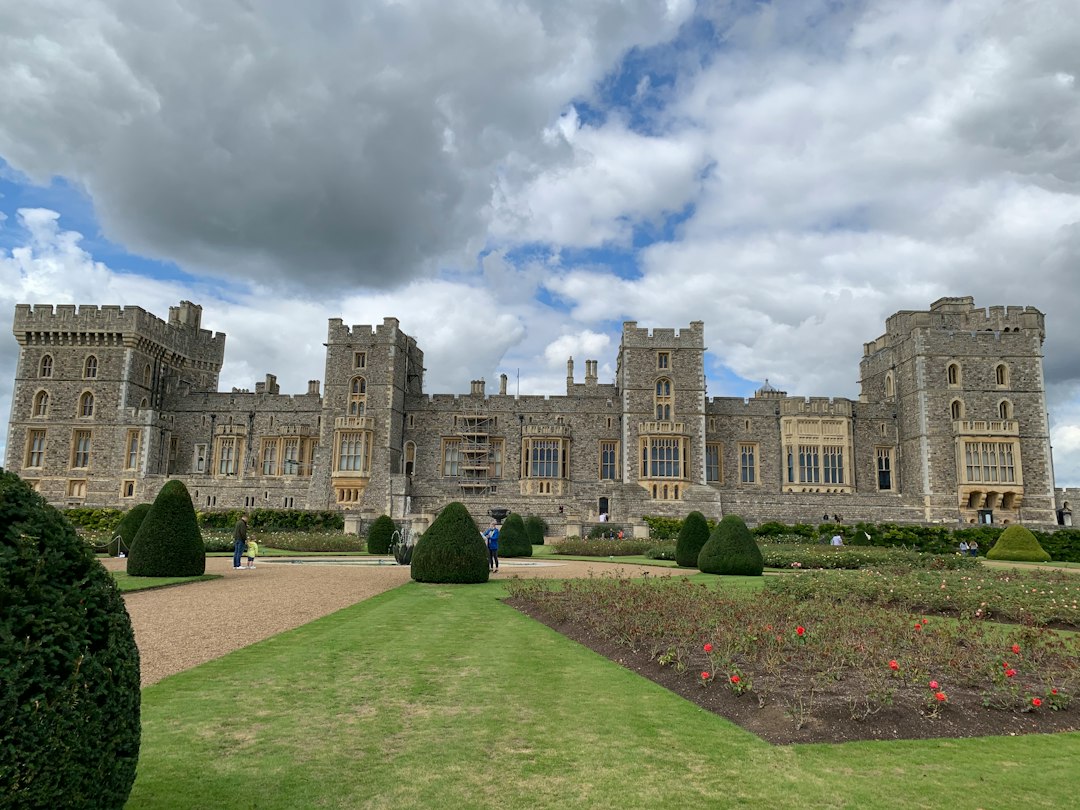
Plan a festive visit with our Windsor events calendar for November and December 2026, including Christmas at Windsor Castle, Windsor Great Park Illuminated, the Christmas Fair, Carols on the Hill and Theatre Royal Windsor’s pantomime. Check official dates, ticket prices, opening times and booking links before travelling.
-
Premier League Matchweek 8 Preview: Ten Fixtures, Three Big Tests and Our Christmas Table Forecast

Ten @PremierLeague @fixtures, three headline clashes & a provisional #Christmas table forecast. Explore our tactical previews of #Aston Villa v #Manchester City, #Chelsea v #Tottenham and #Liverpool v #Brighton, plus illustrative treble odds and #score #predictions. #Manchester City face a demanding trip to #Aston Villa, Chelsea prepare for a London derby against #Tottenham, and #Liverpool…
-
Windsor Castle: 1,000 Years of Royal History
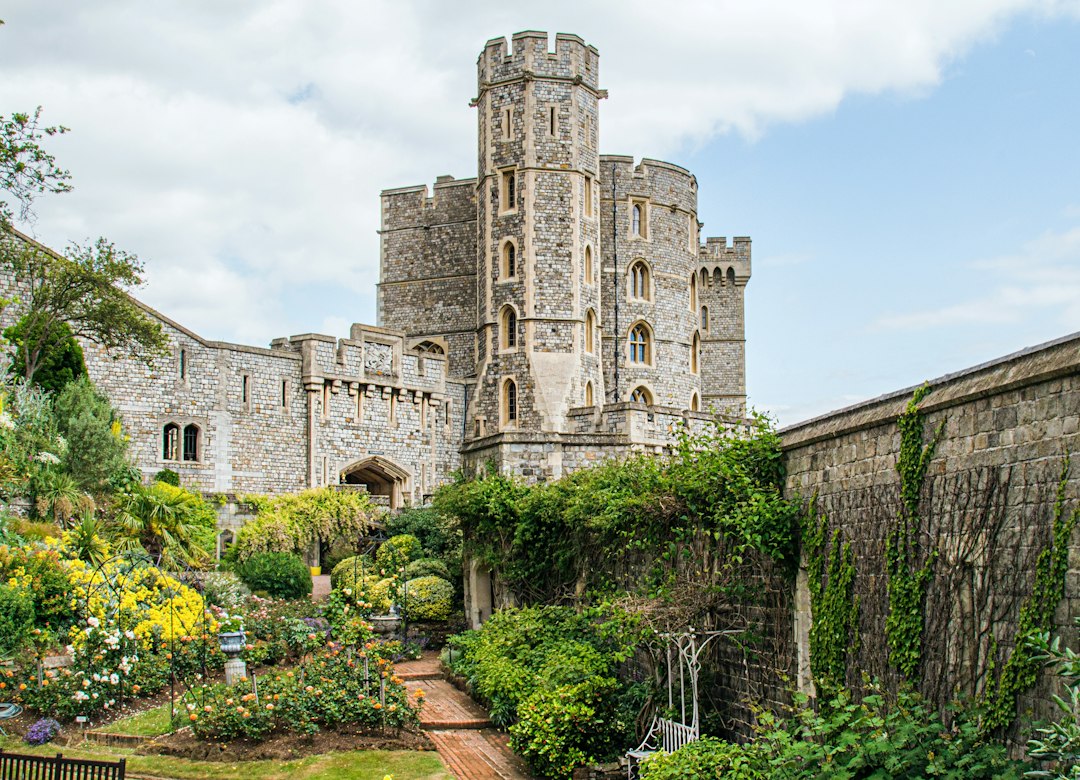
Discover nearly 1,000 years of Windsor Castle history, from William the Conqueror and medieval kings to royal ceremonies, St George’s Chapel and the great fire of 1992.
-
Champions League Round-up: PSG Edge Barcelona as Bayern Host Arsenal

Bayern Munich host Arsenal in a heavyweight Champions League clash on 21 October 2026. Read the tactical preview, team news, win-draw-away probabilities and an illustrative Bukayo Saka movement graphic.
-
What If We Could Send Messages Into the Past?
Imagine sending information backwards through time. Explore the scientific challenges, paradoxes and possibilities of communication across history.
-
Parallel Universes: Could Another Version of Reality Exist?

Could another Earth exist beyond our own? Explore the science, the many-worlds interpretation, the limits of current evidence and the appeal of parallel universes in fiction.
-
From Historic Streets to the Small Screen: Windsor’s Film and Television Heritage
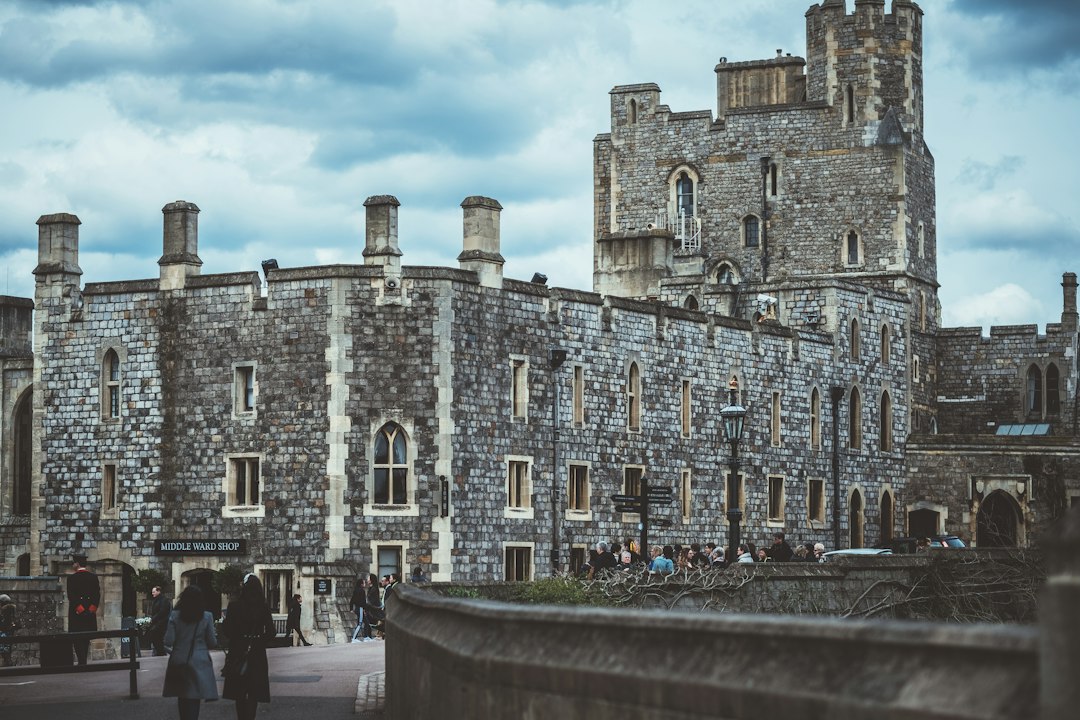
Discover how Windsor, Eton, Bray and Windsor Great Park have inspired films and television, from Hammer horror to modern screen productions. Explore local film heritage and plan a respectful location visit.
-
Premier League Round-up: Results, Tonight’s Spurs v Coventry Preview, Fixtures & Christmas Table Forecast
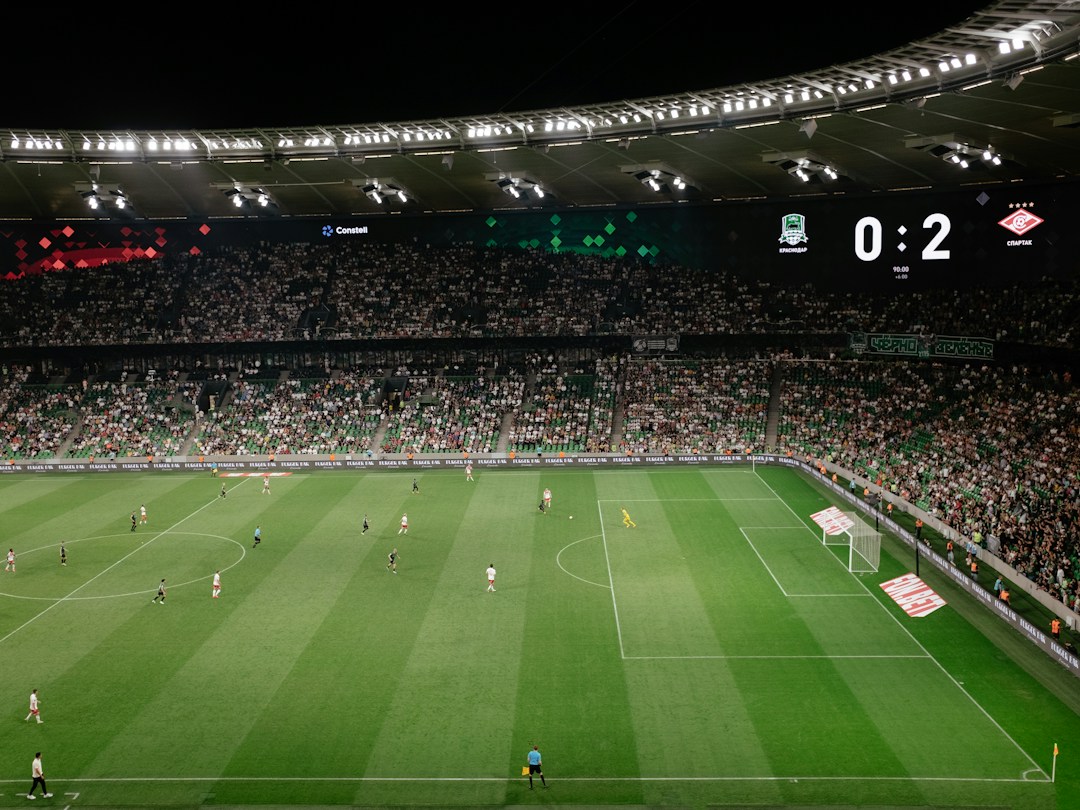
A full Premier League round-up for 19 October 2026: all Matchweek 7 results, Tottenham v Coventry preview, manager quotes with source links, the current table, next fixtures and WindsorCastle.info’s Christmas forecast.
-
Discover Windsor: The Ultimate Visitor Guide to Royal History, Attractions and Things to Do
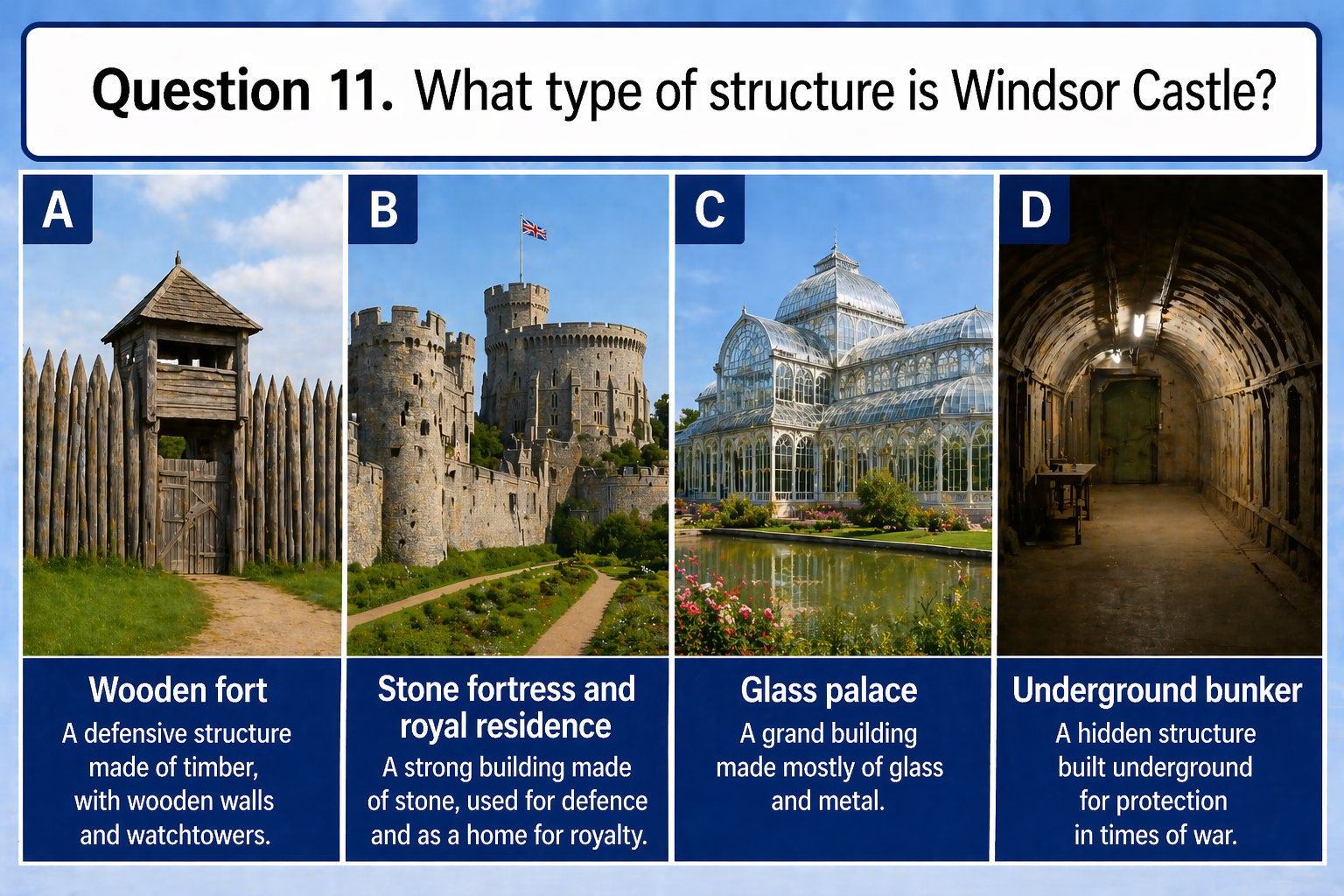
Discover Windsor: The Ultimate Visitor Guide to Royal History, Attractions and Things to Do Explore Windsor Castle, historic streets, beautiful parks, the River Thames and the neighbouring town of Eton. Welcome to WindsorCastle.info, your guide to discovering one of Britain’s most celebrated historic towns. Situated in Berkshire, Windsor brings together centuries of royal heritage, impressive…