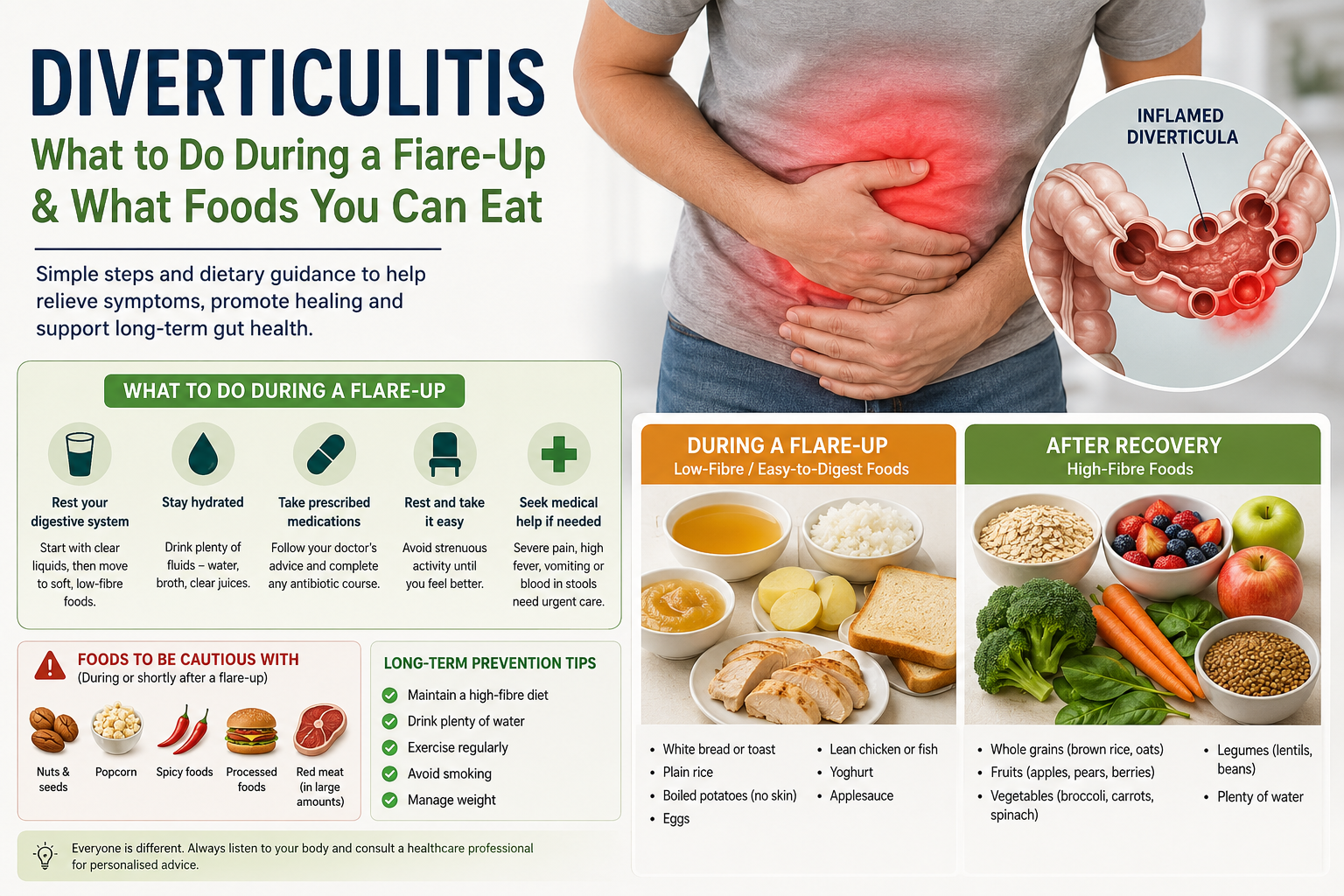
Diverticulitis is a common digestive condition that can cause significant discomfort, especially during flare-ups. If you or someone you know experiences this condition, understanding how to manage symptoms and adjust your diet can make a big difference in recovery and long-term gut health.
What is Diverticulitis?
Diverticulitis occurs when small pouches (called diverticula) that form in the lining of the digestive system—usually in the colon—become inflamed or infected. These pouches are quite common, especially as people age, but not everyone experiences symptoms.
When inflammation happens, it can lead to:
- Abdominal pain (often on the lower left side)
- Fever
- Nausea or vomiting
- Changes in bowel habits (constipation or diarrhoea)
What to Do During a Diverticulitis Flare-Up
A flare-up can be painful and sometimes serious, so it’s important to take the right steps:
1. Rest Your Digestive System
During a flare-up, your gut needs time to recover. Doctors often recommend:
- Starting with a clear liquid diet (broth, water, clear juices)
- Gradually reintroducing soft, low-fibre foods as symptoms improve
2. Stay Hydrated
Drink plenty of fluids to prevent dehydration and help your digestive system function properly.
3. Take Prescribed Medications
If your doctor prescribes antibiotics or pain relief, take them exactly as directed. Avoid self-medicating without advice.
4. Avoid Strenuous Activity
Give your body time to heal. Light movement is fine, but avoid heavy exercise during a flare-up.
5. Know When to Seek Medical Help
Contact a healthcare professional if you experience:
- Severe or worsening pain
- High fever
- Inability to keep fluids down
- Blood in stools
What Foods Can You Eat?
Diet plays a key role in both managing flare-ups and preventing future episodes.
During a Flare-Up (Low-Fibre / Easy-to-Digest Foods)
Start with gentle foods such as:
- White bread or toast
- Plain rice
- Boiled potatoes (without skin)
- Eggs
- Lean chicken or fish
- Yoghurt
- Applesauce
These foods are easier on the digestive system and help reduce irritation.
After Recovery (High-Fibre Diet)
Once symptoms improve, gradually increase fibre intake to support gut health and prevent future flare-ups:
- Whole grains (brown rice, oats)
- Fruits (apples, pears, berries)
- Vegetables (carrots, broccoli, spinach)
- Legumes (lentils, beans)
Foods to Be Cautious With
During or shortly after a flare-up, you may want to limit:
- Nuts and seeds (if they irritate you)
- Popcorn
- Spicy foods
- Processed foods
- Red meat (in large amounts)
Note: Modern research suggests nuts and seeds are not harmful for everyone, but it’s best to monitor your own tolerance.
Long-Term Prevention Tips
- Maintain a high-fibre diet
- Drink plenty of water
- Exercise regularly
- Avoid smoking
- Manage weight
Final Thoughts
Diverticulitis can be uncomfortable, but with the right care and dietary adjustments, most people recover well and can prevent future flare-ups. Listening to your body and making gradual, healthy changes is key.
If you’re unsure about your symptoms or diet, always consult a healthcare professional for personalised advice.

2026 Technology AI AI Boom AI Chips Artificial Intelligence Blog Castle dea Digital Assistants drink England Eton College Eton Walkway food football Future Technology medication Merry Men Nasdaq Premier League 26/27 river thames royal landmarks UK scenic walks England September 2026 soccer Thca UK walking routes visiting windsor castle Wall Street Windsor Windsor castle blog Windsor Castle walk Windsor Drinks Windsor Events Windsor Fringe 2026 Windsor Great Park Windsor hungry Windsor Long Walk Windsor tourism Windsor travel blog Women’s Football Women’s Super League World Cup World Cup 2026 WSL Results