Could Humans Build Data Centres in Space? The Future of Orbital Computing
The idea sounds like science fiction: huge banks of computers orbiting Earth, powered by sunlight and processing data above our heads. But the first pieces of that idea are already moving from concept toward hardware in orbit.
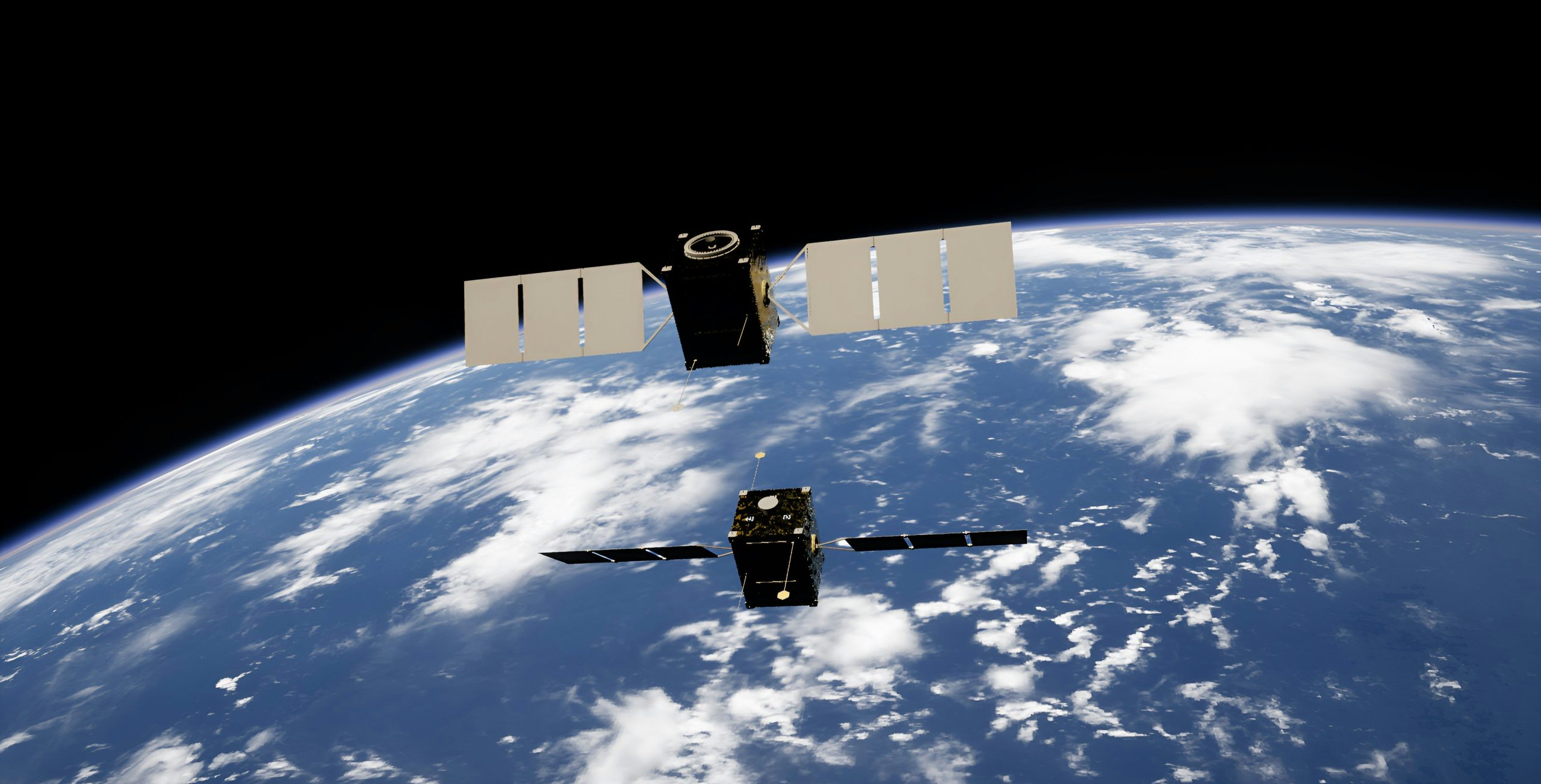
“The big question is no longer whether computers can operate in space. They already do. The question is whether we can scale that idea into a true data-centre industry.”
The short answer: yes — but not like a data centre on Earth
Humans already operate computers and data-processing equipment in orbit. Axiom Space has been developing orbital computing capabilities and data-centre technology for use in space.
That means the technology is no longer purely theoretical. However, a giant orbital facility containing thousands of powerful servers would be a much bigger engineering and economic challenge.
Why put computers in space?
- Solar energy: large solar arrays can generate electricity without relying on terrestrial power grids.
- Processing data closer to satellites: spacecraft can process images, sensor readings and other information in orbit before sending only the useful results to Earth.
- Land and grid constraints: an orbital system would not require a conventional terrestrial site or large transmission connection.
- New AI infrastructure: companies are investigating whether future orbital platforms could host increasingly demanding AI workloads.
But space does not provide “free cooling”
This is one of the biggest misconceptions about orbital data centres. Space is extremely cold, but a computer cannot simply blow its hot air into a vacuum.
NASA explains that in vacuum there is no ordinary convection. Heat must be moved through the spacecraft and ultimately rejected mainly through thermal radiation. A large computing platform therefore needs carefully designed radiators, heat pipes and thermal-control systems.
“Space is cold, but cooling a computer in space is still an engineering problem.”
Solar power could be a major advantage
On Earth, a large data centre needs a substantial electrical connection and a way to remove the heat produced by its processors. An orbital system could use large solar arrays for power and radiators for heat rejection.
Companies developing space-data-centre concepts argue that falling launch costs, solar power and radiative cooling could eventually make very large orbital computing systems possible. These remain developing commercial concepts, so the economics still need to be demonstrated at scale.
The radiation problem
Computers in orbit have another enemy: radiation. NASA notes that ionising radiation can cause errors, crashes and permanent damage to electronics.
Space computers therefore need combinations of radiation-tolerant components, shielding, fault recovery and system-level protection.
Could people actually build one?
Yes, potentially in stages. A realistic development path could look like this:
- Small orbital computing units — prove reliable processors, storage and networking.
- Multiple connected nodes — allow satellites to send data between computing platforms.
- Large solar arrays and radiators — increase available power and heat-rejection capacity.
- Robotic servicing — replace failed hardware and upgrade computing modules without returning everything to Earth.
- Large-scale orbital infrastructure — eventually combine many modules into an orbital cloud or data-centre network.
What would the computers actually do?
An orbital data centre would not necessarily replace terrestrial data centres. Instead, it could complement them.
Imagine an Earth-observation satellite taking thousands of high-resolution images. Instead of downloading every raw image, the satellite could send the data to a nearby orbital computing node.
AI software could identify ships, fires, changes in farmland or other features, with only the important results sent to Earth.
Potential applications could include:
- Artificial intelligence
- Earth observation
- Satellite imagery analysis
- Scientific research
- Spacecraft data processing
- Cybersecurity
- Cloud computing
- Large-scale data storage
What are the biggest obstacles?
| Challenge | Why it matters |
|---|---|
| Launch cost | Large amounts of hardware must be transported safely into orbit. |
| Heat rejection | Vacuum removes convection, so radiators must reject waste heat. |
| Radiation | High-energy particles can disrupt or damage electronics. |
| Maintenance | Repairing hardware in orbit is harder than replacing a server on Earth. |
| Communications | High-capacity links are required to connect spacecraft and Earth. |
| Economics | The cost per unit of computing must compete with rapidly improving Earth-based infrastructure. |
Could humans build the whole data centre in space?
That is where the idea becomes even more interesting.
Rather than launching one enormous finished building, future systems could be assembled from modules. Robots could connect power systems, radiators, storage units and computing modules in orbit.
Over time, a space data centre could become more like a giant industrial machine than a traditional building: solar panels on one side, radiator panels on another, computers and storage inside protected modules, and optical communications equipment connecting it to other spacecraft.
“The future space data centre may not look like a building at all. It could look like a fleet of connected spacecraft.”
The WindsorCastle.info view
Data centres in space are still an emerging technology, not a finished replacement for terrestrial computing.
But the direction is becoming clearer: orbital computing prototypes are being tested, companies are investigating networks of nodes, and NASA continues to develop more capable space processors.
If launch costs, power generation, thermal management, radiation protection and servicing can all be solved economically, humans could eventually build significant computing infrastructure in orbit.
The fascinating part is that the first steps have already begun.
References and further reading
- Axiom Space — Orbital Data Centers
- Axiom Space — Orbital Data Center Node
- NASA — Thermal Control in Small Spacecraft
- NASA — High Performance Spaceflight Computing
- NASA — Radiation-Tolerant Computing in Space
- Starcloud — Data Centres in Space
SEO Information
SEO title: Could Humans Build Data Centres in Space? The Future of Orbital Computing
SEO description: Could humans build data centres in space? Explore orbital computing, solar power, cooling, radiation, AI and the engineering challenges of building data centres above Earth.
SEO keywords: data centres in space, space data centres, orbital data centres, orbital computing, AI in space, space technology, satellite computing, solar powered data centres, Axiom Space, future technology
SEO tags: Space Data Centres, Orbital Data Centres, Space Technology, Artificial Intelligence, AI Computing, Satellite Technology, Future Technology, Solar Power, SpaceX, Axiom Space
Category hierarchy: WindsorCastle.info → Future Technology
2026 Technology (3) AI (3) Artificial Intelligence (2) Blog (90) Castle (96) dea (72) drink (83) England (5) food (81) football (4) Future Technology (2) medication (81) Premier League 26/27 (3) soccer (4) Thca (2) UK walking routes (2) Windsor (89) Windsor castle blog (96) Windsor Castle walk (3) Windsor Drinks (89) Windsor Great Park (3) Windsor hungry (85) Windsor Long Walk (3) Windsor tourism (3) Windsor travel blog (3) World Cup (3)
- Fantasy & Adventure (1)
- Finance & Investing (4)
- Football (4)
- Future Technology (3)
- Local Events (3)
- Premier League 26/27 (3)
- Robin Hood (1)
- Technology & AI (5)
- Tourism (3)
- Windsor Games (3)
- WindsorCastle.info (148)
- Blog (102)
- close (74)
- statoshi$5 (72)
- Won (19)
- statoshi$5 (72)
- Horse Racing (1)
- close (74)
- open (73)
- ssl (72)
- Blog (102)
-
Is it possible to built data centres in space
Will Humans be able to build data centres in space
-
Sky Glass Review: Why Is Sky Glass So Good? Price, Remote & Pay Monthly Options

Explore Sky Glass Gen 2, including 4K picture, Dolby Atmos sound, voice control, remote features, current UK prices and pay-monthly options.