Windsor Castle
— Myth, History & Hidden Passages
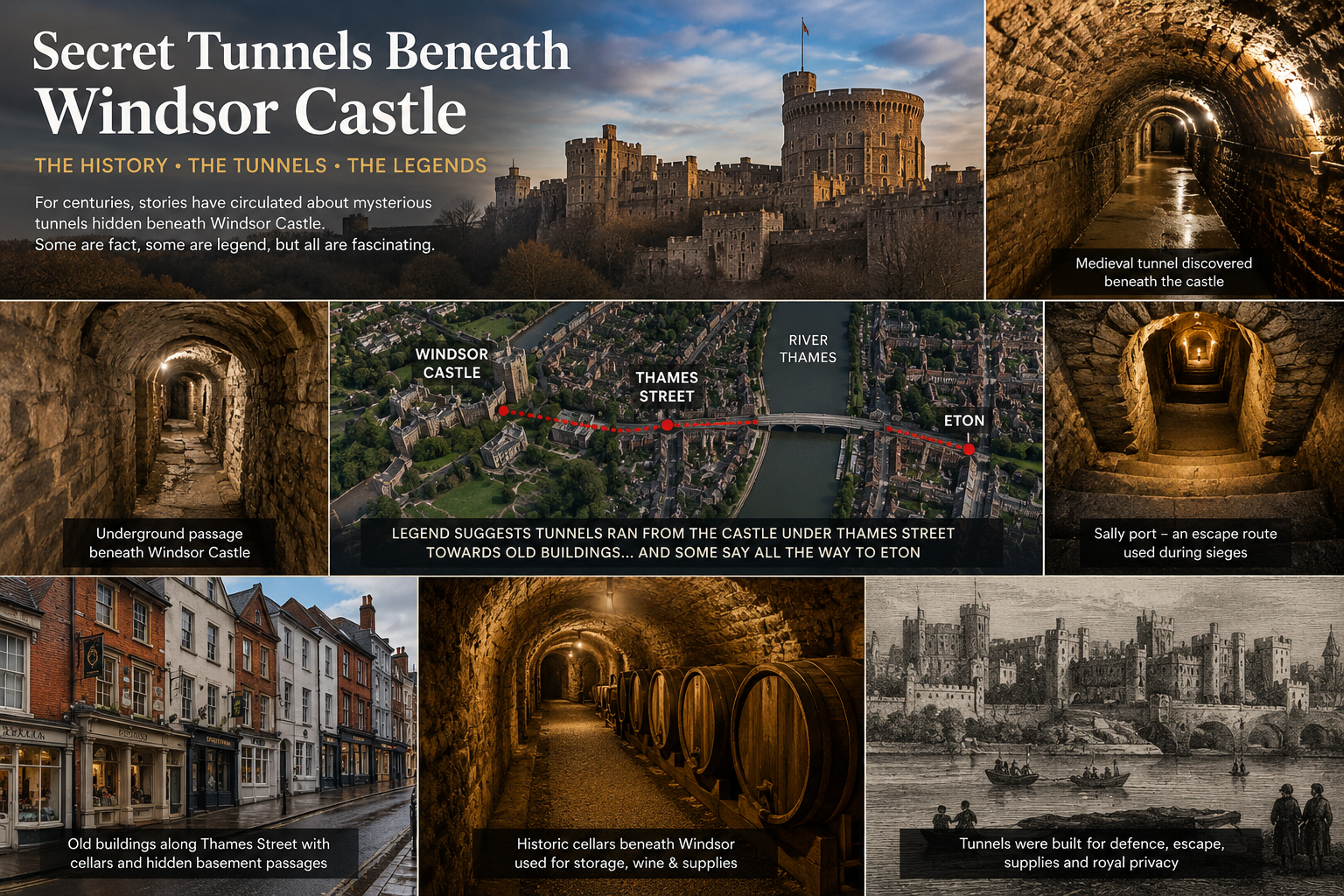
For centuries, stories have circulated about mysterious tunnels hidden beneath Windsor Castle. Some legends claim secret underground routes once stretched beneath Thames Street toward Eton, riverside buildings, old inns, and even hidden royal escape routes.
But how much of the story is true?
The reality is a fascinating mixture of genuine medieval passages, military escape routes, Victorian discoveries, and local folklore that continues to intrigue historians and visitors today.
Did Secret Tunnels Really Exist?
Historical evidence shows that genuine underground passages and “sally ports” did exist beneath parts of Windsor Castle. These were defensive escape routes used during medieval sieges and emergencies.
Some tunnels were discovered during major rebuilding work in the 1820s and 1850s beneath areas of the castle and surrounding streets. One large underground passage was reportedly found deep below the Upper Ward during excavation work ordered by King William IV.
Another tunnel discovered near the Curfew Tower appeared to run beneath Thames Street toward the lower parts of town. Historians believe this may have been a medieval sally port — a hidden exit allowing soldiers or royals to leave the castle unseen during attack or siege.
Where Did the Tunnels Go?
Many local legends claim tunnels once connected the castle to:
- The old riverside area near the Thames
- Buildings beneath Thames Street
- Hidden cellar systems
- Former inns and taverns
- Religious buildings
- Nearby sections of old Windsor
- Rumoured routes toward Eton
However, there is no confirmed evidence of a complete tunnel running all the way under the River Thames into Eton. Most historians believe that story is part of Windsor folklore rather than proven archaeology.
Some reports from the 1800s suggested passages heading toward “Old Windsor,” while other stories involved tunnels beneath shops and basements around Castle Hill and Thames Street.
Who Built the Tunnels?
Most of the known underground passages date back to the medieval period after the castle was founded by William the Conqueror in the 11th century.
Later kings including:
- Henry III
- Edward III
- Henry VIII
expanded and strengthened the castle’s defensive systems over centuries.
The tunnels and sally ports were likely built by royal engineers, stonemasons, labourers, and military workers employed by the Crown during periods of castle expansion and warfare.
What Were the Tunnels Used For?
1. Escape Routes
The main purpose of many medieval sally ports was emergency escape during siege or invasion.
Hidden exits allowed defenders to:
- Leave the castle secretly
- Move troops unseen
- Deliver messages
- Gather supplies
2. Military Defence
Some passages helped soldiers move safely beneath walls during attack.
3. Storage & Utilities
Other underground spaces were later adapted for:
- Food storage
- Heating systems
- Plumbing
- Wine cellars
- Ice houses
4. Royal Privacy
Legends claim members of the royal household used hidden routes to move discreetly between buildings and avoid crowds.
While some of these stories remain unproven, hidden passages were common in large medieval castles throughout Europe.
The Curfew Tower Tunnel
One of the best-known documented passages lies near the Curfew Tower.
Reports from the 1800s described a stone tunnel running from the Horseshoe Cloisters beneath Thames Street toward the western ditch outside the castle walls.
This tunnel is considered one of the most likely genuine medieval escape routes associated with the castle.
Underground Shops & Cellars Beneath Windsor
Many of the older buildings around Thames Street and Castle Hill contain ancient basements and interconnected cellar systems.
Over hundreds of years, these spaces were used for:
- Wine storage
- Ale barrels
- Coal
- Food preservation
- Merchant stockrooms
Because many cellars connected beneath streets, rumours spread that entire underground shopping routes existed beneath Windsor.
Some local stories even mention blocked-up tunnel entrances in old basements and former inns. However, many claims remain unverified and may simply be linked cellar systems rather than vast royal tunnels.
Why Do Tunnel Legends Continue?
Part of Windsor’s appeal is its mystery.
With nearly 1,000 years of royal history, medieval warfare, fires, rebuilding projects, hidden chambers, and ancient stone foundations, it is easy to understand why stories about secret tunnels continue to fascinate visitors.
Even today, historians still debate how extensive some of the underground passages may once have been.
Final Thoughts
The underground world beneath Windsor Castle combines genuine medieval engineering with centuries of myths and local storytelling.
While many dramatic stories about tunnels stretching all the way to Eton remain unproven, there is strong historical evidence that real defensive tunnels and hidden sally ports existed beneath the castle and nearby streets.
These hidden passages remain one of Windsor’s most intriguing mysteries — a reminder that beneath the royal streets and tourist shops lies nearly a thousand years of buried history.
For more Windsor history, hidden secrets, riverside guides, and royal stories visit:
WindsorCastle.info
1125 ai animation blog animated cartoon episode player Blog Castle classic literature parody Conservatory program dea drink Easter Service Easter Service at St George’s Chapel food funny animal animation html javascript animation project interactive storyboard Invest Lord Sugar medication mole rat toad badger cartoon Poker book riverside Royal Events royal landmarks UK saving swans scenic walks England Scones secret swans Thames riverside walk Tunnels UK walking routes Win wind in the willows parody Windsor windsor blog entertainment Windsor castle blog Windsor Castle walk Windsor Drinks Windsor Great Park Windsor hungry Windsor Long Walk Windsor Riverside Windsor tourism Windsor travel blog WSOP
-
The Secret Tunnels Beneath
These hidden passages remain one of Windsor’s most intriguing mysteries — a reminder that beneath the royal streets and tourist shops lies nearly a thousand years of buried history.