Windsor Castle • Royal Heritage
Royal Carriages of Windsor: A Journey Through Ceremony and History
Discover the magnificent coaches, skilled horses and traditions that have carried monarchs and royal guests through British history.
SEO title: Royal Carriages at Windsor Castle: History, Coaches and Ceremony
SEO description: Explore royal carriages associated with Windsor Castle, from Queen Victoria’s carriage to the Gold State Coach and modern Diamond Jubilee State Coach, with historic sources and image credits.
Focus keyphrase: royal carriages at Windsor Castle
Windsor and the royal carriage tradition
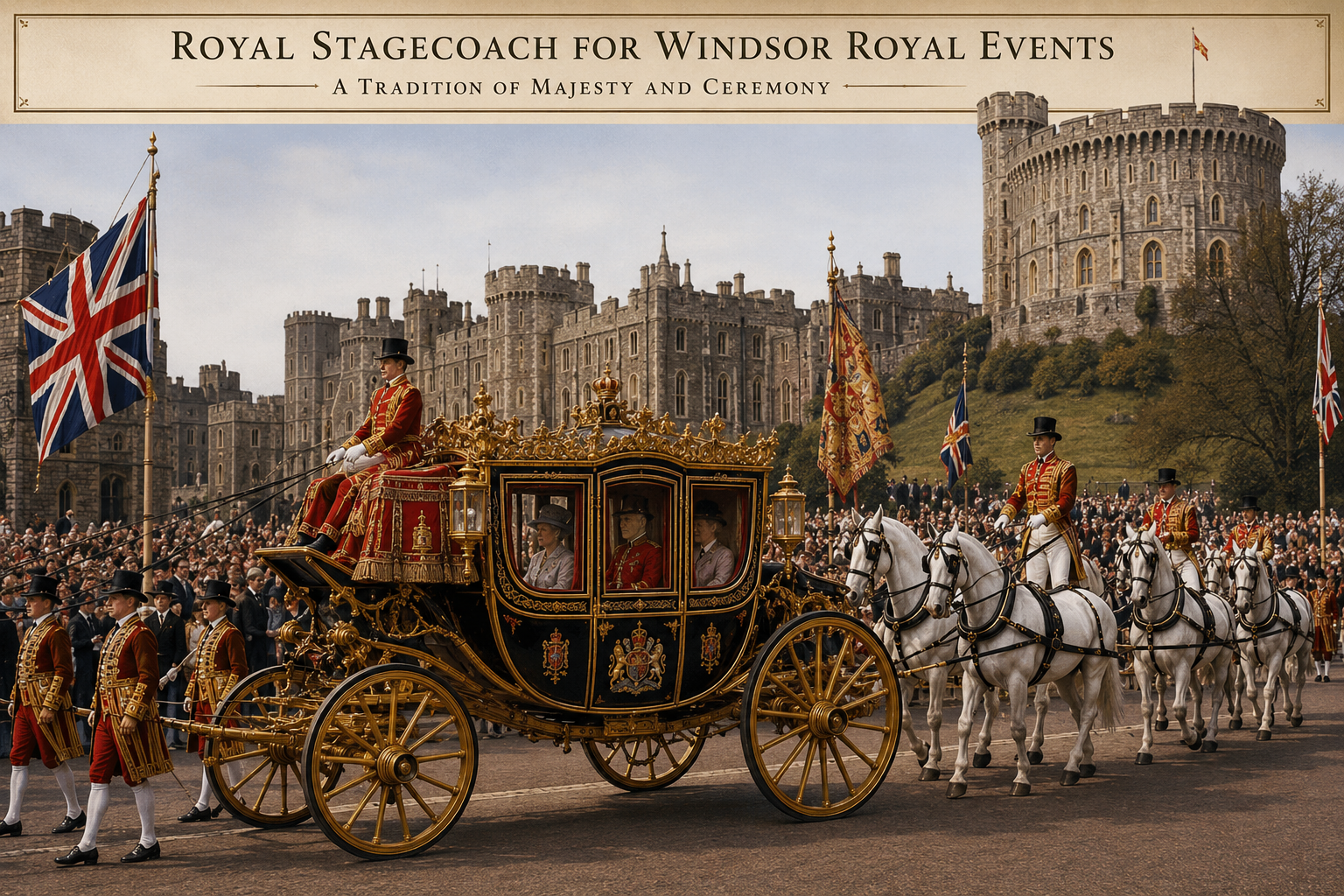
For centuries, horse-drawn carriages were an essential part of royal life. They carried monarchs, family members and distinguished visitors between royal residences and formed a spectacular part of state occasions. Windsor Castle’s royal history is closely connected with these traditions, although many of the best-known state coaches are cared for and displayed at the Royal Mews at Buckingham Palace rather than permanently at Windsor.
Carriages were practical vehicles, but also moving works of art: their painted panels, gilded carvings, liveries, harnesses and carefully matched horses communicated rank, ceremony and continuity.
“A royal carriage is more than transport: it is craftsmanship, ceremony and history set in motion.”
— Editorial reflection for WindsorCastle.info; not a historical quotation.
The Gold State Coach
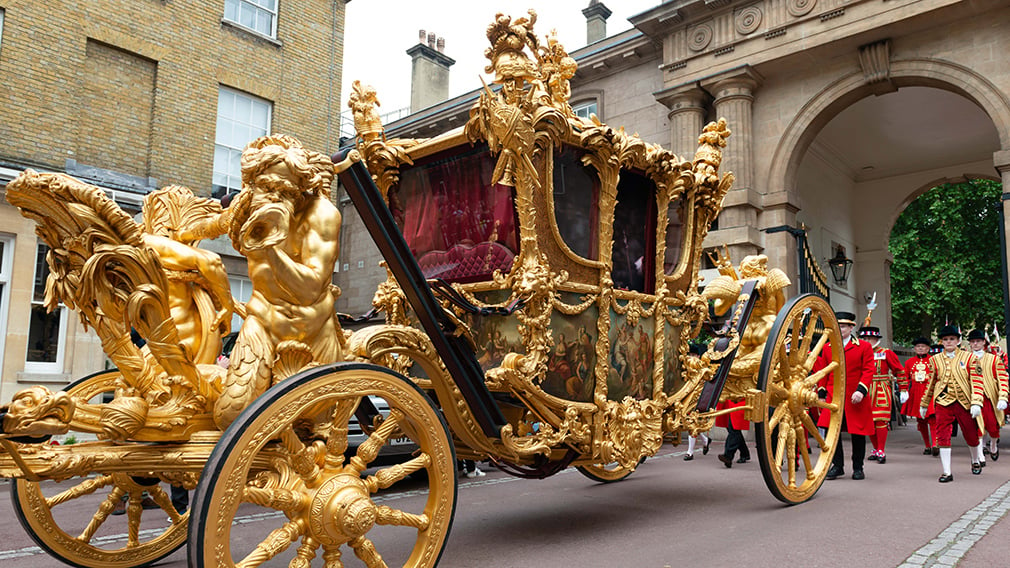
Built in 1762, the Gold State Coach is among the most famous ceremonial coaches in Britain. The Royal Collection Trust records that it is about seven metres long, 3.6 metres high and weighs around four tonnes; eight horses are required to draw it. Its elaborate gilded sculpture and painted panels make it a striking example of eighteenth-century royal spectacle.
It has been used at coronations since William IV’s in 1831, including Queen Elizabeth II’s coronation in 1953 and King Charles III’s in 2023. Its size and weight make it a ceremonial vehicle rather than an everyday carriage.
The Diamond Jubilee State Coach
Created to mark Queen Elizabeth II’s Diamond Jubilee, the Diamond Jubilee State Coach was first used at the State Opening of Parliament in 2014 and later carried the Sovereign during the 2023 Coronation procession. It combines traditional coachbuilding with modern engineering, including an aluminium body and hydraulic stabilisers designed to reduce swaying.
Its interior incorporates historic materials associated with locations and institutions across Britain—including Windsor Castle—making the coach a symbolic collection of national history as well as a working vehicle.
Queen Victoria and the Semi-State Landau
Open carriages such as the Semi-State Landau were well suited to public appearances, allowing crowds to see the royal passengers. The Royal Collection Trust notes Queen Victoria’s use of this type of carriage at ceremonial events, including celebrations connected with her Diamond Jubilee in 1897.
A historic photograph in the Royal Collection also documents Queen Victoria and members of her family with a horse-drawn carriage at Windsor Castle in 1857. The photograph was made by William Bambridge and is catalogued by the Royal Collection Trust.
View the 1857 Windsor Castle carriage photograph and catalogue record (photographer: William Bambridge, 1820–1879; Royal Collection Trust, RCIN 2932750).
The horses: Windsor Greys and Cleveland Bays
The horses are as important as the coaches. According to the Royal Collection Trust, Windsor Greys traditionally draw carriages carrying the monarch, members of the Royal Family and guests. Their name recalls their historical association with Windsor. Cleveland Bays have also served in carriage work, including official and day-to-day duties.
Preparing for a procession takes expertise: horses must be trained, harnesses checked, coaches maintained and coachmen dressed in the correct livery. The Royal Mews remains responsible for the royal family’s road travel arrangements, including ceremonial carriage transport.
A living tradition
Royal carriages continue to connect the present monarchy with earlier generations. They appear at coronations, state occasions and selected ceremonial events, reminding spectators that tradition depends on living skills—coachbuilding, conservation, horse care, harness-making and formal driving.
From the quiet roads around Windsor to grand state processions, the royal carriage tradition tells a story of craftsmanship, service and public ceremony.
Image and research credits
- Gold State Coach photograph: © Royal Collection Enterprises Limited / Royal Collection Trust. Displayed from the official Royal Collection Trust page; please consult its image-use terms before republication elsewhere.
- Historic Windsor carriage photograph: William Bambridge, “Her Majesty the Queen, The Prince of Wales, The Princess Royal and Princess Alice, Windsor Castle”, 1857, RCIN 2932750; catalogue record at Royal Collection Trust.
- Research: Royal Collection Trust, “Highlights of the Royal Mews” and “The Royal Mews, Buckingham Palace”; The Royal Family, “The Coronation Procession”.
Further reading and sources
- Royal Collection Trust: Highlights of the Royal Mews
- Royal Collection Trust: The Royal Mews, Buckingham Palace
- The Royal Family: The Coronation Procession (2023)
- Royal Collection Trust: Windsor Castle carriage photograph, 1857
Categories: Windsor Castle History; Royal Family; Heritage & Traditions
Tag cloud: Windsor Castle, Royal Carriages, Gold State Coach, Diamond Jubilee State Coach, Queen Victoria, Royal Mews, Windsor Greys, Royal History, Coronation, British Heritage
Written for WindsorCastle.info. Historical details are summarised from the linked official sources. The displayed quotation is original editorial wording, not a quotation attributed to a historical figure.
 0

 20
 20
Leave a Reply
You must be logged in to post a comment.