Before Money: How People Bartered in Britain and North America
Long before coins, banknotes and digital payments, people still needed to obtain things they did not produce themselves. They exchanged goods, services, gifts and obligations through networks of cooperation and trade. We cannot identify the single “first person” to barter in Britain or what is now the United States, because these exchanges pre-date written records. Archaeology, however, provides evidence for long-distance exchange in prehistoric Britain, while Indigenous societies across North America developed their own sophisticated systems of exchange long before the United States existed.
The First Evidence of Exchange in Britain
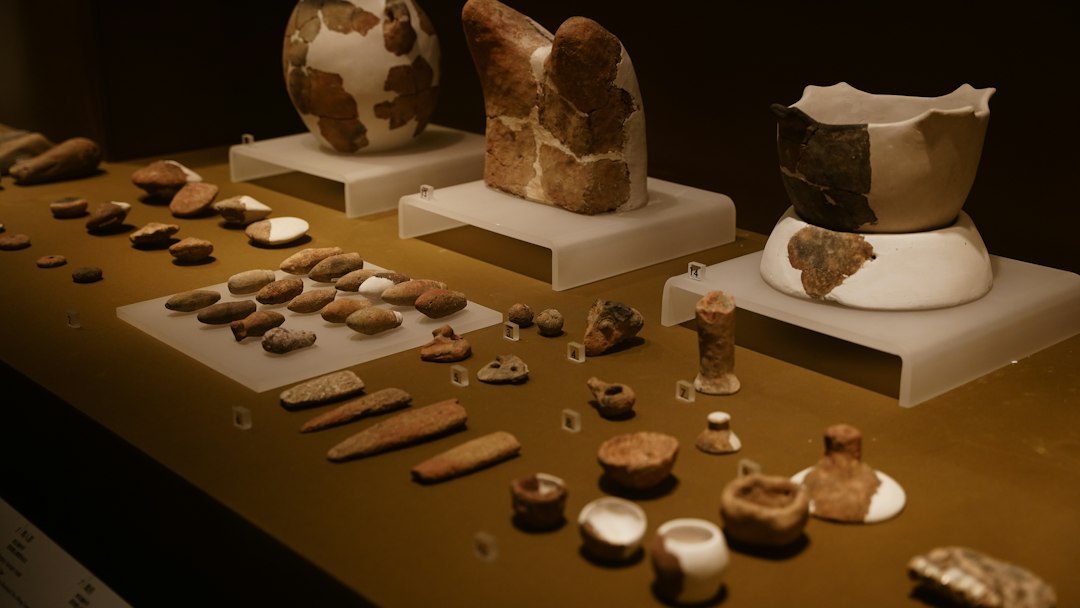
English Heritage notes that goods and skills were probably being exchanged in prehistoric Britain from very early times, although little direct evidence survives. With the arrival of farming around 4000 BC, some of the earliest surviving traded objects include stone-headed axes. citeturn0search1
Stone axes made from distinctive materials travelled considerable distances. Axe stone from the Lake District, including Langdale, was distributed widely, while jade axe-heads originating in the Italian Alps have also been found in Britain. These discoveries demonstrate that people were moving valuable objects across substantial distances, although archaeology cannot tell us exactly whether every individual transaction was a simple one-for-one barter.
What Did People Exchange in Ancient Britain?
- Stone tools and axe-heads – essential for farming, woodworking and land clearance.
- Flint – including high-quality material from places such as Grime’s Graves in Norfolk.
- Metals – copper, tin, bronze and later iron became important commodities.
- Gold and jewellery – prestige objects could travel through long-distance networks.
- Amber – Bronze Age finds indicate links with the Baltic region.
- Pottery, salt and specialist goods – later communities exchanged products made in particular regions.
- Food, livestock and textiles – many important traded goods were perishable and therefore left little archaeological evidence.
By the later Iron Age, southern Britain had established trading links with areas including northern Gaul and Brittany. At Hengistbury Head in Dorset, archaeological evidence points to exchanges involving locally produced iron and imported goods such as pottery, glass, figs and wine. citeturn0search1turn0search2
Britain Moves Towards Money
Barter and exchange did not suddenly disappear when money arrived. Different systems existed alongside one another. British coins began appearing before the Roman conquest, with local coinages developing in southern and eastern Britain. English Heritage identifies coinage at Hengistbury Head as a new concept in Britain and notes that local tribes later produced their own gold and silver coins. citeturn0search1
After the Roman conquest in AD 43, the economy became increasingly money-based, particularly around towns, the army and long-distance trade. Roman military pay helped drive demand for a monetary economy, while British grain, animals, minerals, pottery, salt and other goods became part of a much larger imperial trading system. citeturn0search2turn0search3
Barter and Exchange in North America Before the United States
It is important to remember that the United States did not yet exist when Indigenous peoples developed these trading networks. Archaeological and historical research shows that exchange among Native American societies predates European contact. Trade could involve local markets, long-distance networks, diplomacy, gifting and reciprocal relationships—not simply the modern idea of swapping one object directly for another. citeturn0search10
What Was Exchanged?
The goods varied enormously between regions because North America contained many different environments and cultures.
- Animal furs and hides – important regional products, particularly in northern areas.
- Shells and shell beads – valuable for ornament, diplomacy and exchange.
- Food and agricultural products – communities exchanged products that were abundant locally for goods that were harder to obtain.
- Stone and tools – useful materials could travel far from their geological sources.
- Pottery and crafted objects – specialist production created items suitable for exchange.
- Tobacco and other regional commodities – later historical records document their importance in exchange.
- Clothing, beads and manufactured goods – these became particularly important in Indigenous-European trade after contact.
Wampum is a particularly interesting example. Shell beads were important in Indigenous societies for ceremonial, diplomatic and social purposes. Europeans later adopted wampum as a medium of exchange in some colonial settings, but the National Park Service stresses that wampum had meanings beyond simply being “money”. citeturn0search4turn0search6
Why Was Barter Useful?
Barter and other forms of exchange allowed communities to obtain things they lacked. A farming community could exchange surplus food for specialist tools; a coastal community could obtain inland resources; and communities could develop relationships through repeated exchange.
However, direct barter also had limitations. If one person had fish but wanted tools, the toolmaker had to want fish—or another arrangement had to be found. This problem encouraged people to use goods that were widely desired or relatively easy to measure and transfer. The Bank of England describes early exchange as involving both direct swapping and more complex systems using commodities and objects whose value could be accounted for by weight. citeturn0search0
What Happened When Money Was Introduced?
Money did not simply replace barter overnight. Instead, coins and other forms of money provided an additional way of measuring and settling transactions.
A coin could give a seller something that was easier to store, carry and reuse than many bulky goods. It also made it easier to state prices and pay people who did not necessarily want the goods being offered in exchange.
In Roman Britain, money became particularly important because the Roman army needed a reliable system for paying soldiers and purchasing supplies. Towns became centres for commercial activity, while goods and services could be exchanged through a developing monetary economy. citeturn0search2
Money Changed Trade, But Exchange Continued
The introduction of coins did not mean that people stopped exchanging goods, services or favours. Even in economies with coins, people continued to use credit, gifts, reciprocal arrangements and direct exchanges. The major change was that money provided a common unit through which very different goods and services could be valued.
From Axe Heads to Coins
The story of trade is therefore not simply a straight line from “barter” to “money”. Early people used whatever systems worked for their communities. Archaeological evidence from Britain shows long-distance movement of stone, metals, amber, gold and manufactured objects thousands of years ago. Indigenous North American societies likewise maintained extensive exchange networks before European colonisation. Eventually, coins and other forms of money became increasingly useful because they helped people measure value and settle transactions across larger and more complex economies.
A Fascinating Beginning to Everyday Shopping
Every time we buy something today, we are taking part in a system that has developed over thousands of years. The modern pound or dollar is very different from an ancient axe, shell bead, animal hide or metal object used in exchange, but the underlying human problem is familiar: how do we obtain something we need or want from someone who has it?
SEO Description: Discover how prehistoric people in Britain and Indigenous peoples of North America exchanged goods before money, what they traded, and how coins changed commerce.
SEO Keywords: barter before money, first barter UK, ancient British trade, prehistoric Britain trade, barter in America, Native American trade, Indigenous trade, history of money, first coins Britain, ancient exchange, wampum, Roman Britain economy.
Categories: History, British History, American History, Money & Trade
Tags: Barter, Trade, Money, History, Prehistoric Britain, Ancient Britain, Native American History, Indigenous Trade, Wampum, Roman Britain, Coins, Economics
Image credit: Ryan Du via Unsplash.
Sources: English Heritage, Bank of England, National Park Service and Cambridge University Press. Dates and interpretations are based on archaeological and historical evidence; individual prehistoric transactions cannot usually be reconstructed with certainty.
Leave a Reply
You must be logged in to post a comment.