AI Worker & Public Key

Worker status Stopped
Worker cycles 0
Last activity Waiting

Local demonstration worker. No external AI service is contacted by this example.

Tag: Science Fiction

  • The Caves Beneath Mars: A Fictional Scientific Research Mystery

    The Caves Beneath Mars: A Fictional Scientific Research Mystery

    Fictional research dossier: This is a science-fiction mystery built around real planetary-science concepts. The Asterion mission, Mole-7 rover, researchers, measurements and discoveries described below are invented. They are not reports of a real Mars mission.

    What if a robotic expedition entered a Martian cave and found a signal that appeared to predict the rover’s movements? The Caves Beneath Mars is a cinematic research mystery about lava tubes, scientific uncertainty and a final transmission that cannot be explained by the mission team.

    Rugged volcanic-looking rock landscape used as a visual reference for the fictional Martian cave expedition
    Illustrative geological landscape. Photograph by Suganth on Unsplash; not a photograph of a confirmed Martian cave.

    Abstract: The Asterion mission

    In the fictional year 2042, an international robotic expedition explores a suspected lava tube beneath the western flank of Arsia Mons. The cave is selected because a thick roof could offer protection from some surface hazards and preserve clues to Mars’s geological history.

    On the third day underground, two receivers record a repeating electromagnetic signal. A mapping robot named Mole-7 then detects unusually regular depressions in the rock. When its camera records an image with a timestamp several minutes ahead of the mission clock, the team must distinguish equipment faults from a genuinely unexplained observation.

    Research question and hypotheses

    Primary question: Could the unexplained signal and geometric formations inside a Martian lava tube be accounted for by known geological and physical processes?

    • H1 — Geology: the formations are natural products of volcanic activity or erosion.
    • H2 — Instrument fault: a sensor, clock or software error has corrupted the observations.
    • H3 — Interference: the signal comes from the rover’s electronics or radio environment.
    • H4 — Unknown natural process: repeat measurements reveal an unusual but natural mechanism.
    • H5 — Artificial origin: the geometry and material evidence indicate deliberate construction. This is a hypothesis to test, not an assumed conclusion.

    Why investigate caves on Mars?

    Lava tubes form when the surface of a flowing lava stream cools while molten material continues moving below it. Once the lava drains away, an underground passage can remain. Planetary scientists study possible caves because they may reveal volcanic history and could provide a more sheltered environment for future exploration.

    Mineral deposits and evidence of past water-rock interactions could help researchers assess whether ancient Martian environments were once habitable. Such clues would not, by themselves, prove that life existed.

    Mars-like red rocky landscape used to illustrate the fictional Asterion cave expedition
    Visual reference for the red planet setting. Photograph by Nicolas Lobos on Unsplash. Used illustratively; it is not evidence from the fictional mission.

    Methodology: Mole-7’s underground survey

    The fictional Mole-7 rover carries a lidar mapper, cameras, two independent radio-frequency receivers, temperature and radiation sensors, and a mineral-analysis instrument. The mission protocol requires calibration before and after each survey, repeated scans from different angles, preservation of raw data and independent checks of all timestamps.

    1. Map the cave: build a three-dimensional model of the passage and chamber.
    2. Analyse the signal: compare both receivers’ records with equipment activity and known transmissions.
    3. Measure the environment: record temperature, radiation and mineral composition at multiple locations.
    4. Verify independently: repeat scans and compare original sensor data before drawing conclusions.

    Invented findings: the signal and the chamber

    All results below are fictional story data. During the imagined survey, the cave extends 1.8 kilometres from its entrance. The temperature varies less than expected between several locations, and mineral deposits warrant a closer examination for possible ancient water-rock interactions.

    At 03:17 mission time, both receivers detect a narrow-band signal that repeats every 17 seconds. The fictional readings rise when Mole-7 enters a chamber containing twelve evenly spaced depressions around a central rock column. Their spacing varies by less than 1.5 per cent in the initial map—an intriguing observation, but not proof of artificial construction.
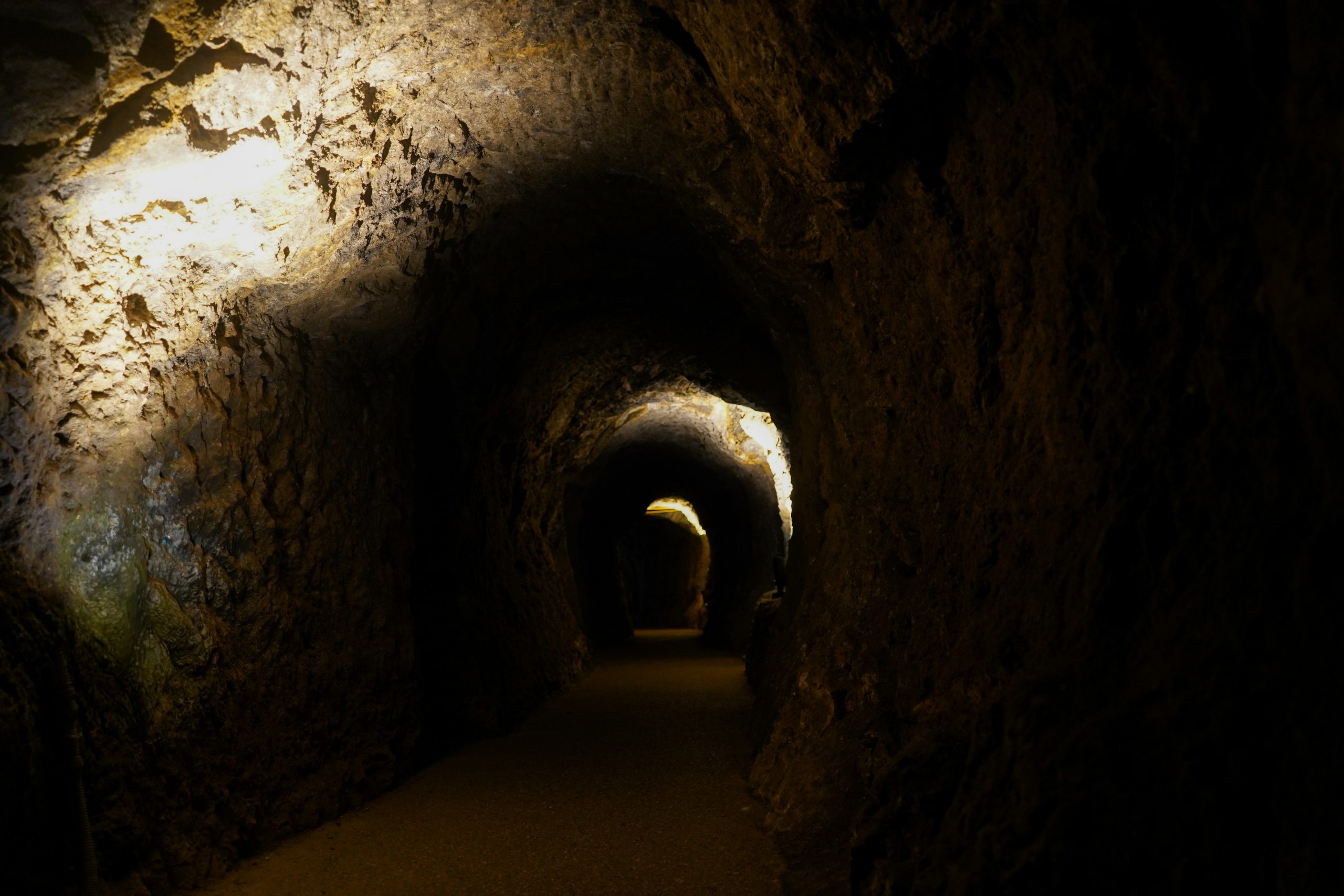
    Dark underground rock tunnel used as a visual reference for the fictional Martian chamber
    Underground tunnel reference image. Photograph by Yosuke Ota on Unsplash. This is a terrestrial reference photograph, not a Martian cave.

    Graph: the fictional signal readings

    The graph below shows invented signal-strength values across six observation windows. Units are arbitrary and the numbers have been created for this story; they are not real mission telemetry.

    Asterion: invented signal-strength readings010203040123456Observation windowSignal strength (arbitrary units)Fictional values — not real Mars data
    Invented values: 12, 13, 12, 31, 30 and 32 arbitrary units. The increase coincides with the fictional rover’s entry into the chamber.

    The timestamp that should not exist

    At 03:42, Mole-7 transmits an image labelled 03:47. It appears to show tracks the rover has not yet made. The team checks clock drift, buffered data, software corruption and image metadata. The checksum is valid, but the available logs do not resolve every discrepancy.

    During the next survey, a lidar map reveals a narrow opening behind the central column that was absent from previous scans. Mole-7 sends a final data packet containing a map of the opening and an unidentified rectangular object. Contact is lost. The signal continues for exactly 17 seconds, then stops.

    Interpretation: what might explain the anomaly?

    Explanation What supports it What remains unresolved
    Sensor or software fault Missing lidar returns and conflicting timestamps Not every observation has been reconciled
    Radio propagation or interference Signal strength changes inside the chamber Does not fully explain the image sequence
    Natural geological structure Volcanic processes can create regular formations The chamber is not fully mapped
    Unknown phenomenon Several records remain unexplained in the story No verified evidence establishes a new physical process

    Interim conclusion: the fictional evidence is inconclusive. The team has not proved that the formations are artificial, that life exists on Mars, or that known physics has been violated. An unexplained observation is a reason for further testing, not proof of an extraordinary claim.

    Proposed follow-up: Asterion II

    A second fictional mission would use two independently designed mapping robots, separate timing systems, a portable radio-frequency analyser, a robotic sampling arm and a tethered communications relay. Researchers would pre-register expected signal characteristics and ask an independent team to analyse the raw data without being told which observations are considered mysterious.

    Limitations

    • The robot loses contact before the chamber can be fully surveyed.
    • Sensor faults, clock errors and radio interference remain plausible.
    • The final image and its timestamp cannot be independently verified.
    • No physical samples are collected from the unidentified object.
    • The fictional study provides no verified evidence of ancient or present-day life.

    Conclusion: a scientific mystery

    The Caves Beneath Mars combines real planetary-science concepts with invented research results. Its central question is not whether the cave contains alien technology, but how a careful team should respond when measurements do not fit its current explanation.

    “We designed this mission to discover what the cave was made of. We may have to return to find out what made it.”

    The story ends before the next expedition launches. The cave remains unexplored, the signal unexplained, and the evidence open to testing.

    Further reading: real science behind the fiction

    Image credits: Nicolas Lobos, Suganth and Yosuke Ota via Unsplash; photographer profile links are provided beneath each image. Images are illustrative references and are not presented as real photographs of Martian caves.

    Prepared for WindsorCastle.info. Fictional research and film concept; all mission data and discoveries are invented.
  • Parallel Universes: Could Another Version of Reality Exist?

    Parallel Universes: Could Another Version of Reality Exist?

    Beyond the stars, could another version of reality exist?

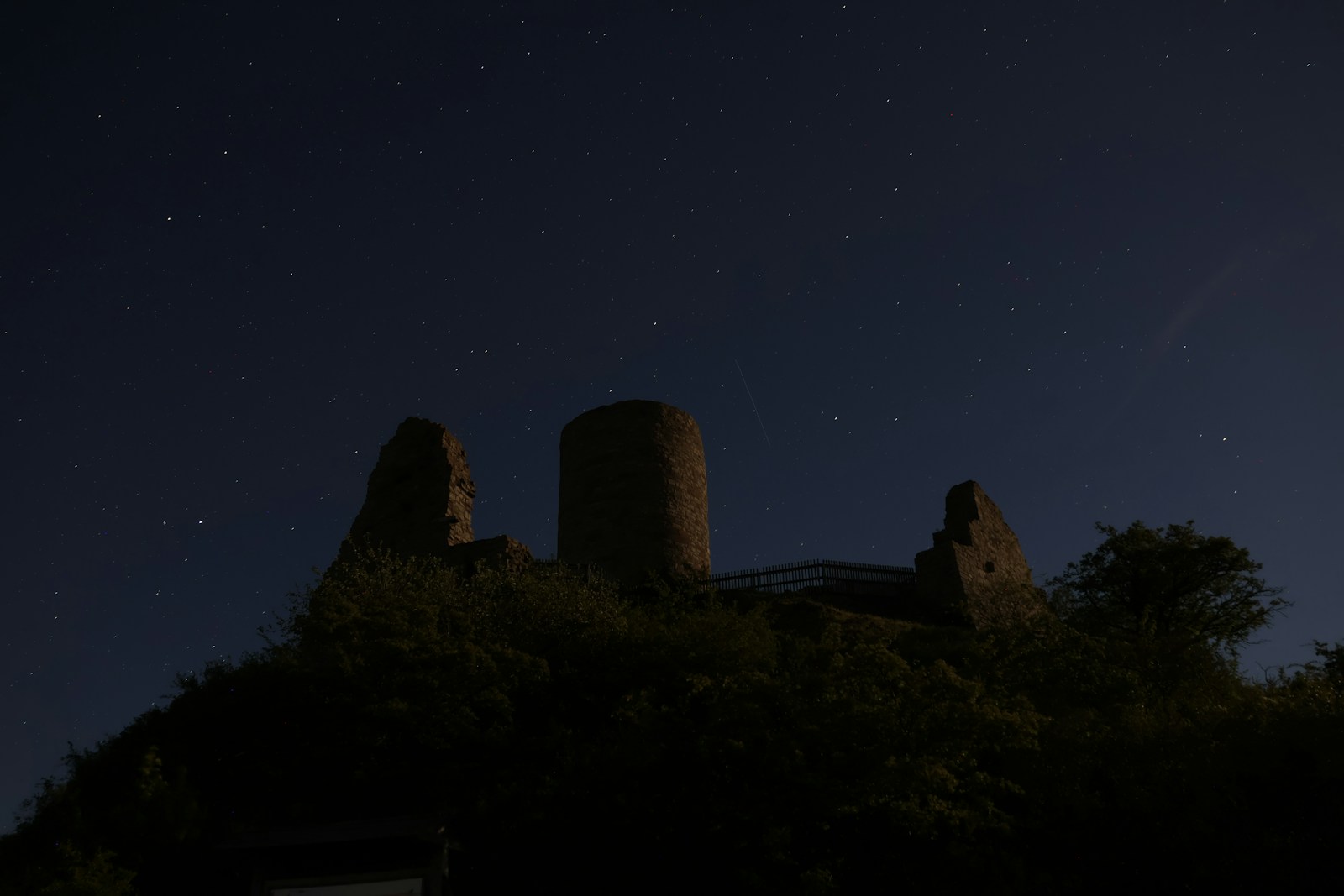
    Imagine standing on the Long Walk in Windsor, looking towards the Castle as the evening sky turns gold. Now imagine another Windsor beyond the stars: the same river, the same towers, but with a different history. In that imagined world, perhaps a different decision changed the course of a life—or history took an entirely different turn.

    The idea of parallel universes sits at the fascinating intersection of physics, philosophy and science fiction. Scientists have explored several ideas that are sometimes grouped under the word multiverse, but they do not all mean the same thing, and none has established that a second version of our world is real.

    What is a parallel universe?

    In everyday language, a parallel universe is a hypothetical reality that exists alongside our own. It might be imagined as a universe with different events, different physical conditions or another version of history. In cosmology, “multiverse” is a broad label for proposals involving more than one universe; the details depend on the particular hypothesis.

    Some proposals suggest regions of space so distant that light from them could never reach us. Other ideas arise from interpretations of quantum mechanics. These are distinct scientific concepts, not evidence for a doorway through which a person could step into another reality.

    The many-worlds interpretation

    One influential interpretation of quantum mechanics is known as the many-worlds interpretation, associated with physicist Hugh Everett’s work in the 1950s. In broad terms, it describes quantum outcomes as part of a universal quantum state rather than treating measurement as a single, special collapse. Its implications are subtle and remain debated among physicists and philosophers.

    It is important not to confuse this interpretation with the familiar film or television image of a person walking through a portal into a world where their life unfolded differently. The many-worlds interpretation does not provide a known method for visiting, communicating with or checking on another branch.

    “Some multiverse hypotheses may therefore be great fun to think about but not practically falsifiable and therefore have no predictive scientific value.”
    — NASA Astronomy Picture of the Day, “Multiverses: Do Other Universes Exist?”

    This quotation captures the key caution: a compelling possibility is not automatically a confirmed discovery. Scientific proposals need to be assessed by their mathematics, consistency and, where possible, observable consequences.

    Could another universe contain another Earth?

    Science fiction often imagines a neighbouring Earth with familiar people and places but a different past. It is a powerful storytelling device: what if a historic decision had gone another way, or a chance meeting had never happened? Such scenarios invite us to think about probability, identity and the consequences of our choices.

    However, there is currently no verified evidence that an alternate Earth containing copies of people we know exists. Nor is there an established experiment that can reveal what those hypothetical people might be doing. The idea belongs in the realm of speculation unless and until testable evidence changes that position.

    How could scientists investigate the multiverse?

    Researchers can examine whether particular multiverse proposals follow from broader theories and whether those theories make predictions that could be tested. In cosmology, scientists study the cosmic microwave background, the expansion of the Universe and the large-scale distribution of galaxies. Such observations help test models of our Universe, but they have not confirmed the existence of parallel universes.

    A major challenge is that some hypothetical universes might be causally disconnected from ours. If no signal can travel between them and no observable trace is left in our own universe, direct testing may be impossible. This makes it especially important to distinguish a mathematically developed idea from an experimentally confirmed fact.

    Parallel universes in films, books and television

    Alternate realities are a rich source of drama because they turn abstract questions into personal stories. A familiar street can become strange; a hero can meet a version of themselves; a single altered event can reshape an entire society. These stories can introduce audiences to genuine questions in physics, even when their portals, timelines and universe-hopping machines are fictional inventions.

    When watching a parallel-universe story, try asking: is it using the multiverse as a scientific hypothesis, a metaphor for regret, or simply an imaginative adventure? Knowing the difference can make the story more enjoyable without blurring the line between evidence and invention.

    Could Windsor have a parallel history?

    Picture a royal castle beneath two skies: one illuminated by a setting sun, the other by distant galaxies. In a fictional parallel Windsor, a different monarch might have commissioned a different tower, a bridge might never have been built, or the town might have developed along another route. These are creative possibilities, not claims about real history.

    Windsor’s actual history is extraordinary enough to explore on its own. A parallel-world thought experiment simply gives us another way to appreciate how places change over time—and how small decisions can inspire big questions about the past and the future.

    The big question: is another reality out there?

    The honest answer is that we do not know. Parallel universes appear in serious scientific discussions and in imaginative fiction, but the different ideas must be judged individually. At present, there is no confirmed proof that another universe contains a duplicate of Earth or that people can travel between realities.

    That uncertainty is part of the appeal. The multiverse invites us to ask what reality means, what science can test and where imagination begins. For now, the most responsible conclusion is also the most intriguing: the idea remains open to investigation, but it is not an established fact.


    Further reading and reliable sources

    Editorial note: This article is an introduction for general readers. It distinguishes established science from hypotheses and fictional examples; it does not claim that parallel universes have been observed.

    2026 Technology (3) AI (5) Artificial Intelligence (3) Bayern Munich (2) Blog (102) Castle (112) Champions League (2) Changing of the Guard (2) dea (83) drink (96) England (6) Eton Walkway (2) food (93) football (8) Football Tactics (2) Future Technology (3) medication (93) Prediction (3) Premier League (4) Premier League 26/27 (7) river thames (2) royal landmarks UK (2) scenic walks England (2) Science Fiction (3) soccer (5) Space Technology (2) Technology (2) Thca (2) UK walking routes (2) visiting windsor castle (3) Windsor (107) Windsor 2026 (2) Windsor Castle (2) Windsor castle blog (112) Windsor Castle walk (3) Windsor Drinks (103) Windsor Events (3) Windsor Great Park (4) Windsor hungry (98) Windsor Long Walk (3) Windsor tourism (3) Windsor travel blog (3) Women’s Football (3) Women’s Super League (2) World Cup (3)

  • The Stars Above Windsor: A Star Wars-Inspired Adventure

    The Stars Above Windsor: A Star Wars-Inspired Adventure

    Windsor Castle beneath the evening sky for The Stars Above Windsor story

    Featured image: Windsor Castle beneath the evening sky. Photo by Toa Heftiba via Unsplash. Image credit and source recorded in the WordPress media library.

    What if a galaxy far, far away had a quiet connection to an ancient royal castle? On a moonlit evening, beneath the stars above Windsor, a young traveller named Rowan looked across the Long Walk and noticed a strange blue light moving silently through the sky.

    The Visitor from the Stars

    The light descended beyond the trees and revealed a small, battered starship. Its pilot was a mysterious traveller called Aster, carrying an old navigation crystal that had begun to glow whenever it pointed towards Windsor.

    “Some places are remembered by history,” Aster said. “Others are remembered by the stars.”

    Rowan followed Aster through the quiet grounds, where the ancient stones seemed almost to whisper stories of kings, queens, knights and long-forgotten journeys. Aster explained that the crystal was not a weapon. It was a map—a map showing worlds connected by courage, friendship and hope.

    A Secret Beneath the Castle

    Deep beneath the castle, they discovered an old chamber. At its centre stood a circular table covered with symbols that looked strangely like constellations. When Rowan placed the crystal on the table, the chamber filled with tiny points of light.

    One light represented Earth. Another represented a distant world beyond the stars. Between them appeared a shining path.

    But the path was fading.

    The Choice

    Aster told Rowan that the crystal could open the route home, but only if someone stayed behind to guide it. Rowan faced a difficult choice: return safely or help a stranger reach home.

    Remembering the stories of brave people who had protected Windsor through the centuries, Rowan chose to help.

    Together they activated the crystal. A brilliant beam rose above the castle, turning the night sky silver and blue. The starship lifted silently into the darkness.

    “May the stars remember Windsor,” Aster called as the ship disappeared.

    A New Legend

    The following morning, everything looked normal. Visitors walked through Windsor, birds crossed the sky, and the castle stood proudly above the town.

    Only Rowan knew what had happened.

    And high above the Earth, a tiny starship carried a new entry in its navigation records:

    “Windsor — a place where courage can be found beneath the stars.”

    For Star Wars Fans

    This is an original, unofficial fan-style story inspired by the adventurous spirit of space opera. It is not an official Star Wars story and is not affiliated with or endorsed by Lucasfilm or Disney.

    Copyright © Simon Ben Gemmill, 2026. Original story for WindsorCastle.info.

    Explore More Windsor Stories

    Blog Castle dea drink food football medication Premier League 26/27 Windsor Windsor castle blog Windsor Drinks Windsor hungry

    More Stories from WindsorCastle.info