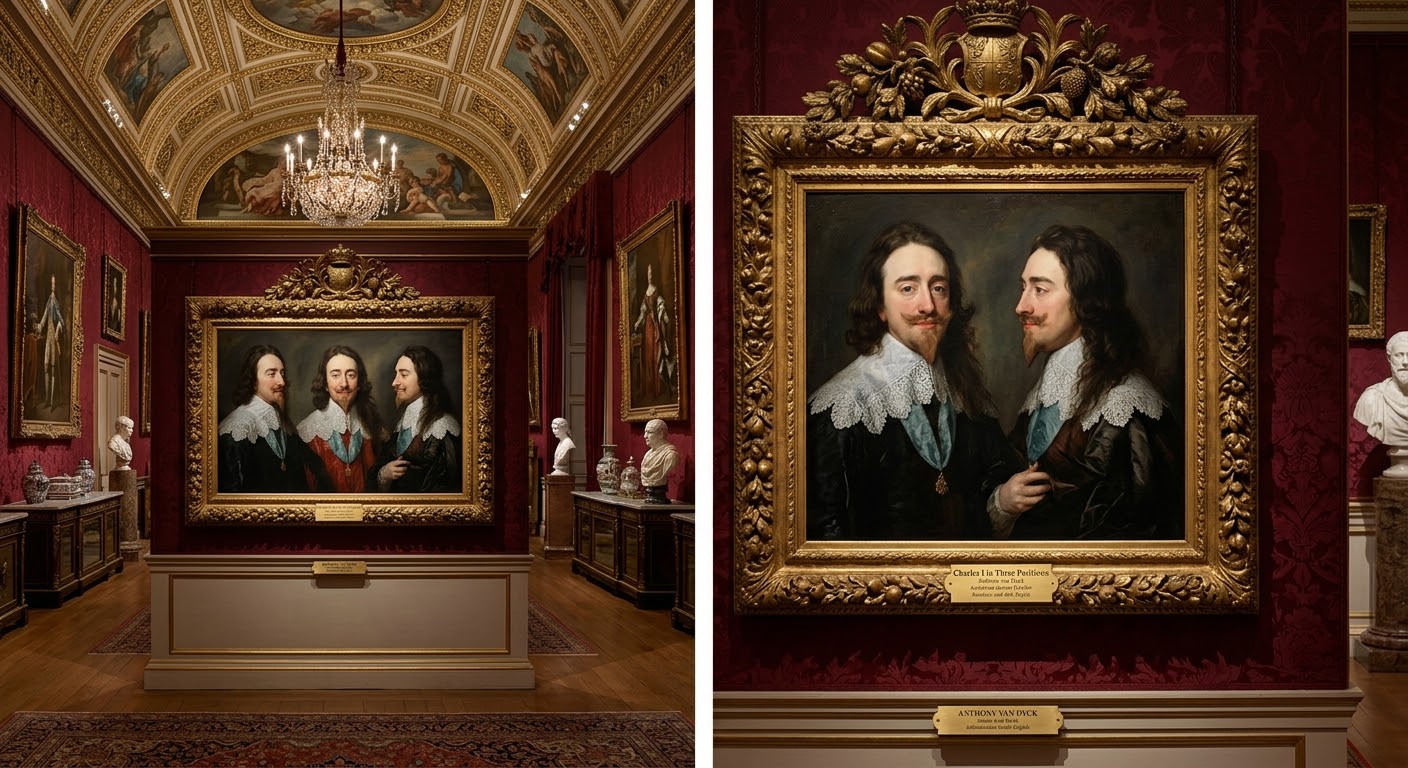
Meta Description: Discover the top highlights, hidden secrets, and world-class masterworks inside the Windsor Castle State Apartments, from van Dyck portraits to grand Baroque ceilings. Target URL Slug: /state-apartments-highlights-secrets-windsor-castle/ Primary Keywords: Windsor Castle State Apartments highlights, Royal Collection paintings Windsor, best rooms in Windsor Castle
The Hidden Secrets & Masterpieces of the State Apartments at Windsor Castle
The State Apartments form the ceremonial heart of Windsor Castle. Built over nearly a millennium, these magnificent suites serve as both an active working palace for the British Monarch and a public museum housing some of the greatest treasures from the Royal Collection.
While millions of visitors marvel at the gilded moldings and sparkling chandeliers each year, many pass by world-renowned masterworks and intriguing historical details without realizing their significance. This room-by-room guide breaks down the hidden stories, artistic secrets, and unmissable highlights of the grandest suites inside Windsor Castle.
1. The Grand Vestibule: Trophies of Empire and Military History
Upon ascending the Grand Staircase, visitors enter the Grand Vestibule, a space designed to showcase Britain’s military power and international diplomatic history.
Key Masterpieces & Hidden Details
- The Musket Ball That Killed Admiral Lord Nelson: Encased in a gold mount inside a display cabinet is the actual lead musket ball fired during the Battle of Trafalgar in 1805. It was extracted from Vice-Admiral Horatio Nelson’s spine after his fatal wounding aboard HMS Victory.
- The Armour of Henry VIII: Dating to 1540, this massive set of tournament armor features an adjustable broad waistline—a stark visual record of the Tudor monarch’s changing physique in his later years.
2. The Queen’s Gallery & Drawing Room: Masterworks of the Old Masters
The ceremonial spaces within the Queen’s side of the apartments hold a dense concentration of Renaissance and Baroque art.
+——————————————————————————-+
| QUEEN’S GALLERY ART HIGHLIGHTS |
+————————————+——————————————+
| ARTIST & WORK | WHAT TO LOOK FOR |
+————————————+——————————————+
| Pieter Bruegel the Elder | The chilling winter landscape depicting |
| “Massacre of the Innocents” (1566) | soldiers raiding a Flemish village. |
+————————————+——————————————+
| Rembrandt van Rijn | Expressive light-and-shadow rendering of |
| “An Old Woman” (1529/30) | the artist’s mother. |
+————————————+——————————————+
The Bruegel Censorship Mystery
Look closely at Bruegel’s Massacre of the Innocents. The painting originally depicted Spanish troops slaughtering infant children in a quiet Flemish village. However, historical inspection reveals that Holy Roman Emperor Rudolf II found the subject matter too disturbing; he had the infants painted over with livestock, farm animals, and bundles of goods.
3. The King’s Dining Room: Baroque Splendor & Grinling Gibbons Carvings
Commissioned by Charles II in the 1670s, the King’s Dining Room reflects the King’s desire to emulate the grandeur of Versailles after returning from exile in France.
+———————————–+
| BAROQUE DINING CHAMBER |
+———————————–+
|
+———————–+———————–+
| |
v v
+——————-+ +——————-+
| Antonio Verrio | | Grinling Gibbons |
| Ceiling Frescoes | | Wood Carvings |
+——————-+ +——————-+
| Features Banquet | | Intricate limewood|
| of the Gods | | floral motifs & |
| framing Charles II| | royal crests |
+——————-+ +——————-+
Visual Highlights
- The Allegorical Ceiling: Painted by Italian artist Antonio Verrio, the ceiling depicts The Banquet of the Gods, featuring Charles II represented as a triumphant monarch surrounded by classical deities.
- Limewood Carvings: The intricate garlands surrounding the wall panels were crafted by master carver Grinling Gibbons. Carved out of soft limewood, the fish, game birds, and floral elements appear almost three-dimensional.
4. The Waterloo Chamber: Celebrating the Fall of Napoleon
Designed by architect Sir Jeffry Wyatville under George IV, the Waterloo Chamber was built specifically to commemorate the defeat of Napoleon Bonaparte at the Battle of Waterloo in 1815.
+—————————+
| THE WATERLOO CHAMBER |
+—————————+
|
+————————-+————————-+
| |
v v
+——————————-+ +——————————-+
| SIR THOMAS LAWRENCE PORTRAITS| | SEAMLESS INDIAN CARPET |
+——————————-+ +——————————-+
| Commissioned by George IV to | | Woven in Agra in 1894 for |
| depict every allied sovereign,| | Queen Victoria’s Diamond |
| general, and diplomat. | | Jubilee. |
+——————————-+ +——————————-+
Key Highlights
- The Lawrence Portrait Series: George IV dispatched court painter Sir Thomas Lawrence across Europe to paint every major leader involved in Napoleon’s defeat, including the Duke of Wellington, Field Marshal Blücher, and Tsar Alexander I of Russia.
- The Agra Carpet: The room features a single seamless carpet, hand-woven in the central prison at Agra for Queen Victoria’s Diamond Jubilee in 1897. It is one of the largest seamless carpets in the world.
5. The Grand Reception Room: Rococo Excess & The Malachite Vase
Before the 1992 fire, this room served as the primary ballroom of the State Apartments. Restored to its original 19th-century appearance, it offers a dramatic display of French Rococo style.
Notable Secrets
- The Malachite Vase: The focal point of the room is a massive green malachite vase presented to Queen Victoria in 1839 by Tsar Nicholas I of Russia.
- Gobelins Tapestries: The walls feature six large tapestries depicting the classical Greek story of Jason and the Golden Fleece, woven at the French Gobelins manufactory.
Frequently Asked Questions
Which room in the State Apartments has the most valuable art?
The Queen’s Gallery and the Rubens Room contain some of the highest-value individual paintings in the Royal Collection, featuring works by Peter Paul Rubens, Anthony van Dyck, Rembrandt, and Pieter Bruegel the Elder.
Are all rooms in the State Apartments open to the public?
Most primary ceremonial suites are included on the standard visitor route. However, specific rooms may close periodically when the monarch is in official residence or hosting state visits.
How long does it take to walk through the State Apartments?